




Legally reviewed by Alexis Austin Litle, Founder of Right Law Group. Before founding the firm in 2018, Alexis worked in Colorado’s 18th Judicial District and later served as a Deputy District Attorney in the 4th and 10th Judicial Districts, including as Chief of the Domestic Violence Unit and as a Homicide Unit prosecutor; she represented the veteran with PTSD whose case is discussed in the results section below.
Get a Free Consultation Today: 719-822-6227
A civilian charge doesn’t wait for the military justice system to do damage. Command finds out. Your clearance gets flagged. A case that would be a Tuesday afternoon inconvenience for most people can put a career you’ve spent years building on the line, and that risk exists whether or not anything under the UCMJ is ever triggered.
We defend that civilian case. Our attorneys used to be the prosecutors filing and trying these charges in El Paso County and the surrounding judicial districts. We know what a DA needs to file, what they need to prove, and where the case is weakest, before your command has to weigh in on anything.
Get Your Free Case Review
One boundary worth stating plainly: we handle the Colorado state or municipal charge. The DUI from a stop on Academy Boulevard. The assault from an off-base bar. The domestic violence call to your home. The drug case from a stop near post. We do not practice military justice. Courts-martial, Article 15, and administrative separation boards go to a JAG attorney or military defense counsel, not to us. What we do is defend the civilian case in a way that gives your command as little to act on as possible.
The rest of this page breaks explains how a Colorado criminal charge or conviction reaches a service member’s career, what the actual state penalties are, cited to the Colorado Revised Statutes on colorado.public.law and the official CRS at leg.colorado.gov, how prosecutors in El Paso County and the surrounding judicial districts build these cases, and where a defense built by former prosecutors looks first.
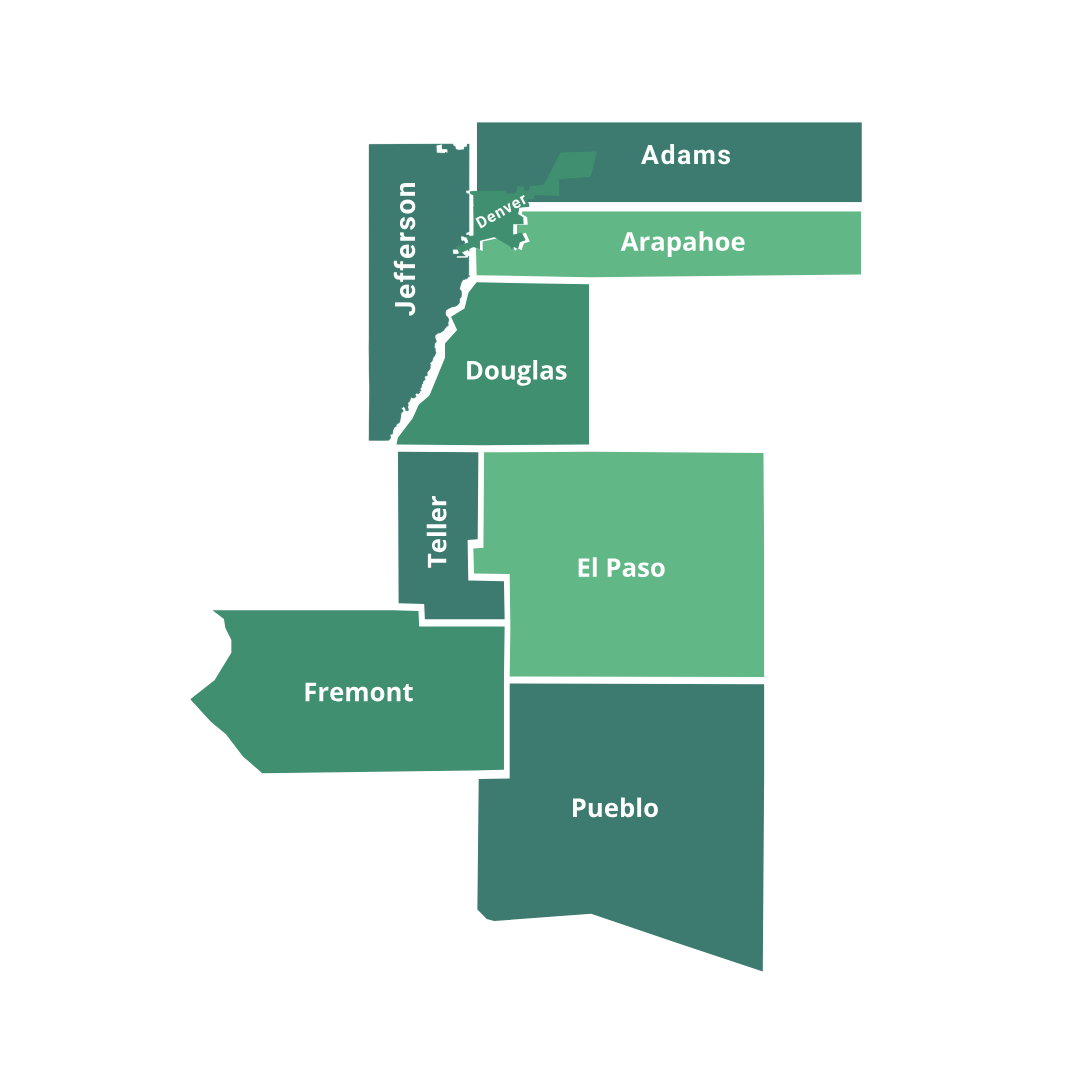
Right Law Group defends active-duty service members, reservists, National Guard members, and veterans charged with civilian crimes in Colorado. Our attorneys used to be the prosecutors filing and trying these cases, so we know how the other side decides what to charge and what makes them reconsider. We have offices in Colorado Springs, Castle Rock, Highlands Ranch, and Denver, and we serve clients across Arapahoe, Denver, Douglas, El Paso, Fremont, Jefferson, Pueblo, and Teller counties, including the personnel stationed at the five military installations in and around Colorado Springs: Fort Carson, Peterson Space Force Base, Schriever Space Force Base, Cheyenne Mountain Space Force Station, and the Air Force Academy.
We are a Colorado criminal defense firm. We represent service members in the civilian case: the DUI filed in county court after a traffic stop on Academy Boulevard, the assault charge from an off-base bar, the domestic violence allegation that brought El Paso County deputies to your home, the drug possession case from a stop near post.
We do not practice military justice. We do not represent service members at courts-martial, in Article 15 or nonjudicial punishment proceedings, before administrative separation boards, or in any matter under the Uniform Code of Military Justice. Those are handled by a military defense counsel, a JAG attorney, or a civilian lawyer who specializes in military law, and you should retain one for that side of the case.
What we do is defend the Colorado charge itself, because the civilian outcome is often the single biggest input into what the military decides. Winning the state case, or resolving it without a disqualifying conviction, frequently removes the basis for the military action before it starts.
A civilian conviction in Colorado does not stay in the courthouse. It travels into your service record and your security clearance file through several channels, and understanding them is the first step in protecting your career.
The first is self-reporting and command notification. Most service members have a duty to report an arrest or charge to their command, and many installations learn of off-base arrests directly from local law enforcement. A conviction, and sometimes the charge alone, can trigger a flag, a bar to reenlistment, or a referral for administrative action handled entirely within the military.
The second is your security clearance. Under the federal adjudicative guidelines, criminal conduct, alcohol involvement, and drug involvement are all listed concerns that can lead to a clearance being denied, suspended, or revoked. A single DUI can prompt a review; a drug conviction or a pattern of alcohol incidents weighs heavier. The clearance adjudicator looks at the underlying conduct and the disposition of the case, which is exactly why the civilian result matters so much.
The third is the conviction’s permanent collateral weight: the effect on reenlistment, promotion, assignment, and, for those nearing the end of service, the character of discharge. A felony conviction or a domestic violence conviction also strip the right to possess a firearm under both Colorado and federal law, which for many military roles is incompatible with continued service. These are civilian consequences with military fallout, and they are the ones a Colorado defense can directly influence.
Service members face the same state charges as any other Colorado resident, and the same statutes apply. The charges below are the ones that most often put a military career at risk.
DUI and DWAI under C.R.S. section 42-4-1301 are the most common. A first, second, or third DUI is a misdemeanor in Colorado; a fourth or subsequent offense is a class 4 felony. Colorado also runs a separate administrative license process through the DMV that operates independently of the criminal case, and the administrative hearing must be requested in writing within 7 days of the notice of revocation, a deadline service members on duty schedules miss more than anyone. Impaired driving remains a leading factor in Colorado crash deaths in CDOT’s safety data and the federal crash-data record NHTSA maintains. DWAI, driving while ability impaired, is a lower threshold than DUI and is charged when alcohol or drugs affect driving ability to the slightest degree.
Assault charges range widely. Third degree assault under C.R.S. section 18-3-204, knowingly or recklessly causing bodily injury, is a class 1 misdemeanor. Second degree assault under C.R.S. section 18-3-203 is generally a class 4 felony and an enumerated crime of violence. First degree assault under C.R.S. section 18-3-202 is a class 3 felony sentenced as an extraordinary-risk crime of violence, which carries a mandatory 10 to 32 years in prison, a floor as well as a ceiling. A bar fight off post can become any of these depending on the injury and whether a weapon was involved.
| Charge | Classification | Colorado range | Statute
|
|---|---|---|---|
| First through third DUI | Misdemeanor | Jail, fines, alcohol education; separate DMV license action | CRS 42-4-1301 |
| Fourth or subsequent DUI | Class 4 felony | 2 to 6 years presumptive | CRS 42-4-1301 |
| Third degree assault | Class 1 misdemeanor | Up to 364 days | CRS 18-3-204 |
| Second degree assault | Class 4 felony, crime of violence | 2 to 6 years presumptive; 5 to 16 crime-of-violence range when prison is imposed | CRS 18-3-203 |
| First degree assault | Class 3 felony, extraordinary-risk crime of violence | 10 to 32 years, mandatory | CRS 18-3-202 |
| Menacing | Class 1 misdemeanor; class 5 felony with a weapon | Up to 364 days; 1 to 3 years if felony | CRS 18-3-206 |
| Domestic violence | Enhancer attached to the underlying charge | Mandatory protection order; federal firearm bar on conviction | CRS 18-6-800.3 |
Domestic violence is not a standalone crime in Colorado. Under C.R.S. section 18-6-800.3, it is a sentence enhancer attached to an underlying offense committed against an intimate partner, and it triggers a mandatory protection order and a mandatory arrest. For a service member, a domestic violence conviction carries a federal firearm prohibition under 18 U.S.C. section 922(g) that can directly end the ability to serve, which makes the civilian disposition critical.
Drug charges, weapons charges, menacing under C.R.S. section 18-3-206, theft, and traffic crimes round out the list. Most distribution charges are felonies, though a handful of narrow circumstances carry a misdemeanor tier. Each carries its own classification and penalty range, and each can independently put a clearance or a career in question.
Sorting out the two layers of consequence is essential, because they run on different tracks. The Colorado criminal penalties are set by statute. The military and clearance consequences are collateral, and they often hinge on what the criminal case produces.
On the criminal side, Colorado felony presumptive ranges under C.R.S. section 18-1.3-401 run from 1 to 1.5 years for a class 6 felony up to 8 to 24 years for a class 2, with a class 3 at 4 to 12 years, a class 4 at 2 to 6 years, and a class 5 at 1 to 3 years. Misdemeanors under C.R.S. section 18-1.3-501, as reclassified effective March 1, 2022, carry up to 364 days in jail for a class 1 and up to 120 days for a class 2. A DUI also brings a DMV license revocation that is separate from any court sentence.
On the collateral side, the same conviction can mean a security clearance review or revocation, a flag in your record, a bar to reenlistment, loss of a special assignment, an administrative separation referral, or an other-than-honorable characterization at discharge. A felony costs you firearm rights under Colorado and federal law. These are not penalties the Colorado judge imposes; they are downstream effects that the military and the clearance authorities decide. Because they turn on the civilian disposition, the work that reduces a felony to a misdemeanor, secures a dismissal, or keeps a conviction off the record is the same work that protects the career.
Colorado recognizes that some criminal conduct by service members and veterans is connected to service, including combat-related trauma. Several jurisdictions in the state operate veterans treatment programs or problem-solving dockets that can offer treatment-focused resolutions in appropriate cases; the 4th Judicial District’s Veterans Trauma Court, serving El Paso and Teller Counties, began in December 2009 as the first in Colorado and accepts veterans and active-duty personnel with trauma spectrum disorders or substance use issues. Eligibility is specific and not automatic, and a DUI or other charge does not by itself qualify.
Where post-traumatic stress disorder, traumatic brain injury, or substance use tied to service is part of the picture, that history can matter both to the available program and to mitigation in a standard case. Alexis Austin Litle represented a veteran whose post-traumatic stress was central to the case, where attempted homicide and vehicular assault charges resolved with a deferred sentence and ultimately a complete dismissal and sealing that preserved the client’s VA benefits. Whether a veterans docket or a trauma-informed mitigation strategy fits your case is something to evaluate early, because the option can disappear once the case advances.
Most cases involving Fort Carson, Peterson, and Schriever personnel are filed by the 4th Judicial District Attorney’s Office in the El Paso County courts, in Colorado Springs. Cases in the northern suburbs land in the Douglas County courts in the 23rd Judicial District around Castle Rock, and cases in the city fall to the Denver courts in the 2nd Judicial District. Each district has its own prosecutors, its own charging habits, and its own tendencies in how it treats service members.
As former prosecutors, our attorneys know that the case the district attorney files is often not the case the evidence supports. A DUI built on a traffic stop depends on the legality of that stop, the administration of roadside tests, and the two-hour window for chemical testing, each of which can be challenged. An assault charge from a fight turns on who was the aggressor and whether the response was self-defense, the same standard that governs a first or second degree assault case. A domestic violence case often rests on the account of an alleged victim whose statements change, yet the prosecutor can proceed even when that alleged victim wants the case dropped. We look at the stop, the search, the statements taken from you, and the reliability of the witnesses before the prosecution locks in its theory.
Every case is different, but the defenses that come up most often in these cases include a few recurring themes.
Unlawful stop or search. Much of the evidence in a DUI or drug case comes from a traffic stop or a search, and evidence obtained in violation of the Fourth Amendment can be suppressed.
Self-defense. In an assault or menacing case, Colorado law allows a person to use reasonable force to defend against an imminent threat, and a trained service member is held to the same legal standard as anyone else.
Challenging the testing. In a DUI, the calibration of the breath instrument, the chain of custody of a blood draw, and the timing of the test relative to driving are all contestable.
Witness credibility. In a domestic violence case, the account of the alleged victim is often the entire case, and inconsistencies, motive, and the absence of corroboration matter.
Mitigation tied to service. Where the conduct connects to combat trauma or a service-connected condition, that context can support a treatment-focused resolution or a reduced charge.
These are a few of the many cases our attorneys have resolved. Disclaimer: past results do not guarantee a particular outcome; every case is different and results depend on the specific facts and circumstances.
You can read more in our case studies and client reviews.
Our former-prosecutor bench moves quickly, because in a service member’s case the clock is running on the career as well as the court date. We obtain and review the police reports, the body-camera footage, and any chemical-testing records; we identify the suppression issues in the stop and the search; we map out whether a veterans treatment option or a trauma-informed mitigation strategy fits; and we open conversations with the district attorney aimed at reducing a felony to a misdemeanor, securing a dismissal, or keeping a disqualifying conviction off the record. We coordinate, when you ask us to, with your military defense counsel so the civilian strategy supports the clearance and command picture rather than working against it. No lawyer can promise a result, but early, informed defense work is what creates options.
If you serve and you have been charged with a crime in Colorado, the next decision matters for more than the case. Talk to a criminal defense attorney before you speak with police or prosecutors again, and retain separate military counsel for any UCMJ side of the matter. Right Law Group offers a free, confidential consultation, and we will review the state’s evidence with you and explain exactly where you stand. Call or text 719-822-6227.
No. Right Law Group is a Colorado criminal defense firm; we defend the civilian state and municipal case, not the military justice process. We do not represent service members at courts-martial, in Article 15 or nonjudicial punishment, or before administrative separation boards.
Those matters fall under the Uniform Code of Military Justice and are handled by military defense counsel, a JAG attorney, or a civilian lawyer who specializes in military law. They run on a separate track from your Colorado case, with separate rules and separate decision-makers. What we do is defend the underlying Colorado charge, because the civilian disposition is often the biggest single factor the military and the clearance authorities weigh.
If you are facing both a civilian charge and a military proceeding, the right approach is usually two lawyers working in parallel, with the civilian defense built to support the military side. We can coordinate with your military counsel when you ask us to.
Related: About Right Law Group, Criminal defense attorneys
Yes. An arrest by Colorado Springs police, El Paso County deputies, or any local agency for an off-base offense produces a civilian case in Colorado state or municipal court, and a civilian criminal defense lawyer handles it exactly as for any other resident.
Off-base conduct is prosecuted by the local district attorney under Colorado law, not by the military. The DUI, assault, or drug charge proceeds through county or district court in the county where it happened, most often the 4th Judicial District in Colorado Springs for Fort Carson, Peterson, and Schriever personnel. Your status as a service member does not move the case into military court.
What your status does change is the stakes, because the civilian outcome flows into your clearance and your record. That is the reason to choose a firm that understands both sides of the consequence.
Related: Colorado Springs criminal defense, Military DUI
It can. Under the federal adjudicative guidelines, alcohol involvement and criminal conduct are both listed concerns, so a DUI under C.R.S. section 42-4-1301 can prompt a clearance review even on a first offense.
A single DUI does not automatically cost you a clearance, but it puts the conduct and its disposition in front of an adjudicator who weighs the whole picture: how many incidents, whether alcohol is a pattern, and how the case resolved. A dismissal or a reduction to a lesser charge presents very differently from a felony conviction. This is one of the clearest examples of why the civilian result drives the collateral consequence.
Because the adjudicator looks at the disposition, defending the DUI itself, and the parallel DMV process, is the most direct way to protect the clearance. Your clearance attorney handles the adjudication; we handle the case that feeds it.
Related: DUI, Military DUI
In most cases, yes, and many commands learn of an arrest from local law enforcement regardless. Reporting obligations vary by branch and by your specific duties and clearance, so confirm yours with your chain of command or your military counsel.
A failure to self-report when required can become its own problem, sometimes more damaging than the underlying charge. At the same time, what you say about the facts of the case can be used in the criminal prosecution. The safe path is to meet your reporting duty about the existence of the charge while not discussing the underlying facts with anyone other than your lawyer.
We can help you understand how the civilian case is likely to proceed so you can report accurately, and your military counsel can advise on the reporting duty itself.
Related: Criminal defense attorneys, About Right Law Group
It can, and the firearm consequence is the reason. In Colorado, domestic violence under C.R.S. section 18-6-800.3 is a sentence enhancer that triggers a mandatory protection order, and a conviction carries a federal firearm prohibition that is often incompatible with military service.
The protection order alone restricts firearm possession while the case is pending, and a qualifying conviction makes that prohibition permanent under federal law. For a service member whose role requires carrying a weapon, that can end the ability to serve even apart from any administrative action. The prosecutor can pursue the case even if the alleged victim wants it dropped.
Because the firearm bar follows the conviction, the defense goal in a service member’s domestic violence case is frequently to resolve it without the disqualifying conviction. That is where early defense work matters most.
Related: Domestic violence, Domestic violence attorney
Colorado operates veterans treatment programs and problem-solving dockets in several jurisdictions, including the El Paso County area, that can offer treatment-focused resolutions in appropriate cases. Eligibility is specific and not automatic, and not every charge or veteran qualifies.
These programs generally target conduct connected to service, such as substance use or trauma tied to deployment, and they emphasize treatment and accountability over incarceration. Whether your case fits depends on the charge, your history, and the local court’s criteria. A DUI or other offense does not by itself secure entry.
We evaluate veterans-court eligibility early, because the option can close once a case advances or a plea is entered. If a docket fits, it can change the entire trajectory of the case.
Related: Military DUI, Case studies
Post-traumatic stress, traumatic brain injury, or service-connected substance use can matter both to eligibility for a veterans treatment program and to mitigation in a standard case. It is context the court and the prosecutor can weigh, not an automatic defense.
Where a service-connected condition is part of why the conduct happened, documenting it can support a treatment-focused resolution, a reduced charge, or a sentence that emphasizes care over punishment. Alexis Austin Litle used a veteran client’s post-traumatic stress as a central part of the case, which resolved with a deferred sentence and a complete dismissal and sealing that preserved the client’s VA benefits.
Whether and how to raise a service-connected condition is a strategic decision, because it touches both the criminal case and potentially the clearance picture. We work through that with you, and with your military counsel where appropriate.
Related: Case studies, About Right Law Group
A felony conviction is a serious clearance concern and can lead to denial, suspension, or revocation, and it also strips your right to possess a firearm under both Colorado and federal law. For many military roles, the firearm bar alone is incompatible with continued service.
Felony criminal conduct sits high on the federal adjudicative guidelines, and the loss of firearm rights compounds the problem for a service member. This is why so much defense work in these cases focuses on keeping a charge from becoming a felony conviction, whether by reduction to a misdemeanor, a deferred judgment, or a dismissal.
The clearance adjudication itself is handled by your clearance counsel, but the input it relies on is the criminal disposition. Defending the Colorado charge is the most direct lever you have over that outcome.
Related: Colorado felony lawyer, Weapons charges
No. Article 15 nonjudicial punishment and administrative separation boards are military proceedings under the Uniform Code of Military Justice, and we do not handle them. Those require a military defense counsel or a civilian attorney who specializes in military law.
We defend only the civilian Colorado case. That said, the civilian outcome often shapes whether and how the military proceeds, so the two are connected even though they are handled by different lawyers. A favorable civilian resolution can reduce or remove the basis for the military action.
If you are facing both, retain military counsel for the UCMJ side and let us handle the Colorado charge. We can coordinate with your military counsel when you ask us to, so the civilian defense supports rather than undercuts the military picture.
Related: Criminal defense attorneys, About Right Law Group
DUI means driving substantially incapable of safe operation, while DWAI means your ability is affected to the slightest degree, a lower threshold. Both are alcohol-or-drug driving offenses under C.R.S. section 42-4-1301, and either can draw a clearance review.
A DWAI is the lesser charge and a frequent target in plea negotiations, but it is still an alcohol-related driving conviction that a clearance adjudicator and a command can see. The presence of any alcohol incident, not only a full DUI, is what the adjudicative guidelines flag. So while reducing a DUI to a DWAI lowers the criminal exposure, it does not erase the collateral concern entirely.
Whether a reduction is realistic depends on the evidence, the BAC, and your record. A military DUI defense weighs both the criminal and the career angles together.
Related: DWAI, Military DUI
Your case is handled in the El Paso County courts in the 4th Judicial District, in Colorado Springs, because that is where the offense occurred. A DUI is a civilian charge prosecuted by the local district attorney, not the military.
Off-base offenses by Fort Carson, Peterson, and Schriever personnel are almost always Colorado state or municipal cases. The county court handles misdemeanor DUIs, and district court handles felony-level charges. Your status as active duty does not move the case to a military forum; it stays in the civilian system where it was filed.
A lawyer who regularly works in the El Paso County courts understands how the 4th Judicial District tends to handle these cases, which informs both negotiation and motions.
Related: Colorado Springs criminal defense, Military DUI
It can. The civilian case and any military action are separate proceedings under separate authorities, so a resolution in Colorado state court does not bind the military, and the protection against double jeopardy does not apply across the two systems.
In practice, a favorable civilian outcome often reduces the likelihood or severity of military action, because the command and the adjudicators weigh the disposition heavily. A dismissal or a reduced charge gives your military counsel far more to work with than a felony conviction would. That is the strategic link between the two cases.
Because the systems are separate, you generally need both a civilian defense lawyer for the Colorado case and military counsel for the UCMJ side. We handle the first and coordinate with the second when you ask.
Related: Criminal defense attorneys, About Right Law Group
A first DUI in Colorado is a misdemeanor under C.R.S. section 42-4-1301, carrying possible jail, fines, alcohol education, and a separate license consequence through the DMV. The exact sentence depends on the BAC and the facts.
Colorado treats a first DUI as a misdemeanor, but the case has two parts: the criminal charge in court and an administrative license action through the DMV that runs on its own timeline. The DMV process can revoke your license even if the criminal case is still open, which is a deadline service members often miss. A first DWAI is also a misdemeanor at a lower level.
For a service member, even a misdemeanor first DUI can trigger a clearance review and command notification, so the civilian penalties are only part of the calculation.
Related: DUI, Military DUI
No. A first, second, and third DUI are all misdemeanors in Colorado under C.R.S. section 42-4-1301; a DUI does not become a class 4 felony until the fourth or subsequent offense.
A second and third DUI carry mandatory minimum jail and longer license consequences, but they remain misdemeanors. The felony threshold is the fourth conviction arising from separate criminal episodes. For a service member, even a misdemeanor repeat DUI signals a pattern of alcohol involvement that weighs heavily in a clearance adjudication, so the number of prior incidents matters for the career even when the charge is not a felony.
Confirming exactly which offense level you face, and what priors count, is the first thing to do with a defense lawyer.
In Colorado, the alleged victim cannot drop the charges; that decision belongs to the prosecutor. Under the domestic violence framework in C.R.S. section 18-6-800.3, the district attorney can proceed even when the alleged victim asks them not to.
This surprises many people, especially when the case grew out of an argument both people regret. The alleged victim’s wishes can influence the prosecutor and can be relevant to the outcome, but they do not control whether the case moves forward. The state can build its case on the police report, recorded statements, and other evidence.
Because the case will not simply disappear, having a defense lawyer engage the prosecutor directly is the more effective path, particularly when a firearm-disqualifying domestic violence conviction would end a career.
Related: Domestic violence, Domestic violence attorney
It can. Drug involvement is its own listed concern in the federal adjudicative guidelines, so a Colorado drug charge can prompt a clearance review independent of any other consequence.
A drug possession charge under C.R.S. section 18-18-403.5 can be a drug misdemeanor or a drug felony depending on the substance and amount, and a distribution charge is a felony. The adjudicator looks at the conduct and the disposition, so a dismissal or a reduction presents very differently from a conviction. Much of the evidence in these cases comes from a stop or a search that can be challenged.
Defending the drug charge itself, including attacking the legality of the search, is the most direct way to protect the clearance. The adjudication is your clearance counsel’s job; the underlying case is ours.
Related: Drug possession, Drug distribution
No. Right Law Group is a criminal defense firm, and military divorce, custody, and other family law matters are outside what we do. You would need a Colorado family law attorney for those.
We mention this because searches for a military lawyer in Colorado Springs often mix criminal and family law, and the distinction matters when you are choosing a lawyer. If your situation is a criminal charge, a DUI, assault, domestic violence, or a drug case, that is squarely what we handle.
A criminal case can sometimes overlap with a family law matter, for example a domestic violence protection order, but the two are handled by different lawyers. We focus on the criminal side.
Related: Domestic violence attorney, Criminal defense attorneys
Do not discuss what happened with the police, and ask for a lawyer. In a DUI, assault, or domestic violence case, statements you make are among the most damaging evidence the prosecution uses.
People often try to explain the situation, believing it will clear things up, but those explanations are easily turned into proof. Politely declining to answer questions and asking for an attorney is not an admission of guilt; it is the protection the law gives you. Separately, confirm your command reporting obligation with your chain of command or military counsel, while keeping the underlying facts to yourself.
The most important step is to stop discussing the case and get counsel involved before the prosecution locks in its theory. If you have already spoken to police, a defense lawyer can still help.
Related: Colorado Springs criminal defense, Free consultation
Yes, as a public record that background checks, licensing boards, and continued security clearance reviews can all reach.
Whether an older case can ever be addressed later is a separate legal question with its own rules and its own timeline, one worth raising with a defense lawyer once the case is resolved rather than assumed away. The stronger strategy is upstream: a case that resolves as a dismissal never creates that later question for a clearance reviewer or a background check to find.
Related: Criminal record, Free consultation
It can. A former prosecutor knows how the district attorney decides what to charge, where they tend to overcharge, and what evidence problems make them willing to reduce or dismiss, which is exactly the knowledge a service member needs when a conviction threatens a career.
At Right Law Group, our attorneys served as Colorado prosecutors before moving to the defense side. That experience shapes how we attack a DUI stop, a search in a drug case, or the proof problems in a domestic violence case. Gannon Becker, Zoe Levesque, and Alexis Austin Litle have each resolved cases that protected a client’s record and, in service-member cases, their career.
No lawyer can promise a specific outcome, but insider knowledge of the prosecution’s playbook is a real advantage when the stakes include a clearance. A free consultation is the place to start.
Related: About Right Law Group, Case studies
Yes. We defend active-duty members, cadets in civilian-court matters, reservists, Guard members, and veterans connected to Fort Carson, Peterson Space Force Base, Schriever Space Force Base, and the Air Force Academy, in their Colorado civilian cases.
These installations sit in and around El Paso County, so off-base charges generally land in the 4th Judicial District in Colorado Springs. We handle the civilian charge regardless of branch, while any military proceeding stays with your military counsel. Zoe Levesque defended an Air Force client whose career was preserved when a protection order violation case was dismissed.
The civilian defense is built with the clearance and command picture in mind, which is why a firm familiar with the local courts and the stakes for service members matters.
Related: Colorado Springs criminal defense, Case studies
In the courtroom, it is not different; the same statutes, penalties, and procedures apply. What is different is the consequence: a conviction reaches your clearance, your command, and your career in ways it would not for a civilian, which changes the defense priorities.
For a civilian, the goal is usually the strongest available criminal outcome. For a service member, that same criminal outcome is also the career outcome, so the defense aims at dispositions that keep a disqualifying conviction off the record. A reduction, a deferred judgment, or a dismissal is worth far more than a quick plea that ends the court case but starts a clearance problem.
That is why the defense strategy for a service member is built around the collateral stakes from the first conversation, not added on later.
Related: Colorado felony lawyer, Criminal defense attorneys
The free consultation is a confidential conversation where we review the charge, the evidence as you understand it, and the specific ways the case could affect your clearance, your command standing, and your record. You leave knowing where you stand and what the realistic options are.
We walk through the Colorado charge and its penalty range, the separate DMV process if it is a DUI, the collateral military and clearance exposure, and whether a veterans treatment option might fit. If you also need military counsel for a UCMJ side, we will say so plainly. The decision about how to proceed is always yours.
You can reach us to schedule by phone or text at 719-822-6227. The consultation is the place to get accurate information before you make any decision about the case.
Related: Free consultation, Criminal defense attorneys
Yes. We represent veterans facing Colorado criminal charges, and a veteran’s service history, including any service-connected condition, can be an important part of the defense and of veterans treatment eligibility.
For veterans, the clearance and command pressures may be in the past, but other stakes remain: VA benefits, professional licenses, firearm rights, and employment. Alexis Austin Litle represented a veteran with post-traumatic stress whose case resolved in a deferred sentence and a complete dismissal and sealing that preserved VA benefits. A service-connected condition can support both a treatment-focused resolution and mitigation.
Whether your service history helps your case is something to evaluate early, because eligibility for treatment options can close as a case advances.
Related: Case studies, About Right Law Group
Yes, when you ask us to. We handle the civilian Colorado case and your military counsel handles the UCMJ side, and the two strategies work most effectively when they are aligned rather than running blind to each other.
A civilian disposition shapes the military picture, so it helps for the civilian defense to know what your military counsel is dealing with, and the reverse. With your authorization, we can share the relevant civilian-case posture so your military counsel can advise you accurately, and so our negotiation with the district attorney accounts for the clearance and command stakes. We do not give military justice advice; that stays with your military counsel.
This coordinated approach is one of the reasons service members benefit from a civilian firm that understands the collateral consequences, even though the firm does not practice military law itself.
In Colorado, assault can either be charged as a misdemeanor or as a felony, depending on the severity of the crime committed. The least serious assault charges are classified as a Class 1 misdemeanor, and the most serious are charged as class 3 felonies.
In Colorado, anytime someone intentionally or recklessly causes actual bodily injury to another person, that could be considered assault.
In Colorado, “bodily injury” is simply defined as “pain”. In other words, if someone claims that they felt pain during an incident that is considered a bodily injury, even if they do not have any visible injuries.
Assault is a very serious charge and can result in severe penalties. In Colorado, assault can be charged as a class 1 misdemeanor, a class 4 felony, or a class 3 felony, depending on the act that was committed.