




Legally reviewed by Jimmy Litle, Managing Attorney. A Deputy District Attorney in the 4th Judicial District from 2013 to 2021, he spent eight years making the same felony filing decisions Colorado theft and fraud defendants now face.
White collar crimes in Colorado are nonviolent financial offenses charged under the state criminal code, including theft, forgery, identity theft, criminal impersonation, and fraud by check. Most are value-graded, so the dollar amount decides whether you face a misdemeanor or a class 6 through class 2 felony. A former prosecutor can attack intent and the loss amount first.
A fraud or theft-based charge in Colorado state court is generally graded by the value involved, which means the number on the charging document often decides whether you face a misdemeanor or a felony. It usually starts with an audit, a fired employee, a bank flag, or a detective’s phone call, and that slow build is its own kind of fear, because you can see the case forming before any charge is filed. The loss figure the state attaches to your case often matters as much as what you are accused of doing. This page explains how Colorado defines the common financial crimes, the exact felony and misdemeanor classes by value, how prosecutors in El Paso, Douglas, and Denver counties build these cases, and where an experienced criminal defense lawyer looks first to take them apart.
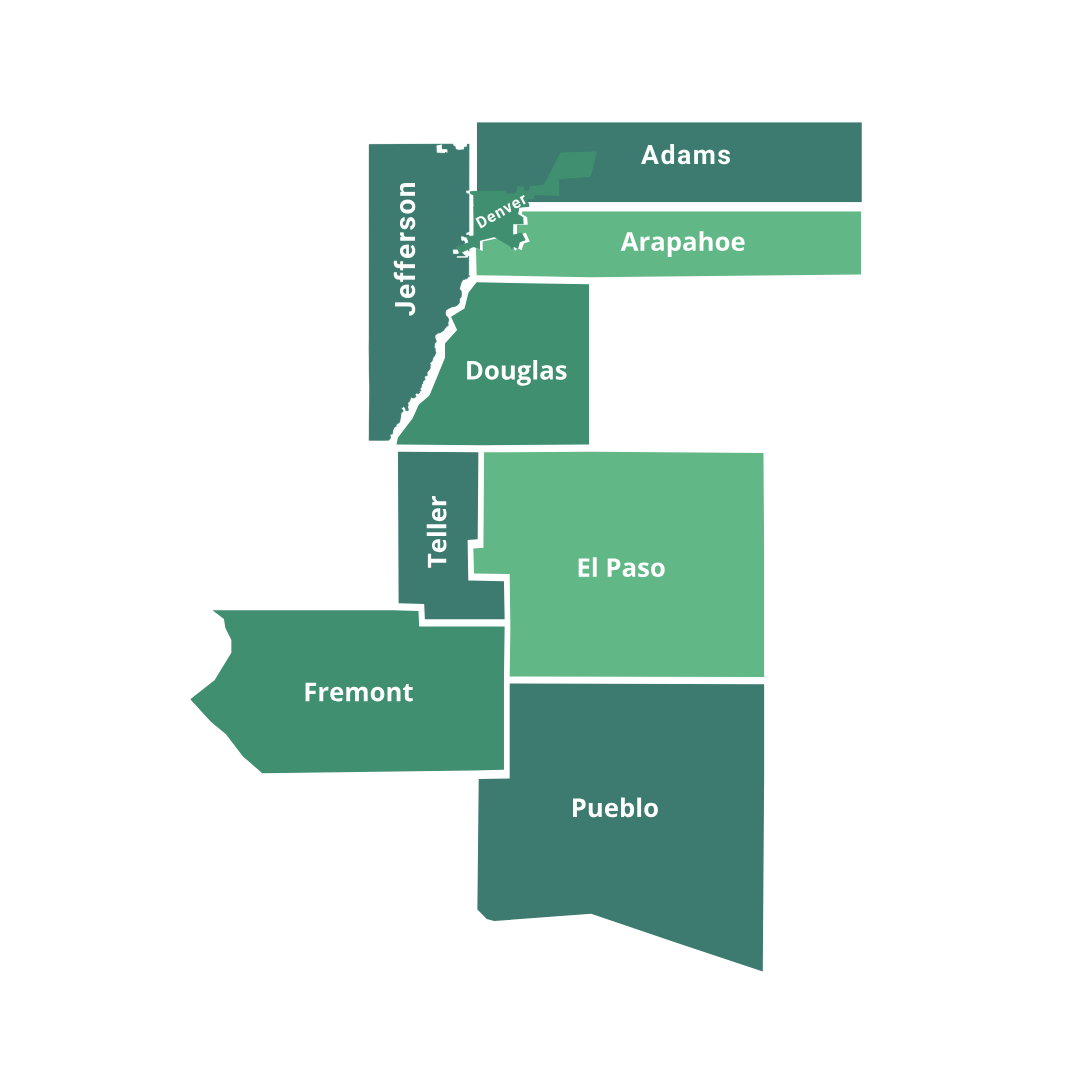
Right Law Group is built on a simple advantage: our attorneys used to be the prosecutors filing and trying these cases. We know how the other side decides what to charge, how they calculate a loss amount, and what makes them reconsider. We have offices in Colorado Springs, Castle Rock, Highlands Ranch, and Denver, and we serve clients across Arapahoe, Denver, Douglas, El Paso, Fremont, Jefferson, Pueblo, and Teller counties. This page covers Colorado state charges only; federal financial cases are prosecuted under a separate body of law in federal court.
“White collar crime” is not a single statute. It is an umbrella term for nonviolent offenses that involve deceit, a breach of trust, or financial gain, and in Colorado these are prosecuted under the regular criminal code in Title 18. The cases share a few features: there is usually no physical injury, the evidence is documents and records rather than eyewitnesses, and the charge level rises with the amount of money at stake.
Because there is no “white collar” offense as such, the label covers a group of separate crimes, each with its own elements. The ones charged most often in Colorado are theft (which covers what people commonly call embezzlement), forgery, identity theft, criminal impersonation, fraud by check, and computer crime. Knowing exactly which statute you are charged under is the first step, because the defense to a forgery is not the defense to a theft, and the penalties are not the same.
One distinction matters at the outset. Many financial accusations are investigated by both state and federal authorities, and the two systems are completely separate. This page addresses Colorado state charges. If your matter is being handled by a federal agency or a United States Attorney, that is a different forum with different rules, and you should confirm which system you are actually in before you do anything else.
Colorado grades most financial crimes by the value involved, using the same ladder that governs theft. Below are the offenses charged most often, with their current statutory classes verified this run.
What people call embezzlement is prosecuted in Colorado as theft under C.R.S. section 18-4-401. There is no separate embezzlement statute. Theft is knowingly taking or keeping another person’s money or property with intent to permanently deprive them of it, and that includes an employee or fiduciary who diverts funds entrusted to them. The class is set entirely by the value:
Because the value drives the class, the single most contested number in a felony theft case is often the loss amount the prosecution claims, not whether a taking happened at all.
Forgery under C.R.S. section 18-5-102 is a class 5 felony. It is falsely making, altering, completing, or passing a written instrument, with intent to defraud, where the instrument is something like money, a check, a deed, a will, a contract, a public record, or a government-issued document. The crime is the intent to defraud combined with the false document, not whether anyone actually lost money. Passing a forged document to a peace officer creates a statutory presumption that you intended to defraud that officer.
Identity theft under C.R.S. section 18-5-902 is a class 4 felony in its base form. It is knowingly using another person’s identifying or financial information to obtain something of value, or falsely making or altering a financial instrument, with intent to defraud. Possessing someone’s identifying information to facilitate a theft, or using it to obtain a government document or open a credit account, is a class 2 misdemeanor, but it rises to a class 5 felony when a person possesses the identifying information or financial devices of three or more separate people. The number of victims, not just the dollars, can move this charge up.
Criminal impersonation under C.R.S. section 18-5-113 is knowingly assuming a false or fictitious identity, including using another person’s identifying information, to do something the law prohibits. Its class depends on what was done under the false identity. Using a false identity to gain a benefit or defraud another is a class 2 misdemeanor; performing an act that might subject the impersonated person to legal consequences is a class 1 misdemeanor; executing a false document or doing something that actually subjects the impersonated person to criminal liability is a class 6 felony; and marrying under a false identity or becoming bail or surety under one is a class 5 felony.
Fraud by check under C.R.S. section 18-5-205 is issuing a check while knowing you have insufficient funds, with intent to defraud. Like theft, it is value-graded on the same ladder:
| Classification | Value Amount |
|---|---|
| Petty offense | Less than $300 |
| Class 2 misdemeanor | $300 to under $1,000 |
| Class 1 misdemeanor | $1,000 to under $2,000 |
| Class 6 felony | $2,000 to under $5,000 |
| Class 5 felony | $5,000 to under $20,000 |
| Class 4 felony | $20,000 to under $100,000 |
| Class 3 felony | $100,000 to under $1,000,000 |
| Class 2 felony | $1,000,000 or more |
Checks written within any 60-day period can be aggregated to reach a higher class, and a check drawn on an account that never existed or has been closed for 30 days or more is a class 6 felony on its own.
Cybercrime under C.R.S. section 18-5.5-102 covers using a computer without authorization, or to commit fraud or theft. When the case involves a loss, it is graded on the same value ladder as theft, from a petty offense under $300 up to a class 2 felony at $1,000,000 or more. Unauthorized access by itself, with no loss element, is a class 2 misdemeanor. This charge often appears alongside a theft or identity theft count when a financial scheme ran through a company’s systems.
Two terms come up constantly in financial cases and deserve a plain answer. Money laundering, in the sense most people mean, is primarily a federal offense; Colorado prosecutes the underlying theft or fraud and related conduct under the state code rather than a standalone “money laundering” statute of the federal kind. Tax matters are similar: Colorado has its own revenue offenses, but federal tax prosecutions are handled in federal court under federal law. Right Law Group handles Colorado state charges. If your case is federal, that is a separate system, and the threshold question is which forum you are actually facing.
Penalties split into the criminal sentence and the long-term collateral consequences. The criminal ranges below are the presumptive ranges for offenses committed on or after July 1, 2020, under C.R.S. section 18-1.3-401 for felonies and C.R.S. section 18-1.3-501 for misdemeanors.
On top of the sentence, financial cases almost always carry restitution: a court order to repay the claimed loss, which is separate from any fine and can be substantial. The criminal sentence is only part of the cost. A felony fraud or theft conviction is a permanent record that can cost you the right to possess a firearm, eligibility for many jobs and housing, and any professional license tied to honesty, including licenses in finance, law, accounting, real estate, nursing, and securities. Because every white collar offense is a crime of dishonesty by definition, the reputational and employment consequences often outlast the sentence, which is why the goal in many cases is to avoid the conviction itself, not only to reduce the sentence.
People use these words interchangeably, but Colorado treats them as separate crimes with different elements, and the charge filed shapes the whole defense.
Theft is taking or keeping property with intent to permanently deprive the owner, and it is the charge behind what people call embezzlement. Forgery is about a false document made with intent to defraud, whether or not anyone was actually paid. Identity theft is using another person’s identifying or financial information for gain. Criminal impersonation is acting under a false identity. Fraud by check is writing a bad check knowing the funds are not there. A single financial scheme can trigger several of these at once, which is how a one-incident case turns into a multi-count indictment. Sorting out which charges actually fit the conduct, and which were stacked on for pressure, is an early priority for the defense.
Financial cases are built on documents and on inference, because the central element, intent to defraud, lives in your head and almost never shows up in a record. As former prosecutors, our attorneys know that the state proves intent from circumstances: the pattern of transactions, who had access and authority, what you said in interviews, and what the paper trail suggests. Each of those is contestable.
The intent element is the first pressure point. Many financial accusations involve conduct that is also consistent with a mistake, a bookkeeping error, a genuine dispute over who was owed what, or authority the person reasonably believed they had. A bad outcome is not the same as an intent to defraud, and the difference between a crime and a civil dispute often turns on exactly that line.
The loss amount is the second pressure point, and it is specific to financial cases. Because theft, fraud by check, and cybercrime are graded by value, the dollar figure the prosecution assigns can be the difference between a misdemeanor and a felony, or between a class 5 and a class 3 felony. Loss figures are frequently inflated, double-counted, or built on estimates, and pushing the value below a class threshold can change the entire exposure. We also examine how the evidence was gathered: subpoenas, search warrants for records and devices, and statements taken in violation of your rights can all be challenged, and evidence obtained unlawfully can be suppressed.
Local context matters too. In El Paso County, financial cases are prosecuted by the 4th Judicial District District Attorney; in Douglas County by the 18th Judicial District; and in Denver by the 2nd Judicial District. Each office staffs and charges economic-crime cases a little differently, and knowing the local tendencies informs both negotiation and motions practice.
Every case is different, but the defenses that come up most often in Colorado financial cases include:
Lack of intent to defraud. Because every white collar offense requires a knowing, deceitful state of mind, evidence that you acted by mistake, in good faith, or under a reasonable belief that you were authorized can defeat the core element.
Disputing the loss amount. Where the charge is graded by value, challenging an inflated or speculative loss figure can move the case below a felony threshold or down a felony class, which often reshapes the entire negotiation.
Authorization and consent. In employee and partnership cases, whether you had permission or authority to move the money is frequently the whole question, and it can turn an alleged theft into a contract or accounting dispute.
Mistaken identity and access. Financial records can point at the wrong person, especially where multiple people shared accounts, credentials, or signing authority.
Constitutional challenges. Overbroad subpoenas, defective search warrants for records and devices, and statements taken in violation of your rights can lead to suppression of the evidence the case depends on.
These are a few of the many theft and property-crime cases our attorneys have resolved. Every case is different and past results do not guarantee a particular outcome, but they show the kind of work we do.
We do not have a published case study for every financial charge, so you can read the full range of outcomes, including theft and property-crime results, in our case studies and client reviews.
Our former-prosecutor bench has handled theft and economic-crime cases from both sides of the courtroom. Our attorneys move quickly to get ahead of the prosecution: we obtain and review the financial records and the state’s loss calculation, identify where authority or good faith undercuts the intent element, pin down the value to challenge the felony class, file early motions where records or statements were unlawfully obtained, and open conversations with the district attorney about reducing a felony to a misdemeanor or resolving the matter through restitution before it builds momentum. No lawyer can guarantee a result, but early, informed defense work is what creates options.
If you are under investigation or have been charged with a financial crime in Colorado, the next decision matters. Talk to a criminal defense attorney before you answer questions, hand over records, or speak with investigators again. Right Law Group offers a free, confidential consultation, and we will review the state’s evidence with you and explain exactly where you stand. Call or text 719-822-6227.
It depends on the offense and the dollar amount. Many Colorado financial crimes, including theft and fraud by check, are graded by value, so the same conduct can be a misdemeanor or a felony depending on the loss.
For value-graded crimes, the line is generally $2,000: below it the offense is a petty offense or misdemeanor, and at $2,000 or more it becomes a felony, rising from class 6 up to class 2 as the value climbs toward and past $1,000,000. Some white collar offenses carry a fixed class regardless of amount, such as forgery, which is always a class 5 felony, and base identity theft, which is a class 4 felony. The single biggest factor in whether your charge is a felony is usually the value the prosecution assigns.
Because the value drives everything, confirming the exact charge and the claimed loss amount is the first thing to do with a criminal defense lawyer.
Related: Felony theft, Felony charges in Colorado
There is no separate embezzlement statute in Colorado. What people call embezzlement is prosecuted as theft under C.R.S. section 18-4-401, specifically the version where someone keeps or diverts money or property that was lawfully entrusted to them.
Embezzlement is a description of how a theft happened, not a different crime. It typically refers to an employee, bookkeeper, fiduciary, or partner who had legitimate access to funds and then used that access to take them. Colorado folds that conduct into the single theft statute, graded by the value involved, so an alleged embezzlement of $40,000 is charged as a class 4 felony theft. The firm explains the employee-theft scenario in more detail on its embezzlement defense page.
Because it is charged as theft, the loss amount sets the class, and disputing that figure is often central to the defense.
Related: Felony theft, Embezzlement defense
Theft is graded on a value ladder under C.R.S. section 18-4-401. It is a petty offense below $300, a class 2 misdemeanor from $300 to under $1,000, and a class 1 misdemeanor from $1,000 to under $2,000.
At $2,000 the offense becomes a felony. It is a class 6 felony from $2,000 to under $5,000, a class 5 felony from $5,000 to under $20,000, a class 4 felony from $20,000 to under $100,000, a class 3 felony from $100,000 to under $1,000,000, and a class 2 felony at $1,000,000 or more. The same ladder governs fraud by check and the loss-based version of cybercrime, so value is the master variable across most Colorado financial crimes.
Because a single dollar can move a case across a class boundary, the loss figure is one of the first things a defense lawyer pressure-tests.
Related: Felony theft, Felony charges in Colorado
Forgery under C.R.S. section 18-5-102 is a class 5 felony. It is falsely making, altering, completing, or passing a written instrument, with intent to defraud, where the document is something like a check, contract, deed, will, public record, or government-issued document.
What makes forgery a crime is the false document combined with the intent to defraud, not whether anyone actually lost money. A class 5 felony carries a presumptive 1 to 3 years and a fine up to $100,000. The statute also lists many specific document types, and passing a forged instrument to a peace officer creates a legal presumption that you meant to defraud that officer, which is a trap people fall into during a stop.
Because intent to defraud is the heart of the offense, evidence that a document was altered by mistake, with authorization, or without any intent to deceive can be a complete defense.
Related: Felony charges in Colorado, Felony theft
Identity theft under C.R.S. section 18-5-902 is a class 4 felony in its base form. It is knowingly using another person’s identifying or financial information to obtain something of value, or falsely making or altering a financial instrument, with intent to defraud.
A class 4 felony carries a presumptive 2 to 6 years and a fine up to $500,000. Lower-level conduct, such as merely possessing someone’s identifying information to facilitate a theft or using it to obtain a government document, is a class 2 misdemeanor, but it jumps to a class 5 felony when a person holds the identifying information or financial devices of three or more people. Here the number of victims, not just the dollar loss, can raise the charge.
Because the statute reaches both serious use and mere possession, the exact subsection you are charged under determines your real exposure, and that is worth confirming early.
Related: Felony theft, Credit card fraud defense
Yes. Using someone else’s card or card information without authorization is a financial crime in Colorado, typically charged as identity theft, theft, or a related fraud offense depending on the conduct and the amount.
The exact charge depends on what was done. Using another person’s card information to obtain value can be charged as identity theft, a class 4 felony, while possessing multiple cards or other people’s identifying information can raise the level. Where a dollar loss is the focus, the theft value ladder may apply. The firm handles these cases on its credit card fraud defense page.
Because card cases often involve several overlapping statutes, identifying the precise charge and the claimed loss is the first defense step.
Related: Credit card fraud defense, Felony theft
Fraud by check under C.R.S. section 18-5-205 is issuing a check while knowing you do not have sufficient funds, with intent to defraud. It is graded by the amount of the check on the same value ladder as theft.
That means a check under $300 is a petty offense, $300 to under $1,000 is a class 2 misdemeanor, $1,000 to under $2,000 is a class 1 misdemeanor, and $2,000 or more becomes a felony rising from class 6 to class 2. Multiple checks within any 60-day period can be added together to reach a higher class, and a check drawn on a nonexistent account, or one closed for 30 days or more, is a class 6 felony by itself. The key element is knowledge and intent: an honest mistake about a balance is not the same as intent to defraud.
Because the offense turns on what you knew when you wrote the check, evidence of a genuine belief that funds would cover it is often the defense.
Related: Felony theft, Credit card fraud defense
Criminal impersonation under C.R.S. section 18-5-113 is knowingly assuming a false or fictitious identity, including using another person’s identifying information, to do something unlawful or to gain a benefit. Its class depends on what was done under the false identity.
Using a false identity to gain a benefit or defraud someone is a class 2 misdemeanor, and performing an act that might subject the impersonated person to legal consequences is a class 1 misdemeanor. It rises to a class 6 felony when the person executes a false document or does something that subjects the impersonated person to criminal liability, and to a class 5 felony for marrying or becoming bail or surety under a false identity. Using another person’s identifying information counts as assuming a false identity under the statute.
Because the conduct, not just the deception, sets the class, the specific subsection charged determines whether you face a misdemeanor or a felony.
Related: Felony charges in Colorado, Credit card fraud defense
Yes. Cybercrime under C.R.S. section 18-5.5-102 covers using a computer without authorization or to commit fraud or theft, and when a loss is involved it is graded on the same value ladder as theft.
That ladder runs from a petty offense under $300 up to a class 2 felony at $1,000,000 or more, mirroring the theft thresholds. Unauthorized access with no loss is a class 2 misdemeanor on its own. In practice this charge often rides alongside a theft or identity theft count when a financial scheme moved through a company’s systems or accounts.
Because the loss figure sets the class, and because access and authorization are often disputed in workplace cases, both are early targets for the defense.
Related: Felony theft, Felony charges in Colorado
The money laundering people usually have in mind is primarily a federal offense. Colorado prosecutes the underlying financial conduct, the theft, fraud, or related crime, under the state criminal code rather than a federal-style money laundering statute.
When money laundering comes up in a Colorado state case, it generally means the state is charging the underlying theft or fraud and the steps taken to conceal it. A true federal money laundering prosecution is handled in federal court under federal law, which is a separate system with its own rules and penalties. The threshold question is which forum your case is actually in, because that changes everything about strategy.
If your matter is federal, that is outside what this page covers, and confirming the forum is the first step. If it is a state theft or fraud charge, the defense focuses on intent and the loss amount.
Related: Felony theft, Criminal defense attorneys
State and federal systems are entirely separate. Colorado state financial crimes are prosecuted under Title 18 in state court by a county district attorney, while federal financial crimes are charged under federal statutes and prosecuted in federal court by a United States Attorney.
The same underlying conduct can draw the interest of both systems, which is why many financial investigations involve both state and federal agencies early on. They have different procedures, different sentencing rules, and different evidentiary standards. Right Law Group handles Colorado state charges. If a federal agency or a United States Attorney is involved, that is a different forum that you should confirm before making decisions.
Because the forum determines the rules, the first thing to nail down is exactly who is prosecuting you and under what law.
Related: Criminal defense attorneys, Felony charges in Colorado
Often, yes. Because theft and fraud by check are graded by value, getting the proven loss below $2,000 moves the case from a felony to a misdemeanor, and that is one of the most common favorable outcomes in financial cases.
Loss amounts are frequently built on estimates, double-counting, or disputed figures, so pushing the value down a class, or below the felony line entirely, removes prison exposure and the felony record. Even where the value holds, restitution, a clean record, and early mitigation can support a negotiated reduction or a deferred judgment. The path depends on the strength of the loss evidence and the intent proof.
Whether a reduction is realistic is exactly what an experienced defense lawyer evaluates first, by testing the prosecution’s loss calculation against the records.
Related: Felony theft, Misdemeanor charges in Colorado
The state must prove, beyond a reasonable doubt, that you acted knowingly and with intent to defraud or deprive, and in value-graded crimes, the amount that sets the class. Intent is the element prosecutors most often struggle to prove directly.
Financial cases are built on documents and inference. The prosecution argues intent from the pattern of transactions, who had access and authority, and what you said in interviews, but a bad result, a mistake, or a genuine dispute is not the same as a deliberate scheme to defraud. The loss figure must also be proven, not assumed, and inflated or speculative amounts are open to challenge.
Because both intent and value are contestable, the charge filed at the start is often not the charge that holds up once a defense lawyer tests the records.
Related: Criminal defense attorneys, Felony theft
A financial conviction carries consequences far beyond the sentence. Because every white collar offense is a crime of dishonesty, it can cost you professional licenses, employment, housing, and, for a felony, the right to possess a firearm.
Licenses tied to trust are especially exposed: finance, accounting, real estate, securities, nursing, and law all run character reviews that a fraud or theft conviction can derail. Employers and landlords routinely run background checks, and a crime of dishonesty reads worse to them than many other offenses. A felony also brings the standard losses of firearm rights and complications with certain government benefits and travel.
These consequences are often the real stakes in a financial case, which is why avoiding the conviction itself, not just minimizing the sentence, is frequently the goal.
Related: Felony charges in Colorado, Misdemeanor charges in Colorado
Usually yes, if there is a conviction. Restitution is a court order to repay the claimed financial loss to the alleged victim, and it is separate from any fine or jail sentence in a Colorado financial case.
Restitution is tied to the actual loss the state can prove, which is one more reason the loss amount is so heavily contested. An inflated loss figure inflates both the charge level and the restitution number, so challenging it serves two purposes at once. Restitution can be ordered even when a case resolves without prison, and unpaid restitution can affect probation and your record.
Because restitution often outweighs the fine, scrutinizing the loss calculation is part of the defense from the start, not an afterthought at sentencing.
Related: Felony theft, Embezzlement defense
Often, yes, if the case ends without a conviction or after a waiting period for certain convictions. A dismissal, an acquittal, or a completed deferred judgment generally allows the record to be sealed, which is part of why dismissal is such a valuable outcome in a financial case.
Sealing keeps the case from appearing on most background checks, which directly protects the employment and professional licenses that a crime of dishonesty puts at risk. Our attorneys have obtained dismissals followed by sealing in theft and property-crime cases, including Jimmy Litle’s dismissal and sealing for two clients charged with burglary and theft. Eligibility and timing depend on the disposition and the specific charge.
Mapping out the sealing path is something to do with a defense lawyer as part of the overall strategy, not after the fact.
Related: Case studies, Client reviews
Do not talk to investigators or hand over records without a lawyer. In financial cases, the investigation stage is when the most damaging evidence is gathered, often from the target’s own statements and documents.
White collar cases frequently build slowly through audits, interviews, and subpoenas before any charge is filed, and people often try to cooperate or explain, believing it will clear things up. In a fraud or theft investigation, those explanations and documents are easily turned into proof of intent or used to set the loss amount. Politely declining to answer and asking for a lawyer is not an admission; it is the protection the law gives you.
Getting counsel involved during the investigation, before charges are filed, is often when a defense lawyer can do the most to shape or even head off the case.
Related: Criminal defense attorneys, Free consultation
The loss amount is the dollar figure the prosecution attaches to the case, and it matters because most Colorado financial crimes are graded by value. It sets the felony class and drives the restitution number, so it is the single most consequential number in the case.
Prosecutors build the figure from records, but it is frequently inflated, double-counted, based on estimates, or includes amounts that were authorized or repaid. Because the theft ladder turns on hard thresholds, moving the proven loss from $20,000 down to $19,000 changes the felony class, and moving it below $2,000 can drop the case to a misdemeanor entirely. That is why the defense often centers on the accounting, not just the conduct.
A defense lawyer who works through the records can often reduce the proven loss, which lowers both the charge and the restitution at the same time.
Related: Felony theft, Felony charges in Colorado
Sometimes, yes. Many financial accusations grow out of business disputes, partnership breakups, or contract disagreements where the real question is who was owed what, not whether anyone committed a crime.
The line between a crime and a civil matter is intent to defraud. If you had authority over the funds, a good-faith belief you were entitled to them, or a genuine dispute about the terms of a deal, the conduct may belong in civil court rather than criminal court. Prosecutors do sometimes file criminal charges over what is fundamentally a business dispute, and showing that distinction can lead to dismissal.
Whether your case is really a civil matter is one of the first things a defense lawyer evaluates, because it can change the forum entirely.
Related: Criminal defense attorneys, Embezzlement defense
It depends on the level of the charge and the county. Felony financial charges are filed in district court, while misdemeanors are generally handled in county court, in the county where the alleged offense occurred.
For our clients, that usually means the El Paso County courts in the 4th Judicial District, the Douglas County courts in the 18th Judicial District, the Denver courts in the 2nd Judicial District, or the surrounding county courts, depending on where the alleged conduct happened. Each jurisdiction has its own prosecutors and tendencies in how economic-crime cases are charged and resolved.
Knowing the local court and the prosecutors who staff it is part of why a Colorado defense lawyer with experience in your county matters.
Related: Colorado Springs criminal defense, Castle Rock criminal defense
A former prosecutor knows how the other side proves intent and builds a loss figure in a financial case, because they used to build those cases. They understand how charging decisions are made, where prosecutors tend to inflate a loss or overcharge a dispute as a crime, and what evidence problems make a district attorney willing to reduce or dismiss.
At Right Law Group, our attorneys served as Colorado prosecutors before moving to the defense side. That experience shapes how we attack the intent inference, the loss calculation, and the legality of the records search. Jimmy Litle has secured a complete dismissal and sealing in a burglary and theft case, a few of the many results in our case studies.
No lawyer can guarantee an outcome, but insider knowledge of the prosecution’s playbook is a real advantage in a financial case. A free consultation is the place to start.
Related: About Right Law Group, Case studies
It helps. Financial cases are resolved in the county where they are filed, in front of local prosecutors and judges, so a lawyer who regularly works in that courthouse understands how these cases tend to go there. Right Law Group practices throughout the Front Range.
We defend theft, fraud, and economic-crime cases in Colorado Springs and El Paso County, Castle Rock and Douglas County, Denver, Highlands Ranch, and the surrounding counties. Local familiarity with the district attorney’s office that filed your case informs how we approach negotiation and motions.
A free consultation is the place to find out how your specific county and court are likely to handle the charge.
Related: Colorado Springs criminal defense, Castle Rock white collar lawyer
Yes, and it is common. A single financial scheme can trigger several charges at once, such as theft, forgery, identity theft, and computer crime, because each statute covers a different piece of the conduct.
Prosecutors often stack charges to raise the overall exposure and the pressure to plead. A scheme that involved a forged check, a diverted payment, and access to a company account can produce a forgery count, a theft count, and a cybercrime count from the same set of facts. The counts can also overlap in ways that allow some to be challenged or merged. Sorting out which charges genuinely fit the conduct is an early defense priority.
A defense lawyer looks at the whole set of charges together, because resolving the central count often depends on what happens with the charges attached to it.
Related: Felony theft, Credit card fraud defense
Your first appearance is an advisement, where the court tells you the charges and your rights, addresses bond, and sets conditions of release. You are not required to enter a plea or explain your side at this stage.
At the advisement the judge sets bond and may impose conditions, such as no contact with an alleged victim or restrictions on certain accounts. Felony financial cases then move through district court, often with a preliminary hearing where the prosecution must show probable cause, while misdemeanors are handled in county court on a faster track. You should not discuss the facts of the case in open court, because anything you volunteer can be used later.
Having a lawyer at or before the first appearance helps with bond arguments and keeps you from saying something that harms the case, before the prosecution commits to its theory.
Related: Colorado felony lawyer, Colorado Springs criminal defense
Not necessarily. The outcome depends on the offense, the dollar amount, and the facts. Misdemeanor financial offenses rarely lead to a long jail term for a first offense, and even some felonies resolve with probation, a deferred judgment, restitution, or a reduction rather than prison.
For a misdemeanor-level theft or fraud, a first offense with mitigation and restitution often resolves without significant jail. Felony cases are more serious, but a clean record, a disputed or reduced loss amount, and early defense work can open the door to probation or a deferred judgment, especially where the conduct sits near a class boundary. Repaying or disputing the claimed loss frequently shapes the outcome.
A defense lawyer who presents strong mitigation and challenges the loss early can often steer a first offense away from incarceration.
Related: Misdemeanor charges in Colorado, Felony charges in Colorado
Frequently Asked Questions
Colorado’s racketeering laws put some white-collar crimes in a similar category as organized crime. This provides prosecutors with enhanced powers such as asset seizure and seeking longer sentences. An experienced defense can challenge the application of such laws.
Joint state-federal prosecutions are not uncommon for major white-collar cases. This can result in parallel state and federal charges over the same alleged crime. Skilled defense representation can be key to navigating both court systems and minimizing overall liability.
At times, federal or state criminal charges can open the door for related civil lawsuits seeking financial damages. Multi-pronged criminal and civil defense are crucial to limit overall liability and protect one’s interests.