


Call Us Today - It's Free! Text Us
600+
Five Star Google Reviews
Call Or Text 24/7
719-822-6227

Criminal Defense Attorney in Colorado Springs


Call Today for a FREE Consultation
Awards & Recognition
badge-01
badge-02
badge-03
badge
badge-05
badge-06
Leading Young Lawyers 2026

Criminal Defense Attorney in Colorado Springs

Legally reviewed by Alexis Austin Litle, Founder of Right Law Group. A former Deputy District Attorney in the Colorado Springs 4th Judicial District Attorney’s Office as well as the 10th Judicial District, she served as Chief of its Domestic Violence Unit and served as a Homicide Unit prosecutor before founding the firm in 2018.

TL;DR

  • Colorado Springs criminal cases are filed by the 4th Judicial District Attorney’s Office at 105 E. Vermijo Ave. and heard at the El Paso County Judicial Building, 270 S. Tejon St.; city ordinance cases go to Colorado Springs Municipal Court, 224 E. Kiowa St.
  • If you are held at the El Paso County Criminal Justice Center, your first advisement happens by video, Monday through Friday at 1:30 p.m.; out-of-custody advisements run Thursdays at 10 a.m.
  • A first DUI conviction carries 5 days to 1 year in jail, a $600 to $1,000 fine, and 48 to 96 hours of public service under CRS 42-4-1307; the DMV license revocation is a separate case with a 7-day deadline to request a hearing.
  • Misdemeanors top out at 364 days in jail under CRS 18-1.3-501; felony prison ranges run from 1 year up to 24 years under CRS 18-1.3-401, before enhancements.
  • Right Law Group defends DUI, domestic violence, assault, drug, theft, weapons, and traffic cases across El Paso County with attorneys who used to prosecute them.

Call Now for a Free Consultation: 719-822-6227

Someone is deciding what to file against you right now, at 105 E. Vermijo Ave., and they’re doing it before you’ve spoken to anyone but a bondsman. Booking at the Criminal Justice Center, a bond decision, a video advisement in front of a judge you never meet in person — that script runs the same way for almost every arrest in El Paso County.

We know it because we used to run it. Alexis Litle prosecuted out of the same 4th Judicial District DA’s office now deciding your case, including a stint as Chief of the Domestic Violence Unit. Every litigation attorney at Right Law Group has prosecuted cases like yours before defending them.

The rest of this page walks through that process the way we explain it to clients, charge by charge and courthouse by courthouse, with every penalty cited to the Colorado Revised Statutes on colorado.public.law and the official CRS at leg.colorado.gov. The case against you is being assembled right now, and the earlier a defense lawyer gets into it, the more of it can still be changed. Contact us today for a free case review.

Booked at the CJC: How the First 72 Hours Run in El Paso County

An in-custody defendant in El Paso County does not get driven to a courtroom for a first appearance. The court holds video advisements every weekday at 1:30 p.m., with the defendant appearing by video from the El Paso County Criminal Justice Center; people who were arrested and released attend out-of-custody advisements on Thursdays at 10 a.m. Both settings are public hearings run through the El Paso County Combined Court. At the advisement the judge states the charges, addresses bail and bond, and enters the mandatory protection order required in every criminal case filed under Title 18 by CRS 18-1-1001, an order that bars contact deemed harassing or intimidating toward any witness or alleged victim and can add no-contact and move-out conditions on the spot.

Here is the path a typical case follows from handcuffs to disposition:

Stage Where it happens What actually gets decided
Arrest and booking El Paso County Criminal Justice Center Fingerprints, holds, and whether you talk to police (you may decline)
First advisement By video, M-F 1:30 p.m. (in custody); Thursdays 10 a.m. (out of custody) Charges read, bond set or reviewed, protection order entered
Charge filing 4th Judicial District DA’s Office, 105 E. Vermijo Ave. Which counts are filed, and at what level; the single most consequential decision in the case
County or district court El Paso County Judicial Building, 270 S. Tejon St. Misdemeanors stay in county court; felonies move to district court, usually through a preliminary hearing
Negotiation or motions Both courts Discovery review, suppression litigation, and plea bargaining
Disposition or trial Both courts Dismissal, negotiated resolution, or a jury holding the state to proof beyond a reasonable doubt

Two things about this sequence matter more than the rest. First, the filing decision happens early, from a police report, before the defense has said a word; a lawyer who reaches the deputy DA before filing can sometimes shape what gets charged at all. Second, the protection order enters automatically and lasts until the case ends. People violate it by accident in the first week, usually by text message, and that violation is a brand-new criminal charge.

Two Courthouses, Three Blocks Apart: Where Colorado Springs Cases Are Heard

State-level criminal cases in Colorado Springs, from a shoplifting misdemeanor to a homicide, are heard at the El Paso County Judicial Building, 270 S. Tejon St., Colorado Springs, CO 80903, home to both the county court and the district court of the 4th Judicial District. The building runs a Self-Help Center in Room S101, open weekdays 7:30 a.m. to 4:30 p.m., and case settings can be confirmed through the Colorado Judicial Branch. City ordinance violations, including many traffic matters and lower-level municipal criminal violations, are prosecuted separately at the Colorado Springs Municipal Court, 224 E. Kiowa St., which the city operates on its own docket and its own rules; details are on the city’s municipal court page. Which building your summons names changes the prosecutor, the judge, the record consequences, and the strategy, so read it before you assume anything about your case.

Inside the DA’s Office at 105 E. Vermijo: Who Is Actually Prosecuting You

The Fourth Judicial District Attorney’s Office prosecutes state crimes for El Paso and Teller Counties from its office at 105 E. Vermijo Ave., under District Attorney Michael J. Allen, who was sworn in on January 12, 2021. The office is not a single desk; it is structured into units, with county court deputies handling misdemeanors, district court deputies handling felonies, a dedicated domestic violence unit, and specialty problem-solving dockets including a DUI Court, a Recovery Court, and a Veterans Trauma Court, all described on the office’s own site. That structure is worth knowing because it predicts who evaluates your file, how much discretion they have, and what resolutions their unit’s policies permit. Prosecutorial discretion is real, but it operates inside office policy, and knowing where the policy bends is a large part of what a defense lawyer who worked there brings to your side of the table.

Misdemeanor or Felony: What the Class on Your Summons Means in El Paso County

Every Colorado charge carries a class, and the class controls the courtroom, the timeline, and the ceiling of what you can lose. The two tracks diverge immediately:

Misdemeanor Felony
Courtroom at 270 S. Tejon County court District court
Screening step Direct filing; case moves to arraignment quickly Preliminary hearing available in eligible cases to test probable cause
Maximum exposure 364 days county jail (class 1) Up to 24 years for a class 2 felony, more with enhancements
Filing deadline 18 months under CRS 16-5-401 3 years for most felonies under the same statute
Record consequence Serious but bounded Felony classification consequences: firearms, housing, licensing, immigration

The sentencing ranges themselves come from two statutes, CRS 18-1.3-501 for misdemeanors and CRS 18-1.3-401 for felonies (official CRS at leg.colorado.gov), plus the drug-specific ladder in CRS 18-1.3-401.5. The current numbers, for offenses on or after March 1, 2022 (misdemeanors) and July 1, 2020 (felonies):

Class Incarceration range Fine range
Class 2 misdemeanor Up to 120 days Up to $750
Class 1 misdemeanor Up to 364 days Up to $1,000
Class 6 felony 1 year to 18 months $1,000 to $100,000
Class 5 felony 1 to 3 years $1,000 to $100,000
Class 4 felony 2 to 6 years $2,000 to $500,000
Class 3 felony 4 to 12 years $3,000 to $750,000
Class 2 felony 8 to 24 years $5,000 to $1,000,000
Drug felony 4 6 months to 1 year $1,000 to $100,000
Drug felony 3 2 to 4 years $2,000 to $500,000
Drug felony 2 4 to 8 years $3,000 to $750,000
Drug felony 1 8 to 32 years $5,000 to $1,000,000

Those are presumptive ranges, not promises. Extraordinary-risk designations raise felony maximums under 18-1.3-401(10), crime-of-violence findings under CRS 18-1.3-406 force sentences from the midpoint of the enhanced range up to twice its maximum, and repeat felony convictions can multiply exposure under the habitual criminal statute. The practical lesson for anyone charged in El Paso County: the class on the summons is a starting position taken from a police report, and the class the case ends at is the thing worth fighting over.

The Charges We Defend in Colorado Springs

Right Law Group’s practice in the 4th Judicial District covers the charges below. Each links to the deeper guides on this site and to the firm’s public legal knowledge hub, where every launched charge, statute, and defense concept has its own page.

DUI and DWAI: Two Cases at Once, and Only One Has a Judge

An impaired-driving arrest opens two proceedings. The criminal case runs under CRS 42-4-1301 (hub explainer) with penalties set by CRS 42-4-1307 (official CRS at leg.colorado.gov; hub penalties page): a first DUI conviction carries 5 days to 1 year in jail, and the statute makes that minimum mandatory, suspendable only on the conditions the statute itself sets out, plus a $600 to $1,000 fine, 48 to 96 hours of useful public service, and probation of up to 2 years. A first DWAI, the lesser impairment offense, carries 2 to 180 days, $200 to $500, and 24 to 48 hours of public service. The second case has no judge or jury: under Colorado’s express consent law, CRS 42-2-126, a first evidentiary test over the per se limit triggers a nine-month license revocation, with restricted-license eligibility, and a refusal triggers a full year. It is a revocation, not a suspension, and you must request the DMV hearing in writing within seven days of the notice; the state’s process is described at the Colorado DMV’s DUI page.

First offense Jail Fine Public service License action (separate DMV case)
DUI 5 days to 1 year (minimum mandatory) $600 to $1,000 48 to 96 hours 9-month revocation on an excess test result; 1 year on refusal
DWAI 2 to 180 days $200 to $500 24 to 48 hours No revocation from the offense itself; points apply

Repeat offenses climb their own ladder, and each rung has its own hub page: DUI, first offense, second offense, third offense, DWAI, and the felony DUI concept for drivers with three or more priors. The defense work lives in the details of the stop and the testing: reasonable suspicion for the pull-over, breath testing protocols, blood alcohol content science, the implied consent advisement, and court-ordered alcohol education tracks. Federal and state road-safety agencies publish the enforcement side at NHTSA’s crash data portal and CDOT’s impaired driving program. Start with our Colorado Springs DUI attorney page, the first DUI guide, or the firm’s video answering client DUI questions live.

Assault, Menacing, and Robbery: Degree Is Everything

Colorado grades assault by injury, weapon, and intent. Third-degree assault under CRS 18-3-204 is knowingly or recklessly causing bodily injury, defined in CRS 18-1-901 to include mere physical pain, a class 1 misdemeanor. Second-degree assault under CRS 18-3-203 adds a deadly weapon, serious bodily injury, or strangulation and becomes a class 4 felony, 2 to 6 years presumptive, 2 to 8 for extraordinary-risk variants, with a 5-to-16-year crime-of-violence range when prison is imposed on the weapon and injury variants. First-degree assault under CRS 18-3-202 is a class 3 felony sentenced as an extraordinary-risk crime of violence, which produces a mandatory 10 to 32 years in prison, a floor as well as a ceiling. Threats without contact are menacing; force plus taking is robbery; driving that causes serious injury or death becomes vehicular assault under CRS 18-3-205 or vehicular homicide. Self-defense shifts the burden back to the state once raised. The charge pages carry the full statutes: first degree, second degree, third degree, plus our Colorado Springs assault defense page, the statewide assault guide, the menacing page, and the vehicular assault guide.

Domestic Violence: The Designation That Rewrites the Rules

If you searched for a domestic battery attorney, here is the translation: Colorado does not charge domestic battery. Domestic violence is a designation under CRS 18-6-800.3 (hub statute page) that attaches to an underlying charge, usually assault or harassment, whenever the alleged victim is someone in a current or former intimate relationship with the accused. Once it attaches, expect responding officers to arrest rather than mediate, expect the mandatory protection order to control where you sleep that night, and expect the statutory lock on plea bargaining: the case cannot resolve to a non-DV offense unless the prosecutor states on the record that the intimate-relationship element cannot be proven. A conviction requires a treatment evaluation and program, a fourth DV misdemeanor becomes a class 5 felony, and a qualifying misdemeanor conviction triggers the federal firearm prohibition in 18 U.S.C. 922(g). When an alleged victim recants or stops cooperating, the 4th Judicial District’s dedicated DV unit routinely proceeds anyway on 911 audio and body-camera statements. This defense is its own discipline: see the domestic violence charge page, our Colorado Springs DV lawyer page, and the statewide domestic violence guide.

Drug Charges: Levels, Not Guesswork

Colorado sentences drug crimes on their own ladder, and the honest way to describe exposure is by level, not by the scariest number. Possession of most controlled substances is charged under CRS 18-18-403.5, while distribution climbs the drug-felony scale of CRS 18-1.3-401.5: DF4 at 6 months to 1 year and $1,000 to $100,000, DF3 at 2 to 4 years and $2,000 to $500,000, DF2 at 4 to 8 years and $3,000 to $750,000, and only DF1, the top of the scale, carrying 8 to 32 years and a $5,000 to $1,000,000 fine. Whose drugs they were is litigated through constructive possession, and how they were found is litigated through suppression. The drug charges practice page maps the cluster, and our Colorado drug charges lawyer guide carries the details.

Theft, Burglary, and Property Crimes: Felonies by the Dollar

Theft in Colorado is graded by value under CRS 18-4-401: below $300 is a petty offense, $300 to under $1,000 is a class 2 misdemeanor, $1,000 to under $2,000 a class 1 misdemeanor, and the felony line sits at $2,000, with classes stepping up to a class 2 felony at $1,000,000 or more. One trap the dollar table hides: theft from the person of another, a snatched phone or wallet, is a class 5 felony regardless of value. Burglary is a different crime entirely, unlawful entry with intent to commit an offense inside, split between first degree and second degree statutes, and criminal mischief covers property damage. The deeper pages: felony theft on the hub, the Colorado Springs theft lawyer page, the motor vehicle theft page, and the burglary defense guide.

Weapons Charges: State Files, Federal Shadows

Most El Paso County weapons cases are possession cases: a person with a disqualifying record found with a firearm, charged as possession of a weapon by a previous offender, the charge Colorado lawyers call POWPO, covered on the weapons charges hub page and the weapons practice area. The state case is only half the exposure, because federal law imposes its own prohibition on possession after felony convictions and after qualifying domestic violence misdemeanors under 18 U.S.C. 922(g). These cases are won on search-and-seizure litigation and on possession itself: whether the gun was actually yours to possess in the legal sense. Our weapons charges lawyer page covers each Colorado weapons offense in depth.

Traffic Crimes: The Criminal Cases Hiding in Traffic Court

Some driving conduct in Colorado is charged as a misdemeanor traffic offense, a criminal case with a criminal record, not a mail-in infraction. Reckless driving and its frequent negotiating partner careless driving sit at that line, license points accumulate under CRS 42-2-127 toward suspension, and repeat conduct can build toward habitual traffic offender status, where the next drive is itself a crime. Commercial drivers and anyone whose job depends on a license have no margin here. The traffic offenses practice page, our Colorado Springs traffic lawyer page, and the reckless driving guide break down the offenses.

White Collar Allegations: Paper Cases Priced Like Theft

Fraud, embezzlement, and economic charges in Colorado are usually priced through the theft ladder of CRS 18-4-401, which means the contested dollar amount is often the whole case: the difference between a class 1 misdemeanor and a class 3 felony can be an accounting dispute. These prosecutions are document cases, built slowly and often charged only after a long investigation, which makes the pre-filing window unusually valuable for the defense. The felony defense practice page and our white collar crimes lawyer guide cover the charge-by-charge detail, and our felony overview explains the classification stakes.

A Military City’s Extra Layer: Five Installations and the Veterans Trauma Court

Colorado Springs is home to five military installations: Cheyenne Mountain Space Force Station, Fort Carson, Peterson Space Force Base, Schriever Space Force Base, and the United States Air Force Academy, a roster the city itself documents on its military community page. For the tens of thousands of service members and cleared contractors here, a state criminal case is never only a state criminal case: commands learn of arrests, security clearance reviews examine alcohol and drug allegations, and a conviction class can decide a career. Two local facts help. The 4th Judicial District operates a Veterans Trauma Court among its problem-solving dockets, a track worth exploring for defendants whose service history is part of the story. And because civilian consequences drive military ones, the defense goal in these cases is class control: keeping convictions off the record, or at the lowest class the evidence allows, protects both sides of the ledger. Professional licenses regulated through DORA face the same review dynamic after a conviction.

What Prosecuting for the 4th Judicial District Taught Us About Beating It

Here is what former prosecutor means, concretely, at this firm. Jimmy Litle spent 2013 to 2021 as a Deputy District Attorney in the 4th Judicial District and led the Vehicular Homicide Team, filing and trying cases for the same office at 105 E. Vermijo that will handle yours. That history translates into three practical advantages. First, filing-stage instinct: deputies charge from police reports, default high, and reconsider only when someone gives them a documented reason; we know what a persuasive pre-filing packet looks like because we used to receive them. Second, unit knowledge: a DV-unit case, a DUI Court case, and a district court felony are evaluated by different people under different policies, and matching the argument to the audience is half of negotiation. Third, honest case pricing: having written plea offers, we can read one and tell you whether it reflects the evidence or the office’s opening posture. The people doing this work are Alexis Austin Litle, Jimmy Litle, Gannon Becker, and Zoe Levesque, profiled with the full Colorado criminal defense team.

A Few of the Many Cases We Have Resolved

Every result below links to its case study and names the attorney who did the work:

  • Assault with a deadly weapon, filed as a crime of violence: complete dismissal, record sealed. A felony that began with mandatory-prison exposure ended without a conviction. Gannon Becker. Case study.
  • Fourth-offense felony DUI: felony dismissed, resolved as careless driving. The felony count disappeared from the record entirely. Zoe Levesque. Case study.
  • Domestic violence case stacking assault, harassment, and criminal mischief: all counts dismissed and sealed. Jimmy Litle. Case study.

Disclaimer: past results do not guarantee future outcomes; each case is unique and results depend on the specific facts and circumstances. More outcomes are on the case studies page, and the firm’s reviews page collects 600+ five-star Google reviews from Colorado clients.

One Office on Boardwalk Drive, Nine Counties of Coverage

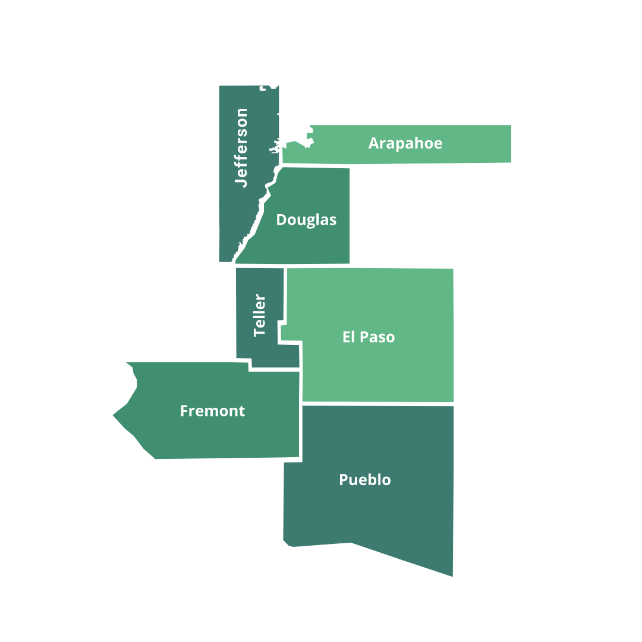
Right Law Group’s Colorado Springs office sits at 5030 Boardwalk Dr, Suite 225, Colorado Springs, CO 80919, and this city is the firm’s home market: the hub’s Colorado Springs and El Paso County pages map the local courts in detail, with dedicated pages for Fountain, Monument, and Manitou Springs. The defense practice extends across nine Colorado counties: El Paso and Teller in the 4th Judicial District, Douglas in the new 23rd, Arapahoe, Denver, Jefferson, Adams, Pueblo, and Fremont. Statewide charge guides live on the criminal defense practice hub and its siblings for DUI defense, domestic violence defense, assault defense, and misdemeanor defense.


Questions Colorado Springs Clients Ask Us First

What does a criminal defense lawyer do at each stage of a Colorado Springs case?

A defense lawyer protects you at every decision point: advising silence during investigation, arguing bond and protection-order terms at advisement, pushing the DA’s filing decision down, litigating suppression and preliminary hearings, negotiating the plea posture, and trying the case when trial is the right answer.

The stages matter because each one closes doors. Before filing, a lawyer can put mitigation or exculpatory evidence in front of the deputy DA while the charge is still a draft. After filing, the work shifts to discovery: police reports, body-camera footage, lab results, and witness statements get tested against the elements the state must prove. At 270 S. Tejon that testing happens through motions in county or district court, and most cases resolve through negotiation informed by how those motions go.

The practical takeaway: the earlier the lawyer enters, the more stages remain open. A lawyer hired the night of arrest can work the filing decision; a lawyer hired at arraignment cannot.

Related: right to counsel, free consultation.

How much does a criminal defense attorney cost in Colorado Springs?

There is no single number: fees follow the charge level, the court, and the work the case will actually need. Most defense firms, including this one, quote a flat fee after hearing the facts, and the first consultation at Right Law Group is free.

What moves the quote is predictable. A misdemeanor in county court with clean evidence costs less to defend than a district court felony heading toward a preliminary hearing and suppression litigation, and a case with a separate DMV proceeding or a protection-order fight adds workstreams. Flat fees exist so the decision to litigate never costs you extra by the hour; ask any lawyer you interview whether motions and trial preparation are inside the quoted fee or billed on top.

Ask for the fee structure in writing, and weigh it against what the conviction would cost: a felony’s decades of background-check, licensing, and firearm consequences reprice what a defense is worth.

Related: free consultation program, reviews.

How do I choose a criminal defense attorney in Colorado Springs?

Choose on three axes: local experience in the 4th Judicial District specifically, real trial and negotiation history with your charge type, and whether the lawyer explains your case in specifics, statutes, ranges, and deadlines, rather than reassurance.

Local knowledge is not a slogan in this district. The DA’s office at 105 E. Vermijo runs specialized units with their own policies; knowing how the DV unit treats recanting witnesses, or what DUI Court expects, changes outcomes. Former prosecutors from this district carry that map with them. Verify claims independently: read the lawyer’s client reviews, ask who will personally handle your hearings, and ask what the lawyer sees as the three decisive issues in your case after hearing the facts.

A useful interview question: “What is the first motion you would file, and why?” A specific answer tells you the lawyer is already working; a vague one tells you what the representation will feel like.

Related: our attorneys, case studies.

Is it worth hiring a lawyer for a misdemeanor charge in El Paso County?

Yes, and the math is straightforward: a class 1 misdemeanor carries up to 364 days in jail and a permanent record entry, and misdemeanor courtrooms move fast enough that unrepresented people routinely plead to convictions a lawyer would have kept off their record.

County court at 270 S. Tejon handles high volumes, which cuts both ways. Prosecutors have limited time per file, so a defense lawyer who shows up with a documented weakness or a mitigation package often finds room to negotiate that a defendant alone never hears about. Deferred resolutions and dismissals happen in misdemeanor court every week, but they are asked for, not offered. And some misdemeanors are heavier than they look: a DV-designated count carries firearm consequences, and a theft conviction of any class follows you through employment screening.

Before any plea, have counsel check the two clocks: the 18-month filing deadline under CRS 16-5-401, and whether the offense date puts you under the current 364-day scheme.

Related: misdemeanor defense practice, Colorado misdemeanor guide.

What happens at a video advisement in El Paso County?

The judge tells you the charges, addresses bond, and enters the mandatory protection order. In-custody defendants appear by video from the Criminal Justice Center every weekday at 1:30 p.m.; out-of-custody advisements are held Thursdays at 10 a.m.

Nothing about guilt is argued at this hearing, but two of its outputs shape the whole case. Bond conditions decide whether you go home and under what restrictions. The protection order under CRS 18-1-1001 restrains contact with alleged victims and witnesses until the case fully ends, and judges routinely add no-contact and residence terms in DV and assault cases. What you say matters too: the hearing is on the record, and statements about the incident can be used later.

Say nothing about the facts, ask for counsel, and get the protection order’s exact written terms before the day ends; an accidental text that evening can become a new charge.

Related: El Paso County court page, mandatory protection order.

How is bond set after an arrest in Colorado Springs?

A judge sets bond at or near the first advisement, weighing the charge, record, community ties, and flight risk. The output is a bond type, an amount, and conditions, and the conditions often matter more than the dollar figure.

In practice, El Paso County bonds arrive with strings: no-contact orders, alcohol monitoring in DUI cases, firearm surrender in DV cases, and supervision requirements. Violating a condition can revoke the bond entirely and add charges, which is why the first week is the most dangerous stretch of a case. Defense counsel can argue for lower amounts and lighter conditions at advisement, and can move to modify conditions later as the case develops, for example restoring contact once the alleged victim requests it and the court agrees.

If a condition is unworkable, a job that requires travel, a shared house, a child exchange, raise it through counsel immediately rather than bending the condition and hoping.

Related: bail concept, protection order violation charge.

What is the mandatory protection order that comes with every Colorado criminal case?

Under CRS 18-1-1001, every criminal case filed under Title 18 carries a protection order from first appearance until final disposition, restraining you from harassing, intimidating, retaliating against, or tampering with any witness or alleged victim.

The baseline order applies in a shoplifting case exactly as in an assault case. On top of it, courts add discretionary terms where the facts call for them: full no-contact, exclusion from a shared home, firearm surrender, and no-alcohol conditions are standard in domestic violence and assault dockets at 270 S. Tejon. The order is not optional and does not depend on what the alleged victim wants; only the court can modify it, on motion.

Treat the written order as the literal rulebook: indirect contact through friends, comments on social media, and “just logistics” texts have all produced new protection-order-violation charges in this county.

Related: CRS 18-1-1001, criminal protection order.

Will my Colorado Springs case be in county court or district court?

Misdemeanors and most traffic crimes are heard in El Paso County Court; felonies are heard in the 4th Judicial District Court. Both sit in the El Paso County Judicial Building at 270 S. Tejon St.

The split controls procedure. County court cases move directly toward arraignment and disposition, on faster timelines. Felony cases start with an advisement, and eligible defendants can demand a preliminary hearing where a judge tests whether probable cause supports each charged count; that hearing is the first structured opportunity to attack an overfiled case, and charges are reduced or dismissed at that stage with some regularity. Felony cases that survive move to district court arraignment, motions, and trial settings.

Read the case number on your paperwork: an M or T prefix signals county court, a CR in district court. Then confirm the courtroom through the Colorado Judicial Branch rather than showing up to the wrong division.

Related: felony classification, Colorado felony guide.

What is the difference between Colorado Springs Municipal Court and the El Paso County courts?

Municipal Court at 224 E. Kiowa St. enforces City of Colorado Springs ordinances; the county and district courts at 270 S. Tejon enforce state law. Different prosecutors, different judges, different records.

The city prosecutes its own ordinance violations, including many traffic matters and lower-level offenses that have state-law twins. Where conduct violates both codes, charging decisions determine which system you face, and occasionally both are possible. Municipal convictions are still real convictions with fines and, for some ordinances, jail exposure, and they still surface on background checks, but the procedures, deadlines, and negotiation practices differ from the state system in ways that reward counsel who works both buildings.

Do not treat a municipal summons as a formality: show up, and get advice before pleading, because some municipal resolutions have state-system consequences nobody mentions at the window.

Related: municipal court information, traffic offenses practice.

How many days do I have to act to protect my license after a Colorado Springs DUI arrest?

Seven days. Under CRS 42-2-126, you must request a DMV hearing in writing within seven days of receiving the notice of revocation, or the revocation takes effect without any hearing at all.

This is the deadline people miss, because it runs while they are still absorbing the arrest and it has nothing to do with any court date. The DMV action is administrative and entirely separate from the criminal case: a first excess-test result brings a nine-month revocation with restricted-license eligibility, and a refusal brings one year. The hearing is also the defense’s first chance to cross-examine the officer under oath, which can produce testimony that helps the criminal case later.

Request the hearing in writing, request that the officer appear, and get counsel involved before it happens; it is a small proceeding with outsized value.

Related: DMV hearing concept, Colorado DMV DUI page.

How long is the license revocation after a first DUI in Colorado?

For a first violation, nine months when an evidentiary test shows an excess result, and one year for refusing testing, under CRS 42-2-126. It is a revocation, not a suspension, and it is imposed by the DMV, not the criminal court.

The distinction is easy to miss: there is no single license suspension attached to the DUI conviction itself. The real structure is two separate proceedings: the DMV revocation can begin months before any conviction, and the criminal outcome does not undo it. Colorado’s express consent law is what authorizes testing demands in the first place, and refusal has its own separate price. Restricted-license eligibility can shorten the practical pain of the nine-month track for drivers who qualify.

If driving is your livelihood, tell your lawyer immediately: hearing strategy, restricted-license timing, and interlock decisions all change when a CDL or work vehicle is involved.

Related: express consent, CRS 42-2-126.

What penalties does Colorado law set for a first DUI conviction?

Under CRS 42-4-1307: five days to one year in jail, with the minimum mandatory unless suspended on the statute’s own conditions, a fine of $600 to $1,000, 48 to 96 hours of useful public service, and probation of up to two years.

Those are the conviction penalties only; the DMV revocation runs separately, and the collateral costs, insurance surcharges, employment and clearance review, and treatment obligations, arrive on their own schedules. The jail range surprises people in both directions: a mandatory minimum exists, but courts apply the statutory suspension conditions in many first-offense cases, which is exactly the kind of outcome that depends on how the case is presented and what alcohol evaluation and education steps are already underway by sentencing.

Starting treatment and education early is not an admission; it is practical mitigation that changes sentencing conversations. Ask counsel what to start before your first court date.

Related: DUI first offense, first DUI guide.

Is DWAI a lesser charge than DUI in Colorado?

Yes. DWAI, driving while ability impaired, alleges impairment to the slightest degree, and its first-offense penalties under CRS 42-4-1307 are lower: 2 to 180 days in jail (the 2-day minimum is mandatory, though the court may suspend it on completion of an alcohol evaluation and any ordered program), a $200 to $500 fine, and 24 to 48 hours of public service.

DWAI matters mostly as a destination: many Colorado DUI cases resolve as DWAI when the evidence has problems, because the reduction cuts the jail floor, the fine, and the license mathematics. A first DWAI does not by itself trigger the DMV revocation that a DUI test result does, though license points still apply. The charging difference often turns on the test number, the driving observed, and the field testing, all of which are contestable.

If you are offered a DWAI resolution, evaluate it against the evidence, not against fear: in a weak case it may still be overpaying, and in a strong one it may be the right exit.

Related: DWAI charge page, DWAI concept.

Who decides whether a Colorado Springs domestic violence case gets dismissed?

The 4th Judicial District DA’s Office, not the alleged victim. Once a DV-designated case is filed, no private person can drop it, and Colorado law restricts even the prosecutor’s ability to remove the designation through a plea.

The office maintains a dedicated domestic violence unit, and its deputies proceed without a cooperating witness in many cases, using 911 recordings, body-camera statements, photographs, and medical records. A recantation does not erase the original statement; it creates a credibility question the unit weighs against everything else. What actually produces dismissals is proof failure: an intimate-relationship element the state cannot establish, injuries inconsistent with the narrative, or suppression of the statements the case is built on.

If the alleged victim genuinely wants to communicate a changed account, that must move through defense counsel in a documented, pressure-free way; direct contact while the protection order stands creates new charges instead of dismissals.

Related: victim recanting, Colorado Springs DV lawyer.

What turns an ordinary charge into a domestic violence case in Colorado?

The relationship, not the conduct. Under CRS 18-6-800.3, domestic violence is an act or threatened act of violence, extended to coercive or controlling conduct, against someone with whom the accused has or had an intimate relationship.

The designation rides on top of an underlying charge, third-degree assault and harassment are the common carriers, and rewires the case: expect an arrest at the scene once officers find probable cause, a protection order with residence and contact terms, mandatory treatment on conviction, and the statutory bar on pleading to a non-DV offense absent a specific on-record showing. The intimate-relationship element covers current and former partners, and it is a fact the state must prove, which makes it a genuine litigation target in shorter or disputed relationships.

Never absorb a “minor” DV plea without counsel: a fourth DV misdemeanor is a class 5 felony, and the federal firearm ban attaches to qualifying misdemeanors, permanently.

Related: intimate relationship concept, domestic violence charge.

What dollar amounts make theft a felony in Colorado?

Two thousand dollars. Under CRS 18-4-401, theft of $2,000 to under $5,000 is a class 6 felony, and the classes climb with value to a class 2 felony at $1,000,000 or more. Below $2,000, theft is a misdemeanor or petty offense.

The valuation is therefore the case. Retail pricing versus replacement cost, aggregation of multiple takings, and disputed ownership all move charges across the felony line in one direction or the other. And one variant ignores value entirely: theft from the person of another, pickpocketing, a phone pulled from a hand, is a class 5 felony no matter what the item was worth, because the legislature priced the personal invasion, not the property.

If your case sits near a threshold, make the state prove its number; the difference between $1,950 and $2,050 is the difference between county court and a felony record.

Related: felony theft charge, CRS 18-4-401.

How are Colorado drug felonies leveled and fined?

On a four-level scale under CRS 18-1.3-401.5: DF4 carries 6 months to 1 year and $1,000 to $100,000; DF3, 2 to 4 years and $2,000 to $500,000; DF2, 4 to 8 years and $3,000 to $750,000; DF1, 8 to 32 years and $5,000 to $1,000,000.

The level follows the substance, the quantity, and the conduct alleged, with distribution charged above simple possession. Only DF1, reserved for the most serious distribution allegations, carries the $1 million fine ceiling, and most El Paso County drug cases are filed levels below it. Treatment-oriented resolutions and probation structures exist throughout the drug docket, including the 4th Judicial District’s Recovery Court, and they are argued for case by case.

Get the exact level and subsection off your charging document first; every conversation about outcomes starts from that letter and number, not from the worst theoretical number.

Related: drug distribution charge, drug possession charge.

Do Colorado weapons charges carry federal consequences too?

They can. State charges like POWPO run in state court, but firearm possession after a felony conviction, or after a qualifying domestic violence misdemeanor, independently violates 18 U.S.C. 922(g), and a state case can put possession on a federal radar.

The federal overlay matters most for two groups. People with old felony records who believe time has restored their rights are often wrong about federal law even where state paperwork looks favorable. And people resolving a DV misdemeanor without counsel frequently learn about the federal firearm ban years later, at a failed purchase check. In the state case itself, the decisive issues are usually the search that found the weapon and whether possession, actual or constructive, can be proven.

Before pleading to anything with a firearm element or a DV designation, get a specific answer on what happens to your gun rights under both systems.

Related: weapons charges page, weapons charges guide.

How does a criminal case affect a security clearance or a military career in Colorado Springs?

A pending charge can trigger command notification and clearance review well before any conviction, and the eventual outcome class, felony or misdemeanor, conviction or dismissal, largely determines the damage.

With Fort Carson, Peterson, Schriever, Cheyenne Mountain, and the Air Force Academy anchoring the local economy, El Paso County courts process service members and cleared contractors constantly. Alcohol and drug allegations draw specific scrutiny in clearance adjudication, and a DV outcome that triggers the federal firearm prohibition is career-ending for anyone who carries a weapon on duty. The defense strategy in these cases prices the collateral first: a resolution acceptable to a civilian may be unacceptable to a soldier, so the negotiation targets change.

Tell your lawyer about your clearance and command situation at the first conversation, not after a plea is drafted; it changes what “winning” means in your case.

Related: El Paso County hub page, DUI defense practice.

Does El Paso County have a Veterans Trauma Court?

Yes. The 4th Judicial District operates a Veterans Trauma Court among its problem-solving dockets, alongside a DUI Court and a Recovery Court, as the district attorney’s office describes in its own materials.

Problem-solving courts trade intensive supervision and treatment for outcomes that ordinary dockets do not offer, and the veterans track exists because this district serves one of the largest military populations in the country. Eligibility is determined through screening in the individual case, so admission can never be promised in advance; what a defense lawyer does is identify candidacy early, assemble the service and treatment history that supports it, and advocate for the referral.

If you or the person you are researching for served, say so in the first consultation. It is relevant to court selection, to mitigation, and sometimes to the entire shape of the resolution.

Related: 4th Judicial District DA’s office, our attorneys.

Is there a deadline for the DA to file criminal charges in Colorado?

Yes. Under CRS 16-5-401, most felonies must be filed within 3 years of the offense and misdemeanors within 18 months, with the clock pausing for up to 5 years while an accused is out of state.

These are filing deadlines, not arrest deadlines: the state complies by filing the charging document in time, even if you learn about it later. For cases under investigation but not yet filed, the window is also the defense’s window, because a lawyer can sometimes put context or exculpatory material in front of the deputy DA before the filing decision hardens. Certain offenses carry different periods, so the general rule is where analysis starts, not where it ends.

If you are contacted about something old, date-check it before anything else: an 18-month-stale misdemeanor allegation may simply be time-barred, and a letter citing the statute can end it.

Related: CRS 16-5-401, free consultation.

Do I have to answer police questions after a Colorado Springs arrest?

No. You must identify yourself in a lawful stop, but you are never required to explain, account for, or discuss the incident, and after arrest you have the right to counsel before questioning.

The Miranda framework means statements taken in custodial interrogation without warnings can be suppressed, but the more common problem is voluntary talking: people explain themselves at the scene, in the car, and at the CJC, and those statements, recorded on body cameras, become the state’s cleanest evidence. Officers are trained to keep you talking; courtesy does not require answering, and silence cannot lawfully be punished. The request that changes everything is one sentence: “I want a lawyer.”

Say it, then stop. Politeness is fine, explanation is not; every case described above gets harder to defend after an unadvised interview and easier after silence.

Related: Miranda rights, presumption of innocence.

Can charges be reduced after the 4th Judicial District DA files them?

Yes, routinely. Filed charges are a starting position taken from a police report; they move when the evidence moves, through preliminary hearings, suppression rulings, disputed valuations, element failures, and negotiated pleas.

The mechanics run through the same office structure described above: line deputies have latitude bounded by unit policy, supervisors approve deviations, and documented weaknesses give a deputy a defensible reason to move. Reductions have addresses: a felony theft becomes a misdemeanor when the valuation fails, an assault degree drops when the injury does not meet the statutory definition, a DUI becomes a DWAI when the testing has problems. The one hard statutory lock is the DV designation, which cannot be pled away absent the on-record showing described earlier.

Reductions are earned with evidence and timing, and the defense’s bargaining position is strongest before positions harden, which is one more argument for early counsel.

Related: plea bargain concept, plea bargain pros and cons.

What should I bring to a free consultation at Right Law Group’s Colorado Springs office?

Every piece of paper the system has given you: the summons or complaint, bond paperwork, the protection order, any DMV notice, the property receipt, plus a written timeline of events while your memory is fresh.

The documents let a lawyer read the actual charges, the exact statute and subsection, the court and division, and the deadlines already running, instead of guessing from your description. The DMV notice matters most urgently in DUI cases because of the seven-day hearing window. Names and contact information for witnesses help, as do photographs, texts, and any medical records you control. Bring your questions in writing too; consultations move fast and the list keeps you from leaving with the important one unasked.

The consultation is free and confidential whether or not you hire the firm, and the office at 5030 Boardwalk Dr, Suite 225 takes calls around the clock at 719-822-6227.

Related: free consultation, Right Law Group hub.

Your Advisement Date Is Already Set: Call Before It Arrives

Somewhere in the paperwork from your arrest there is a date, and the system is already preparing for it: a deputy DA is reading the police report, the protection order is drafted, and the DMV clock may already be running. Preparation on your side should start just as early. Call Right Law Group at 719-822-6227, any hour, or book a free consultation online. Former 4th Judicial District prosecutors, one office at 5030 Boardwalk Dr, Suite 225 in Colorado Springs, and a defense practice built for the El Paso County courtrooms.

Don’t Let One Wrong Decision Impact Your Life, Job or Freedom.

Getting You To A Better Place Fast

Should I hire a criminal defense attorney?

If you have been charged with a crime in Colorado Springs, you should always at least discuss your case with an experienced criminal defense attorney. They will be able to review your case and help you determine your best path forward. Criminal laws are not easy for individuals with no formal legal training to maneuver, and there is too much on the line to leave it all up to chance.

Is it worth getting a lawyer for a misdemeanor?

You may think that a misdemeanor charge is too minor to hire an attorney for, but that is likely a mistake. Misdemeanor charges can still carry serious consequences and have a negative impact on your future. Speaking with a criminal defense attorney about your misdemeanor charges as soon as possible will give you your best chance at a favorable outcome in your case.

How do I choose a criminal defense attorney?

When choosing a Colorado Springs criminal defense attorney, there are a few important factors to consider. Here are some questions you can ask your attorney before you hire them so that you can feel confident in your decision:

• What is your personal experience with cases like mine?

• What do you honestly think about my case?

• How are your legal fees structured?

• Who will be my point of contact, and how will most of our communication take place?
Law Firm Locations