




Legally reviewed by Jimmy Litle, Managing Attorney. A Deputy District Attorney in the 4th Judicial District from 2013 to 2021, he spent eight years filing and trying the same county court misdemeanor cases he now defends.
A misdemeanor in Colorado is a criminal charge below a felony, and as of March 1, 2022 there are only two classes: a class 1 misdemeanor (up to 364 days in jail and a $1,000 fine) and a class 2 misdemeanor (up to 120 days and $750). A conviction is still a permanent criminal record. A former prosecutor can often get a misdemeanor reduced, dismissed, or kept off your record.
A Colorado misdemeanor moves through the courts quickly, but the jail exposure is genuine and the conviction can sit on your background check for years. It is a criminal offense that sits below a felony, yet a conviction still produces a permanent record. This page explains how Colorado classifies misdemeanors after the 2022 sentencing overhaul, what the penalties and collateral consequences actually are, how prosecutors in El Paso, Douglas, Denver and surrounding counties handle these cases, and where an experienced criminal defense lawyer looks first to take them apart.
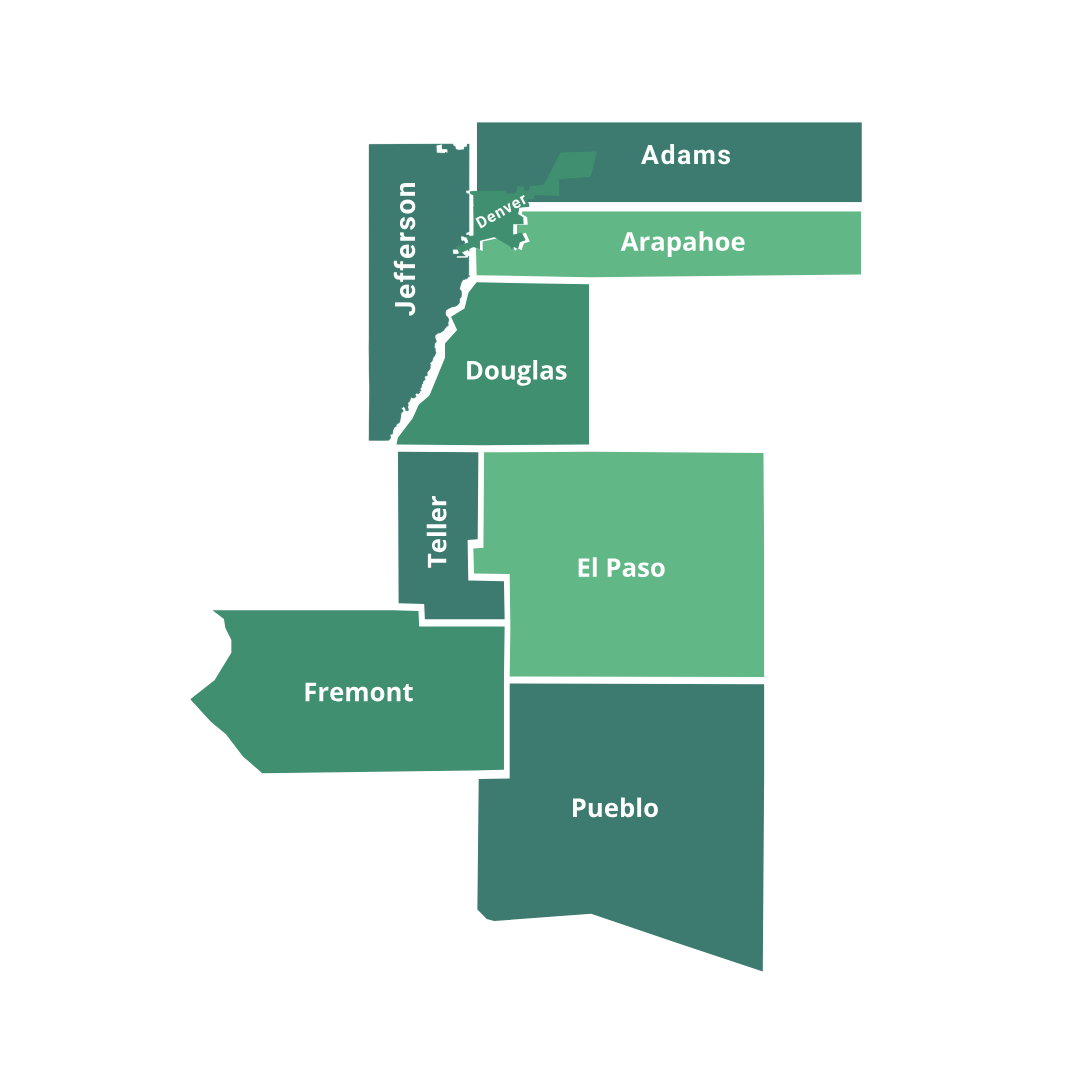
Right Law Group is built on a simple advantage: our attorneys used to be the prosecutors filing and trying these cases. We know how the other side decides what to charge, when they overcharge, and what makes them reconsider. We have offices in Colorado Springs, Castle Rock, Highlands Ranch, and Denver, and we serve clients across Adams, Arapahoe, Denver, Douglas, El Paso, Fremont, Jefferson, Pueblo, and Teller counties.
While misdemeanors carry less severe penalties than felonies, they can still result in a permanent criminal record, jail time, and other long-term consequences. That’s why it’s critical to work with a skilled criminal misdemeanor lawyer who can provide the best defense possible.
In Colorado, misdemeanors are considered mid-level crimes. They’re more serious than petty offenses and traffic infractions but less serious than felony charges.
Generally, there are two types of misdemeanors:
– Class 1 misdemeanors, which are punishable by up to 364 days in jail and/or a fine of up to $1,000.
– Class 2 misdemeanors, which carry a maximum jail sentence of up to 120 days and/or a fine of up to $750.
In addition to jail time or fines, misdemeanor convictions often result in probation. The terms of probation vary from case to case but may include requirements such as evaluations, classes (like anger management or substance abuse treatment), or community service.
It’s also important to consider the collateral consequences of a misdemeanor conviction. These can include:
– Impacts on employment prospects and career opportunities
– Difficulty obtaining or renewing professional licenses issued by the state
– Challenges in securing housing
– Immigration consequences, such as potential deportation or denial of naturalization
While the legal penalties are significant, these additional impacts can have long-term effects on your life, which is why every misdemeanor charge should be taken seriously.
A misdemeanor is a criminal offense less serious than a felony but more serious than a petty offense or a civil infraction. The dividing line matters: a misdemeanor carries the possibility of county jail, while a felony carries time in the Department of Corrections (prison) and a much heavier set of collateral consequences. A misdemeanor is prosecuted in county court rather than district court, and most misdemeanor cases move on a faster track than felonies.
The single most important fact about Colorado misdemeanors today is that the entire classification system changed. A 2021 law, Senate Bill 21-271, took effect on March 1, 2022 and collapsed the old three-class misdemeanor system into two. It also reduced petty offenses to a single category and created a new, non-criminal classification called a civil infraction. Many offenses that used to be class 3 misdemeanors or petty offenses were reclassified downward, and some were removed from the criminal code entirely. Any page that still lists a “class 3 misdemeanor” with a 60-day maximum is describing the law as it existed before 2022.
The penalties below come from C.R.S. section 18-1.3-501, the statute that sets misdemeanor sentencing, as amended by Senate Bill 21-271 for offenses committed on or after March 1, 2022.
A class 1 misdemeanor is the most serious misdemeanor level. It carries up to 364 days in county jail, a fine of up to $1,000, or both. The 364-day cap, rather than a full year, is deliberate: it keeps a class 1 misdemeanor one day short of the one-year threshold that triggers immigration consequences under federal law. Common class 1 misdemeanors include third degree assault, menacing without a weapon, and violating a protection order.
A class 2 misdemeanor carries up to 120 days in county jail, a fine of up to $750, or both. This is the level many former class 2 and class 3 misdemeanors landed at after the reform. It is still a criminal conviction that appears on a background check, even though the jail exposure is lower.
Before March 1, 2022, Colorado had three misdemeanor classes, and a class 3 misdemeanor carried up to six months in jail under the old law. The 2022 reform eliminated the class 3 misdemeanor entirely. Offenses that were class 3 misdemeanors were either moved up to class 2, reduced to a petty offense, or converted to a civil infraction. If you are reading older guidance that still references a class 3 misdemeanor, it predates the current law, and the actual classification of your charge needs to be confirmed against the statute in effect on the date of the alleged offense.
Below the misdemeanor level, a petty offense now carries up to 10 days in jail, a fine of up to $300, or both. A civil infraction, the new category created by the reform, is not a criminal offense at all and is punishable only by a fine of up to $100. Reclassifying conduct from a misdemeanor down to a civil infraction is significant, because a civil infraction does not create a criminal record. That distinction is one of the things a defense lawyer looks for when negotiating a resolution.
Not every misdemeanor fits the class 1 or class 2 framework. DUI and DWAI are unclassified misdemeanors, which means their penalties are set directly in the DUI statute rather than by the general misdemeanor sentencing rules. A first DUI carries from 5 days up to one year in jail and a fine of $600 to $1,000, with mandatory jail that the court can suspend if you complete alcohol education. A first DWAI, the lower-impairment offense, carries from 2 to 180 days and a fine of $200 to $500.
These cases also run on two separate tracks at once: the criminal case in county court and a DMV administrative license action that proceeds on its own deadline. A second DUI and a third DUI carry mandatory minimum jail and longer license revocation, and a fourth or subsequent DUI is no longer a misdemeanor at all; it is a class 4 felony. The takeaway is that an alcohol-related misdemeanor is more complicated than its label suggests, which is why our DUI defense page covers the administrative side in detail.
The jail time and fine are only the part of the sentence the court announces. The lasting cost of a misdemeanor is the criminal record itself and the collateral consequences that follow it. A misdemeanor is not a minor event that disappears; it is a conviction that landlords, employers, and licensing boards can see for years.
A misdemeanor conviction can cost you a job offer or a promotion, because most employers run background checks and many treat any criminal conviction as disqualifying. It can block a rental application, because landlords screen the same way. It can threaten a professional license held by a nurse, a teacher, a commercial driver, a real estate agent, or anyone whose work depends on a clean record. For a domestic violence misdemeanor, the consequences extend to a mandatory protection order and the loss of the right to possess a firearm. For non-citizens, certain misdemeanors carry immigration consequences, which is part of why Colorado capped the class 1 sentence at 364 days. The point is not to alarm you, but to be accurate: the conviction usually outlasts the sentence, and that is why keeping the conviction off your record is often the real goal of the defense.
Misdemeanor cases are not treated casually by the prosecution, but they are handled in volume, and that volume is where the defense finds its opening. As former prosecutors, our attorneys know that a county-court docket moves fast and that many misdemeanor files have gaps the office never closes before the case is set for resolution.
The charging decision is the first pressure point. A misdemeanor is often the result of an officer charging the most serious thing the facts might support, not the thing the evidence actually proves. A shoving match becomes third degree assault; a heated argument becomes menacing; a misunderstanding at a store becomes theft. Testing whether the filed charge matches the provable facts frequently opens the door to a reduction.
The evidence behind a misdemeanor is the second. Misdemeanor cases are built on body-camera footage, witness statements, and statements the accused person made before they had a lawyer, and each of those is contestable. Statements taken in violation of your rights can be suppressed, and witnesses who seemed certain at the scene often are not. We examine how the stop, the contact, and any search were conducted, because evidence obtained unlawfully can be excluded.
The local court is the third. A misdemeanor in the El Paso County courts in the 4th Judicial District is not handled the same way as one in the Douglas County courts in the 18th Judicial District or the Denver courts in the 2nd Judicial District. Each office has its own diversion programs, its own tendencies on reductions, and its own approach to deferred judgments. Knowing the local prosecutors is part of how a misdemeanor gets resolved without a conviction.
Misdemeanors cover a wide range of conduct. The ones we defend most often include:
Every case is different, but the defenses that come up most often in Colorado misdemeanor cases include:
These are a few of the many misdemeanor and alcohol-related cases our attorneys have resolved. Every case is different and past results do not guarantee a particular outcome, but they show the kind of work we do.
You can read more in our case studies and client reviews.
Our former-prosecutor bench has handled misdemeanor cases from both sides of the courtroom. Our attorneys move quickly to get ahead of the prosecution: we obtain and review the body-camera footage, police reports, and any witness statements, test whether the filed charge actually matches the evidence, file early motions where statements or a search violated your rights, identify whether you qualify for diversion or a deferred judgment, and open conversations with the district attorney about a reduction or dismissal before the case builds momentum. No lawyer can guarantee a result, but early, informed defense work is what creates options.
If you or someone you love has been charged with a misdemeanor in Colorado, the next decision matters more than the label on the charge. Talk to a criminal defense attorney before you speak with police or prosecutors again. Right Law Group offers a free, confidential consultation, and we will review the state’s evidence with you and explain exactly where you stand. Call or text 719-822-6227.
Yes. A misdemeanor is a real criminal charge that can carry jail, a fine, and a permanent criminal record, even though it is less serious than a felony. A class 1 misdemeanor carries up to 364 days in jail.
The mistake people make is treating a misdemeanor as something that will simply go away. It will not. A misdemeanor conviction shows up on background checks run by employers and landlords, it can threaten a professional license, and for some offenses it carries firearm or immigration consequences. The court-imposed jail and fine are often the smallest part of the real cost. Most misdemeanors are prosecuted in county court on a faster track than felonies, but the conviction is just as permanent.
Because the consequences last far longer than the sentence, the goal in many cases is to keep the conviction off your record rather than only to reduce the penalty.
Related: Felony charges in Colorado, Criminal defense attorneys
Two. As of March 1, 2022, Colorado has only a class 1 misdemeanor and a class 2 misdemeanor. The old three-class system, which included a class 3 misdemeanor, was eliminated by Senate Bill 21-271.
Before the reform, Colorado had three misdemeanor classes plus several petty-offense categories. The 2021 law collapsed the three classes into two, reduced petty offenses to a single category, and created a brand-new non-criminal classification called a civil infraction. Many offenses that were class 3 misdemeanors were reclassified downward to a petty offense or a civil infraction, and some were removed from the criminal code. The change applies to offenses committed on or after March 1, 2022.
If you are reading older guidance that lists three misdemeanor classes, it predates the current law, and the classification of your charge depends on the date of the alleged offense.
Related: Class 1 misdemeanor, Class 2 misdemeanor
A class 1 misdemeanor is the most serious misdemeanor level, carrying up to 364 days in county jail, a fine of up to $1,000, or both, under C.R.S. section 18-1.3-501.
The 364-day cap is one day short of a full year, and that is intentional. A sentence of one year or more can trigger immigration consequences under federal law, so Colorado set the class 1 maximum at 364 days to avoid that result. Common class 1 misdemeanors include third degree assault, menacing without a weapon, and protection order violations. The maximum is a cap, not a mandatory sentence, and many class 1 cases resolve well below it.
Because the exposure on a class 1 misdemeanor is real, the priority is usually a reduction to a lower level or a resolution that avoids a conviction altogether.
Related: Third degree assault, Class 2 misdemeanor
A class 2 misdemeanor carries up to 120 days in county jail, a fine of up to $750, or both, under C.R.S. section 18-1.3-501. It is the lower of Colorado’s two current misdemeanor classes.
After the 2022 reform, the class 2 misdemeanor became the level where many former class 2 and class 3 offenses landed. The jail exposure is lower than a class 1, but a class 2 conviction is still a criminal conviction that appears on background checks and can affect employment and housing. The 120-day figure is a maximum, and first-time class 2 cases frequently resolve without any jail at all.
Because even a class 2 conviction leaves a record, the question worth asking early is whether the case can be reduced to a petty offense or a non-criminal civil infraction.
Related: Class 1 misdemeanor, Class 3 misdemeanor
No. The class 3 misdemeanor was eliminated on March 1, 2022. Senate Bill 21-271 collapsed Colorado’s three misdemeanor classes into two, so the only classes that remain are class 1 and class 2.
Under the old law, a class 3 misdemeanor carried up to six months in jail. When the reform took effect, the offenses that had been class 3 misdemeanors were reassigned: some moved up to class 2, some dropped to a petty offense, and some became civil infractions, which are not criminal at all. The result is that the term “class 3 misdemeanor” no longer describes any current Colorado classification.
If your charge arose from conduct before March 1, 2022, the old classes can still apply, so the date of the alleged offense determines which framework governs your case.
Related: Class 2 misdemeanor, Misdemeanor 1 in Colorado
Usually not. A first-time misdemeanor, especially a class 2 misdemeanor or a non-violent class 1, frequently resolves without jail through probation, a diversion program, or a deferred judgment.
Courts treat a first offense differently from a repeat one. For a person with no record, the realistic outcomes are often probation, community service, classes, or a deferred judgment that leaves no conviction once completed. The jail maximums, 364 days for a class 1 and 120 days for a class 2, are caps the court rarely imposes on a first offense with good mitigation. Some misdemeanors carry mandatory minimum jail, most notably DUI, and those follow their own rules.
The way a first offense actually resolves depends on the charge, the facts, and the mitigation your lawyer presents early, which is why getting counsel involved before the first court date matters.
Related: DUI first offense, Criminal defense attorneys
It depends on the class. A class 1 misdemeanor carries up to 364 days in county jail, and a class 2 misdemeanor carries up to 120 days, under C.R.S. section 18-1.3-501.
Those are maximums, not expected sentences. A petty offense, which sits below the misdemeanor level, carries up to 10 days, and a civil infraction carries no jail at all, only a fine of up to $100. DUI and DWAI are unclassified misdemeanors with their own jail ranges set in the DUI statute, including mandatory minimums that increase with each prior offense. Whether any jail is realistic in your case depends on the charge level and your record.
For most first-time, non-violent misdemeanors, the realistic exposure is far below the statutory maximum, and a defense lawyer can give you a grounded estimate once the charge and evidence are clear.
Related: DWAI charges, Class 1 misdemeanor
A civil infraction is a non-criminal violation created by the 2022 misdemeanor reform, punishable only by a fine of up to $100. It does not carry jail and does not create a criminal record.
Senate Bill 21-271 introduced the civil infraction as the lowest tier in Colorado’s offense structure, below both misdemeanors and petty offenses. The key feature is that a civil infraction is not a crime, so it does not appear as a criminal conviction on a background check. The reform reclassified a number of lower-level offenses, including some former class 3 misdemeanors and petty offenses, as civil infractions. Negotiating a charge down to a civil infraction can therefore mean the difference between a criminal record and none.
Because the line between a criminal misdemeanor and a non-criminal infraction is so consequential, it is one of the first things a defense lawyer evaluates.
Related: Class 2 misdemeanor, Criminal defense attorneys
Yes, for most offenses. A first, second, or third DUI is an unclassified misdemeanor, meaning its penalties are set directly in the DUI statute rather than under the general misdemeanor classes. A fourth or subsequent DUI is a class 4 felony.
A first DUI carries from 5 days up to one year in jail and a fine of $600 to $1,000, with mandatory jail the court can suspend if you complete alcohol education. A second DUI and third DUI carry mandatory minimum jail that increases with each offense. DUI cases also run alongside a separate DMV license action, so there are two proceedings to manage at once.
Because a DUI is more complex than an ordinary misdemeanor, our DUI defense page walks through both the criminal and the DMV sides.
Related: DUI first offense, DWAI charges
A DUI means your ability to drive was substantially impaired, while a DWAI means your ability was affected to the slightest degree. DWAI is the lower-impairment offense and carries lighter mandatory penalties.
Both are unclassified misdemeanors, but they sit at different thresholds. A DUI generally involves a blood-alcohol level of 0.08 or more, or proof of substantial impairment, while a DWAI can be charged at a level as low as 0.05. A first DWAI carries from 2 to 180 days in jail and a fine of $200 to $500, lower than a first DUI’s 5-day-to-one-year range. Prosecutors sometimes offer a DWAI as a reduction from a DUI, which can lower the penalties and the points against your license.
Whether a DWAI is the right resolution depends on the evidence of impairment, the chemical-test results, and how the stop was conducted.
Related: DWAI charges, DUI defense in Colorado
Yes. Third degree assault under C.R.S. section 18-3-204 is a class 1 misdemeanor, the most serious misdemeanor level, carrying up to 364 days in jail.
Third degree assault means knowingly or recklessly causing bodily injury to another person, or causing injury with a deadly weapon through criminal negligence. It is the most common assault charge filed at the misdemeanor level, and it often arises from fights, domestic incidents, or confrontations that escalate. Because it is a class 1 misdemeanor rather than a felony, it is handled in county court, but a conviction still creates a permanent record and, when tied to a domestic relationship, can trigger a protection order and firearm restrictions.
Self-defense and a dispute over who caused the injury are common defenses, and the charge is sometimes reduced where the evidence of intent or injury is weak.
Related: Third degree assault, Assault defense in Colorado
It can be either. Menacing under C.R.S. section 18-3-206 is a class 1 misdemeanor by default, but it becomes a class 5 felony when a deadly weapon is used or the victim is led to believe one is present.
Menacing means knowingly placing or attempting to place another person in fear of imminent serious bodily injury. The presence of a weapon, real or apparent, is what moves the charge from a misdemeanor to a felony, which is a substantial jump in exposure. Because the felony version turns on the weapon element, disputing whether a weapon was actually used or displayed is often the central issue in a menacing defense.
Whether your menacing charge is a misdemeanor or a felony depends on the specific allegation, so confirming the exact charge and statute is the first step.
Related: Menacing, Felony charges in Colorado
Yes. Knowingly violating a valid protection order under C.R.S. section 18-6-803.5 is a class 1 misdemeanor, carrying up to 364 days in jail.
A protection order violation is charged when a person subject to a valid order knowingly does something the order forbids, such as contacting the protected party or going to a prohibited location. These charges frequently arise in domestic violence cases, where a mandatory protection order is issued at the first appearance. Even contact the alleged victim initiated or invited can lead to a charge, because the order binds the restrained person regardless of the other party’s wishes.
Because these cases often turn on what the order actually said and whether the contact was knowing, the precise terms of the order are central to the defense.
Related: Protection order violation, Domestic violence defense
Often, yes. Possessing a small amount of a controlled substance under C.R.S. section 18-18-403.5 is frequently a level 1 drug misdemeanor, though larger amounts or certain substances can raise it to a drug felony.
Colorado treats most simple possession of personal-use amounts as a drug misdemeanor rather than a felony, reflecting a policy shift over the past several years toward treatment over incarceration for low-level drug offenses. The line between a drug misdemeanor and a drug felony depends on the type and quantity of the substance, and possession with intent to distribute is charged far more seriously than simple possession.
Many drug-possession cases qualify for diversion or treatment-based resolutions that avoid a conviction, which is one of the first options a defense lawyer explores.
Related: Drug possession, Drug charges in Colorado
Theft is a misdemeanor when the value of the property is under $2,000, and it becomes a felony at $2,000 or more. The value of what was allegedly taken sets the level of the charge.
Colorado grades theft by dollar value, so the same conduct can be a petty offense, a misdemeanor, or a felony depending on the amount. Theft under $300 is a petty offense, theft from $300 to under $2,000 is a misdemeanor, and theft of $2,000 or more is a felony graded upward as the value rises. Because the value drives the charge, disputing the alleged value, or the basis for it, is often a key part of a theft defense.
If you are facing a theft charge near one of those dollar thresholds, the exact value claimed can be the difference between a misdemeanor and a felony.
Related: Felony theft, Theft defense in Colorado
Yes, and it happens often. A class 1 misdemeanor can sometimes be negotiated down to a class 2 misdemeanor, a petty offense, or a non-criminal civil infraction, depending on the charge and the evidence.
Reductions are one of the most common favorable outcomes in misdemeanor cases. Where the evidence is weak, where the original charge was overfiled, or where strong mitigation exists, prosecutors frequently agree to a lower charge. Reducing a misdemeanor to a civil infraction is especially valuable, because a civil infraction is not a crime and leaves no criminal record. The same negotiation can convert a DUI to a DWAI in the right case.
Whether a reduction is realistic depends on the strength of the state’s evidence, which is exactly what a defense lawyer evaluates first.
Related: Class 2 misdemeanor, Criminal defense attorneys
A deferred judgment is an agreement where you plead guilty but the court holds the conviction in abeyance while you complete conditions, and if you finish them, the case is dismissed and no conviction enters.
Deferred judgments are widely used in Colorado misdemeanor cases, especially for first-time offenders. You enter a plea, but the court does not formally convict you; instead, it sets a period during which you complete probation-style conditions such as classes, community service, or restitution. Complete them, and the plea is withdrawn and the charge dismissed, which generally allows the record to be sealed. Miss them, and the conviction enters.
A deferred judgment can be the difference between carrying a misdemeanor conviction for life and emerging with no record, so eligibility is something to discuss early with a defense lawyer.
Related: Criminal defense attorneys, Case studies
Often, yes, particularly when the case ends without a conviction or after a waiting period for certain convictions. A dismissal, an acquittal, or a completed deferred judgment generally allows the record to be sealed.
Sealing keeps the case from appearing on most background checks, which protects housing and employment. Our attorneys have obtained dismissals followed by sealing in misdemeanor-level cases, including a DUI dismissed and sealed by Alexis Austin Litle and a domestic violence case dismissed and sealed by Jimmy Litle. Eligibility and timing depend on the disposition and the specific charge.
Because the path to sealing depends on how the case is resolved, planning the resolution with sealing in mind is part of the overall strategy.
Related: Case studies, Client reviews
Yes. A misdemeanor conviction is a criminal record that appears on standard background checks run by employers, landlords, and licensing boards, unless and until the record is sealed.
This is the consequence people most often underestimate. A class 1 or class 2 misdemeanor conviction can cost a job offer, block a rental application, or threaten a professional license held by a nurse, teacher, commercial driver, or real estate agent, even when no jail was imposed. A non-criminal civil infraction, by contrast, does not appear as a criminal conviction, which is part of why reducing a charge to that level is so valuable. These professional consequences are often more damaging than the court sentence itself.
Because the record outlasts the sentence, anyone who holds a professional credential should raise it with a defense lawyer immediately, since it can shape the entire defense strategy.
Related: Class 2 misdemeanor, Criminal defense attorneys
A misdemeanor is a less serious crime carrying up to 364 days in county jail, while a felony is more serious and carries time in the state Department of Corrections, from one year to life depending on the class.
The two differ in more than sentence length. Misdemeanors are prosecuted in county court and felonies in district court, with additional procedural stages for felonies. The collateral consequences also differ: a felony conviction can cost you the right to vote while incarcerated, the right to possess a firearm, and a far wider range of jobs and licenses. Some charges, such as menacing and certain thefts, can be charged as either a misdemeanor or a felony depending on the facts.
Whether a charge is a misdemeanor or a felony drives everything about the exposure, so confirming the exact charge is the first step.
Related: Felony charges in Colorado, Menacing
It is strongly advisable. Because a misdemeanor conviction creates a permanent record with real collateral consequences, having a criminal defense lawyer can be the difference between a conviction and a dismissal, reduction, or deferred judgment.
People often assume a misdemeanor is too minor to justify a lawyer, then learn later that the conviction blocked a job or a rental. A defense lawyer tests whether the charge fits the facts, identifies diversion or deferred-judgment eligibility, challenges unlawfully obtained evidence, and negotiates with the prosecutor from a position of preparation. Many of these options are time-sensitive and are easier to secure before the first court date than after.
A free consultation is a no-cost way to understand your exposure and your options before you make any decisions.
Related: Criminal defense attorneys, Free consultation
County court, in the county where the alleged offense occurred. Misdemeanors are handled in county court, while felonies go to district court, and the two operate on different tracks.
For our clients, that usually means the El Paso County courts in the 4th Judicial District, the Douglas County courts in the 18th Judicial District, the Denver courts in the 2nd Judicial District, or the Jefferson County courts in the 1st Judicial District, depending on where the alleged offense happened. Each county has its own prosecutors, its own diversion programs, and its own tendencies on reductions, and dismissals there often come from a motion to suppress, a challenge to the file, or a diversion program designed to result in dismissal.
Knowing the local court and the prosecutors who staff it is part of why a defense lawyer with experience in your county matters.
Related: Colorado Springs criminal defense, Castle Rock criminal defense
A misdemeanor can affect more than your criminal record. For a student, it can trigger university disciplinary proceedings, threaten financial aid, and complicate future job and graduate-school applications, on top of the court case.
Students in Colorado Springs, Denver, and the Front Range often face misdemeanor charges arising from alcohol, disorderly conduct, or minor altercations. The school’s disciplinary process runs separately from the criminal case and has its own standards, so a resolution that protects your record, such as a diversion program or a deferred judgment, can also protect your standing at school. Because both proceedings are happening at once, coordinating them matters.
A defense lawyer can help you handle the criminal case in a way that minimizes the collateral damage to your education and future plans.
Related: Disorderly conduct defense, Criminal defense attorneys
A former prosecutor knows how the other side files and resolves misdemeanor cases, because they used to do it. They understand how charging decisions are made, where offices tend to overcharge, and what evidence problems make a prosecutor willing to reduce or dismiss.
At Right Law Group, our attorneys served as Colorado prosecutors before moving to the defense side. That experience shapes how we test the filed charge against the evidence, attack unlawfully obtained statements, and identify the diversion and deferred-judgment options a given office is likely to offer. Jimmy Litle has secured a DUI dismissal and a domestic violence dismissal and sealing, and Alexis Austin Litle has obtained a DUI dismissal and sealing, a few of the many results in our case studies.
No lawyer can guarantee an outcome, but insider knowledge of the prosecution’s playbook is a real advantage. A free consultation is the place to start.
Related: About Right Law Group, Case studies
It helps. Misdemeanor cases are resolved in the county where they are filed, in front of local prosecutors and judges, so a lawyer who regularly works in that courthouse understands how these cases tend to go there.
We defend misdemeanor cases in Colorado Springs and El Paso County, Castle Rock and Douglas County, Denver, Highlands Ranch, and the surrounding counties. Local familiarity with the district attorney’s office that filed your case, and with the diversion programs it offers, informs how we approach negotiation and motions.
A free consultation is the place to find out how your specific county and court are likely to handle the charge.
Related: Colorado Springs criminal defense, Highlands Ranch criminal defense
Drug Possession In Colorado Is Now A Misdemeanor After HB 19-1263
I Committed a Hit-and-run. How Long Will It Take for the Police to Find Me?
Is Making a Threat Illegal? How Far is Too Far?
Burglary vs Theft: What Is The Difference?
You can also visit these pages:
Unlawful Use of Marijuana in a Detention Facility