




Legally reviewed by Jimmy Litle, Managing Attorney. A Deputy District Attorney in the 4th Judicial District from 2013 to 2021, he led the office’s Vehicular Homicide Team and prosecuted the full range of Colorado traffic and driving cases before moving to the defense side.
Reckless driving in Colorado, under C.R.S. section 42-4-1401, is driving with a wanton or willful disregard for the safety of people or property. It is a class 2 misdemeanor traffic offense carrying up to 90 days in jail, a fine up to $300, and 8 points against your license on a first conviction. It is also the charge prosecutors most often reduce a DUI down to, so what you are charged with is not always where the case ends.
A reckless driving citation in Colorado is a class 2 misdemeanor traffic offense, which means a conviction puts points on your license and a crime on your record, not just a fine. It is prosecuted in court, not a ticket you can mail in. This page explains how Colorado defines reckless driving, how it differs from careless driving and a DUI, what the penalties and license points actually are, how prosecutors in El Paso, Douglas, and Denver counties build these cases, and where a defense lawyer looks first to take them apart.
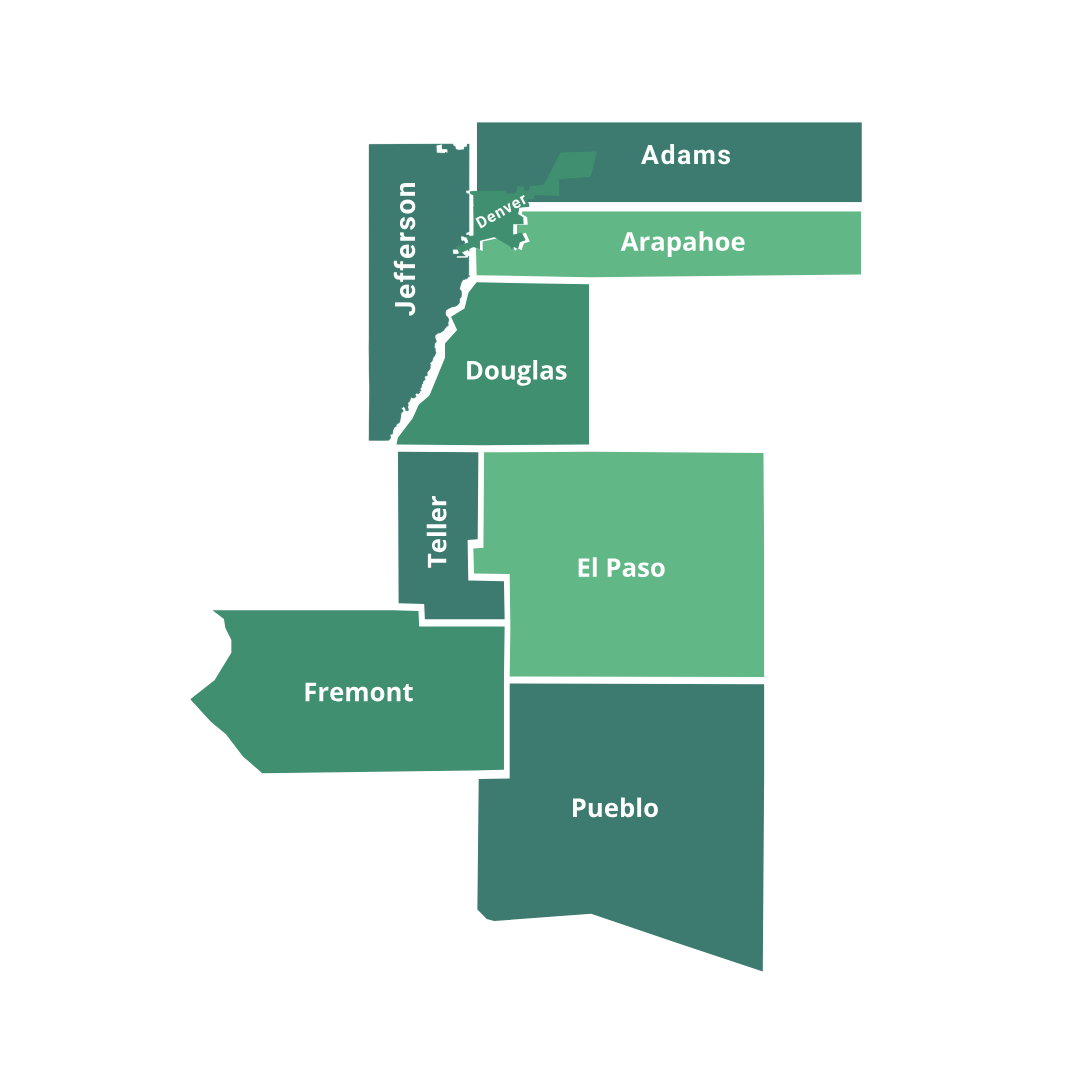
Right Law Group is built on a straightforward advantage: our attorneys used to be the prosecutors who filed and tried these cases. We know how the other side decides what to charge, when a traffic case gets overcharged, and what makes a district attorney willing to reduce or dismiss. We have offices in Colorado Springs, Castle Rock, Highlands Ranch, and Denver, and we serve clients across Adams, Arapahoe, Denver, Douglas, El Paso, Fremont, Jefferson, Pueblo, and Teller counties.
Call Now for a Free Consultation
A very common traffic offense we see is careless driving. This often occurs when you’re involved in an accident and the police determine you’re at fault—or even if both parties share fault. Careless driving means operating a vehicle in an imprudent manner, such as disregarding road width, grade, curves, traffic signals, or other road conditions.
It’s an extremely broad statute, and it can apply to situations where someone is simply driving a little too fast for conditions or failing to adjust to a curve or stoplight. It’s based on a negligence standard, so it doesn’t require any intentional or reckless behavior—just that your actions weren’t reasonable under the circumstances.
A more serious offense is reckless driving, which involves operating a vehicle with willful and wanton disregard for the safety of others or for traffic laws. This charge reflects a higher level of culpability and carries more severe penalties than careless driving.
Another common traffic-related offense is leaving the scene of an accident, or failure to report an accident. Under Colorado law, you have a legal duty to stop at the scene of any accident—whether it involves property damage, injury, or even death. This duty exists even if the other driver flees.
Leaving the scene is considered a strict liability offense, meaning the prosecution doesn’t have to prove you intended to leave—just that you did. It’s similar with failure to report: even in a minor fender bender, such as one that happens in a parking lot, you must either call the police, report it online, or contact the non-emergency line to file a report.
Not reporting an accident—even if you weren’t trying to avoid law enforcement—can still result in charges. And if the accident caused serious bodily injury (such as a broken bone or permanent disability) and you left the scene, you could be facing felony charges.
In many of these cases, restitution also becomes a factor. Restitution allows the victim to recover damages—like medical bills or property damage—through the criminal court process. While restitution applies to many types of crimes, it’s especially common in traffic-related cases.
Reckless driving under C.R.S. section 42-4-1401 is driving a motor vehicle, bicycle, electrical assisted bicycle, electric scooter, or low-power scooter “in such a manner as to indicate either a wanton or a willful disregard for the safety of persons or property.” That definition has two parts that matter. “Wanton or willful disregard” is a high mental state: the driver has to have acted with conscious indifference to a known risk, not just made a mistake. And the risk has to be to the safety of people or property, not merely a rule broken on an empty road.
This is why the exact conduct, and what the officer wrote in the report, decides the case. There is no fixed speed that automatically makes driving “reckless.” Excessive speed can support the charge, but so can weaving through heavy traffic, racing, passing on a blind curve, or running multiple red lights with other cars present. The prosecution has to prove the disregard for safety, and a charge based on speed alone, with no traffic and no danger to anyone, is often vulnerable.
Because reckless driving is a criminal traffic offense, it is filed and prosecuted in court, with the same proof-beyond-a-reasonable-doubt standard as any other crime. That distinguishes it from a speeding ticket or other civil traffic infraction, which carries only a fine and points and no jail.
People use these terms interchangeably, but Colorado treats them as separate offenses with different elements and very different consequences. Knowing which one actually fits the facts can change the entire case.
Careless driving under C.R.S. section 42-4-1402 is driving “in a careless and imprudent manner, without due regard for the width, grade, curves, corners, traffic, and use of the streets and highways.” That is a negligence standard, a lower bar than reckless driving’s wanton or willful disregard. Careless driving is also a class 2 misdemeanor traffic offense, but it carries only 4 points instead of reckless driving’s 8, and it becomes a class 1 misdemeanor traffic offense only when it is the proximate cause of bodily injury or death to another person. Because careless is the lesser offense, reducing a reckless charge to careless is one of the most common favorable outcomes a defense lawyer pursues.
A DUI or DWAI under C.R.S. section 42-4-1301 is a different charge entirely, based on impairment by alcohol or drugs rather than the manner of driving. The connection that matters to most clients runs the other way: reckless driving is frequently the charge a DUI gets reduced to in a negotiated plea, often called a “wet reckless.” The firm covers that comparison in detail on its wet reckless versus DUI page, and the wet reckless concept is explained on the Hub.
Reckless endangerment under C.R.S. section 18-3-208 is yet another offense, a class 2 misdemeanor for conduct that creates a substantial risk of serious bodily injury to another person. It is not a traffic charge, but it sometimes appears alongside a driving charge, and the firm explains it on its reckless endangerment page.
Reckless driving penalties split into the criminal sentence, the license consequences handled separately by the DMV, and the long-term collateral costs. The criminal ranges come from the traffic-offense penalty schedule in C.R.S. section 42-4-1701, and the repeat-offense penalty is set directly in the reckless driving statute itself.
A first reckless driving conviction is a class 2 misdemeanor traffic offense. Under the traffic penalty schedule in C.R.S. section 42-4-1701, a class 2 misdemeanor traffic offense carries 10 to 90 days in county jail, a fine of $150 to $300, or both. A conviction also adds 8 points to your driving record.
A second or subsequent reckless driving conviction carries a heavier statutory penalty written into C.R.S. section 42-4-1401 itself: a fine of $50 to $1,000, imprisonment in the county jail for 10 days to 6 months, or both. The point hit remains 8 points per conviction.
The 8 points a reckless driving conviction carries are what often hurt the most, because they are handled by the DMV independently of the criminal case. Under the point system in C.R.S. section 42-2-127, an adult driver who accumulates 12 points within any 12 months, or 18 points within any 24 months, faces license suspension. A single reckless driving conviction puts you two-thirds of the way to the 12-point threshold by itself, so a second moving violation in the same year can trigger a suspension. For drivers under 18 and 18-to-20-year-olds, the thresholds are lower. Reckless driving is also one of the major offenses that counts toward a habitual traffic offender designation, which carries a multi-year revocation.
The criminal sentence and the points are only part of the cost. A reckless driving conviction is a traffic misdemeanor on your record, not a civil ticket, so it can show up on background checks run by employers and insurers. Auto insurance premiums commonly rise sharply after a reckless conviction, and for anyone who drives for a living, a commercial driver included, the points and the conviction itself can threaten the job. Those collateral consequences are often the real reason to fight a charge that looks minor on paper.
Reckless driving cases are built almost entirely on one officer’s account of how the car was being driven. As former prosecutors, our attorneys know that the charge stands or falls on whether the state can prove “wanton or willful disregard,” and that this mental state is rarely as clear as the report makes it sound.
The mental state is the first pressure point. Reckless driving requires conscious disregard of a known risk, which is a meaningfully higher bar than the ordinary negligence that supports careless driving. A driver who was speeding to get out of a dangerous situation, reacting to road conditions, or simply driving badly without the conscious indifference the statute requires often has a real defense to the reckless charge, even if some lesser violation fits.
The evidence behind the officer’s conclusion is the second. Many reckless cases rest on a visual estimate of speed, a brief observation in traffic, or a dashcam clip that, on review, shows far less than the citation claims. We obtain the body-worn and dash-camera footage, the radar or lidar calibration and certification records where speed is alleged, and the computer-aided dispatch timeline, and we test whether the actual evidence supports a finding of disregard for safety or only a routine traffic violation.
The stop itself is the third. If the traffic stop lacked reasonable suspicion, or the officer expanded it beyond its lawful scope, the evidence that followed can be challenged and potentially suppressed. Gannon Becker, for example, secured a complete dismissal of a driving case where the stop lacked the reasonable suspicion the law requires. The same scrutiny we apply to the manner-of-driving evidence applies to whether police had the legal basis to stop the car at all.
For many clients, reckless driving is not the original charge but the destination. Prosecutors regularly reduce a DUI to reckless driving as a negotiated plea, the arrangement many people call a “wet reckless,” when the impairment evidence has problems but the state still wants a conviction on something. The trade is significant: reckless driving avoids the mandatory alcohol-education and monitored-sobriety requirements, the longer license revocation through the DMV express-consent process, and the mandatory minimum jail that attaches to a second or third DUI.
The same dynamic appears in more serious vehicular cases. A vehicular assault or vehicular homicide charge, which are felonies, can sometimes be negotiated down toward a misdemeanor driving offense when causation or the recklessness element is genuinely in dispute. Our attorneys have done exactly this kind of work. Jimmy Litle and Alexis Austin Litle reduced a DUI-related vehicular assault to careless driving as a traffic infraction, and Jimmy Litle resolved a hit-and-run with serious bodily injury with a deferred sentence to careless driving. Whether a reduction is realistic depends on the strength of the state’s evidence, which is the first thing a defense lawyer evaluates.
Every case is different, but the defenses that come up most often in Colorado reckless driving cases include the following:
Our former-prosecutor bench has handled traffic and vehicular cases from both sides of the courtroom. Our attorneys move quickly to get ahead of the prosecution: we obtain the citation, the officer’s report, and any body-worn or dash-camera footage; we request radar or lidar calibration and certification records where speed is alleged; we identify whether the stop had a lawful basis; we assess your point total and any license exposure with the DMV; and we open conversations with the district attorney about reducing reckless to careless or dismissing the charge before it builds momentum. No lawyer can promise a result, but early, informed defense work is what creates options.
These are a few of the many traffic and vehicular cases our attorneys have resolved. Every case is different and past results do not guarantee a particular outcome, but they show the kind of work we do.
You can read more in our case studies and client reviews.
If you have been charged with reckless driving in Colorado, the next decision matters more than the charge looks. Talk to a criminal defense attorney before you plead to anything or speak further with the prosecutor. Right Law Group offers a free, confidential consultation, and we will review the state’s evidence with you, explain your point and license exposure, and tell you exactly where you stand. Call or text 719-822-6227.
Reckless driving is a misdemeanor in Colorado, specifically a class 2 misdemeanor traffic offense under C.R.S. section 42-4-1401. It is never charged as a felony on its own, no matter how the driving is described.
This surprises people who assume a charge that carries jail must be a felony. Reckless driving is a traffic misdemeanor, not a civil traffic infraction, so it is prosecuted in court and can carry up to 90 days in county jail on a first conviction. But the reckless driving statute itself tops out at a misdemeanor. When dangerous driving causes serious injury or death, the state does not upgrade the reckless charge to a felony; it files a different felony offense such as vehicular assault or vehicular homicide instead.
Because the charge is a misdemeanor with real jail exposure and an 8-point license hit, it is worth treating seriously and reviewing with a criminal defense lawyer.
Related: Misdemeanor charges in Colorado, Vehicular assault
A reckless driving conviction adds 8 points to your Colorado driving record, under the point schedule administered through C.R.S. section 42-2-127. That is one of the heaviest point hits for a single moving violation in the state.
The points matter because the DMV handles them separately from the criminal case. An adult driver who accumulates 12 points within any 12-month period, or 18 points within any 24-month period, faces a license suspension. A single 8-point reckless conviction puts you two-thirds of the way to the 12-point threshold, so one more moving violation in the same year can cost you your license. By comparison, careless driving carries only 4 points, which is a major reason reducing reckless to careless is so valuable.
If you are close to a suspension threshold, the point consequence of pleading guilty can be worse than the fine, so it is worth mapping out before you resolve the case.
Related: Careless driving and reckless endangerment, DUI defense
There is no fixed speed that automatically makes driving reckless in Colorado. Reckless driving under C.R.S. section 42-4-1401 is defined by a wanton or willful disregard for safety, not by a specific number on the speedometer.
Speed can support a reckless charge, especially extreme speed in traffic or near pedestrians, but speed alone does not satisfy the statute. The prosecution has to prove conscious disregard for the safety of people or property. Driving well over the limit on an empty highway in good conditions may be speeding without being reckless, while moderate speed combined with weaving through heavy traffic might qualify. The conduct as a whole, not the number, is what the case turns on.
Because the charge depends on a judgment about disregard rather than a bright-line speed, a charge built on a speed estimate alone is often contestable.
Related: Reckless versus careless driving, Wet reckless versus DUI
The difference is the mental state. Reckless driving under C.R.S. section 42-4-1401 requires a wanton or willful disregard for safety, while careless driving under C.R.S. section 42-4-1402 requires only carelessness or imprudence, a lower negligence standard.
Both are class 2 misdemeanor traffic offenses, but the consequences differ. Reckless driving carries 8 license points; careless driving carries 4. Careless driving escalates to a class 1 misdemeanor traffic offense only when it is the proximate cause of bodily injury or death to another person, while reckless driving stays a class 2 misdemeanor unless it is a repeat offense. Because careless is the lesser charge, negotiating a reckless charge down to careless cuts both the points and the exposure roughly in half.
This distinction is often the heart of a reckless driving defense, because the same conduct can frequently be argued as careless rather than reckless.
Related: Careless driving and reckless endangerment, Misdemeanor charges in Colorado
Yes. Reducing a DUI to reckless driving is a common negotiated outcome, often called a “wet reckless,” when the impairment evidence has weaknesses but the prosecution still wants a conviction. The reckless plea avoids many of the harshest DUI consequences.
A wet reckless reduction matters because reckless driving does not carry the mandatory alcohol-education and monitored-sobriety requirements, the longer license revocation through the DMV express-consent process, or the mandatory minimum jail that attaches to a second or third DUI. It results in a less severe record and shorter license consequences. The firm walks through the trade-offs on its wet reckless versus DUI page, and the Hub explains the wet reckless plea in detail.
Whether a reduction is realistic depends on the strength of the breath, blood, and field-sobriety evidence, which is exactly what a DUI defense lawyer evaluates first.
Related: Wet reckless versus DUI, DUI defense in Colorado
A “wet reckless” is the informal name for a DUI that has been reduced to reckless driving through a negotiated plea where alcohol was involved. It is not a separate charge in the statute; it is a reckless driving conviction reached as a compromise on a DUI case.
The term distinguishes a reckless plea that came out of an impaired-driving arrest from an ordinary reckless driving charge. The benefit is that the conviction is for reckless driving, a class 2 misdemeanor traffic offense, rather than a DUI, so it avoids the alcohol-education requirement, the monitored sobriety, and the express-consent license revocation that a DUI conviction triggers. The Hub explains the wet reckless concept and the wet reckless plea program.
A wet reckless still counts against you if you are later charged with another impaired-driving offense, so it is worth understanding the long-term effect before accepting one.
Related: Wet reckless versus DUI, DUI defense in Colorado
A first reckless driving conviction carries up to 90 days in county jail as a class 2 misdemeanor traffic offense under C.R.S. section 42-4-1701. A second or subsequent conviction carries 10 days to 6 months under C.R.S. section 42-4-1401.
For a first offense, the class 2 traffic-offense range is 10 to 90 days in jail, a fine of $150 to $300, or both. A repeat conviction has a heavier statutory penalty written into the reckless driving statute itself: a fine of $50 to $1,000, jail of 10 days to 6 months, or both. Jail is the maximum exposure, not the typical result for a first offense with no aggravating facts, but the possibility is real because this is a criminal charge.
Because the sentence depends on your record and the facts, and because a reduction to careless driving can remove the jail exposure entirely, the actual outcome is something to map out with a lawyer.
Related: Misdemeanor charges in Colorado, Careless driving and reckless endangerment
A first reckless driving conviction carries a fine of $150 to $300 under the class 2 misdemeanor traffic-offense schedule in C.R.S. section 42-4-1701. A second or subsequent conviction carries a fine of $50 to $1,000 under C.R.S. section 42-4-1401.
The fine is only part of the financial picture. A reckless driving conviction commonly raises auto insurance premiums for years, and the 8 license points can lead to a suspension that costs far more than the fine in lost mobility and reinstatement fees. Court costs and any required classes add to the total. For many drivers the insurance and license consequences dwarf the statutory fine.
Because the real cost extends well past the fine, weighing a plea against the points and insurance hit is worth doing before resolving the case.
Related: Reckless versus careless driving, DUI defense in Colorado
Not by itself, in most cases, but it can. A single reckless driving conviction adds 8 points, and under C.R.S. section 42-2-127 an adult license is suspended at 12 points in 12 months or 18 points in 24 months. One reckless conviction alone does not reach 12, but it puts you most of the way there.
Because the 8 points are so close to the adult threshold, a reckless conviction combined with any other recent moving violation can trigger a suspension. Drivers under 21 face lower point thresholds, so for younger drivers a reckless conviction is even closer to a suspension. Reckless driving is also a major offense that counts toward a habitual traffic offender designation, which carries a five-year revocation when three qualifying convictions stack up within seven years.
If you already have points on your record, the license consequence of pleading to reckless can be the most important factor in how you resolve the case.
Related: DUI defense in Colorado, Careless driving and reckless endangerment
Yes, and it is one of the most common favorable outcomes. The difference between reckless and careless driving is the mental state, so when the evidence of wanton or willful disregard is weak, a reckless charge can often be negotiated down to careless.
The reduction is valuable for concrete reasons. Careless driving carries 4 license points instead of reckless driving’s 8, which can be the difference between keeping and losing your license. Both are class 2 misdemeanor traffic offenses, so the reduction does not erase the criminal nature of the charge, but it cuts the point exposure roughly in half and signals a less serious offense to employers and insurers. Our attorneys have repeatedly resolved driving cases through pleas to careless driving, including a vehicular assault reduced to a careless driving infraction.
Whether a reduction is realistic depends on the strength of the state’s proof of disregard, which a defense lawyer evaluates first.
Related: Careless driving and reckless endangerment, Case studies
The prosecution must prove beyond a reasonable doubt that you drove with a wanton or willful disregard for the safety of persons or property, the standard set in C.R.S. section 42-4-1401. Proving the manner of driving is not enough; the state must prove the conscious disregard.
That mental-state requirement is usually the hardest part for the prosecution, because it is rarely shown by direct evidence. The state argues it from circumstances such as speed, traffic conditions, near-misses, and the officer’s observations. Each of those is contestable. A visual speed estimate, a brief observation, or a dashcam clip that shows less than the citation claims can leave the disregard element unproven, which is why a charge can fall short of reckless even when some lesser violation fits.
Because both the conduct and the mental state are open to challenge, the charge filed at the roadside is often not the charge that holds up in court.
Related: Reckless versus careless driving, Criminal defense attorneys
Yes. Because reckless driving is a traffic misdemeanor under C.R.S. section 42-4-1401, not a civil traffic infraction, it requires a court appearance and cannot simply be paid like a speeding ticket.
A class 2 misdemeanor traffic offense is prosecuted in court, with a court date, the possibility of jail, and a criminal conviction if you plead or are found guilty. That is different from a civil speeding ticket, which you can often resolve by paying a fine. A defense lawyer can usually appear on your behalf for many court dates and handle negotiations with the prosecutor, so you may not have to attend every setting yourself.
Because a guilty plea creates a criminal record and 8 license points, it is worth talking to a lawyer before your first court date rather than pleading at the counter.
Related: Colorado Springs criminal defense, Misdemeanor charges in Colorado
A reckless driving conviction usually raises auto insurance premiums significantly, often for three to five years, because insurers treat it as a serious moving violation and a high-risk indicator. The increase frequently costs more over time than the statutory fine.
Insurers see a reckless driving conviction as a stronger risk signal than ordinary speeding, so the surcharge is typically larger and lasts longer. Some carriers may decline to renew a policy after a reckless conviction, forcing a switch to a higher-cost insurer. Reducing the charge to careless driving, or avoiding a conviction altogether, can limit or prevent that increase.
Because the insurance hit is one of the largest real costs of a conviction, it is a reason many drivers fight a charge that looks minor on the citation.
Related: Reckless versus careless driving, DUI defense in Colorado
Yes. The reckless driving statute, C.R.S. section 42-4-1401, expressly applies to a motor vehicle, bicycle, electrical assisted bicycle, electric scooter, or low-power scooter. Driving any of those with a wanton or willful disregard for safety can be charged as reckless driving.
This catches many people off guard, because they assume traffic crimes apply only to cars. A cyclist or scooter rider who weaves dangerously through pedestrians or traffic can face the same class 2 misdemeanor charge as a driver. The firm has written about how Colorado traffic and impaired-driving laws can reach bicycles. The point and license consequences for a cyclist depend on whether they hold a driver license.
If you were charged while on a bike or scooter, the same disregard-for-safety analysis applies, and the same defenses are available.
Related: Can you get a DUI on a bike, Reckless versus careless driving
Reckless driving under C.R.S. section 42-4-1401 is a traffic offense about how a vehicle is driven, while reckless endangerment under C.R.S. section 18-3-208 is a criminal-code offense about creating a substantial risk of serious bodily injury to another person.
Both sound like class 2 misdemeanors, but they live in different parts of Colorado law and are proven differently. Reckless driving is a traffic class 2 misdemeanor which requires a wanton or willful disregard for safety while operating a vehicle. Reckless endangerment is a criminal misdemeanor, which has significantly higher risks of jail, and requires recklessly creating a substantial risk of serious bodily injury and is not limited to driving. The two can be charged together when dangerous driving puts a specific person at risk, but they are separate offenses with separate elements.
If you face both, sorting out which actually fits the conduct is an early defense priority, because the defenses and the records they create are not identical.
Related: Reckless endangerment, Misdemeanor charges in Colorado
Not exactly. “Aggressive driving” is a common phrase rather than a single Colorado statute, and the conduct people describe as aggressive, such as tailgating, weaving, or racing, is usually prosecuted as reckless driving under C.R.S. section 42-4-1401 or as careless driving depending on the facts.
Whether aggressive driving becomes a reckless charge depends on whether it shows the wanton or willful disregard for safety the reckless statute requires. The same behavior might be charged as careless driving if it reflects only negligence, or as reckless driving if it reflects conscious indifference to a known risk. Because the label “aggressive driving” does not map to a single offense, the first step is identifying the exact charge and statute you actually face.
A defense lawyer can confirm which charge the conduct supports and whether the more serious reckless characterization can be challenged.
Related: Reckless versus careless driving, Criminal defense attorneys
Yes. Reckless driving charges are dismissed when the prosecution cannot prove the wanton or willful disregard the statute requires, or when the traffic stop or the evidence behind the charge does not hold up. A dismissal is a realistic goal in the right case.
Dismissals come from several directions: an unlawful stop that lacked reasonable suspicion, unreliable speed or observation evidence, or proof that the driving did not rise above ordinary negligence. Gannon Becker obtained a complete dismissal of a driving case where the stop lacked the legal basis the law requires. Where dismissal is not available, reducing the charge to careless driving is often the next-best outcome.
Whether dismissal is realistic depends on the specific facts and the legality of the stop, which a defense lawyer assesses at the outset.
Related: Case studies, Criminal defense attorneys
If dangerous driving causes serious bodily injury or death, the state usually files a felony charge instead of, or in addition to, reckless driving. Serious injury can lead to vehicular assault and a death can lead to vehicular homicide, both felonies under the criminal code.
Reckless driving itself stays a misdemeanor even when it causes property damage or a minor injury, but the moment the harm becomes serious bodily injury or death, the exposure changes dramatically. Vehicular assault based on reckless driving is a felony, and a death caused by reckless driving can be charged as vehicular homicide. The recklessness and causation elements of those felonies are often genuinely disputable, which is where defense work focuses.
If your case involves an accident with injuries, the charge level can shift well beyond a traffic misdemeanor, so early legal review is important.
Related: Vehicular assault, Vehicular homicide
Reckless driving cases are handled in the county court of the county where the alleged offense happened, because it is a misdemeanor traffic offense rather than a felony. The court and the prosecutors differ by jurisdiction.
For our clients that usually means the El Paso County courts in the 4th Judicial District, the Douglas County courts in the 18th Judicial District, the Denver courts in the 2nd Judicial District, or the surrounding county courts, depending on where the stop occurred. Each jurisdiction has its own prosecutors and its own tendencies in how traffic cases are charged and reduced.
Knowing the local court and the prosecutors who staff it is part of why a defense lawyer with experience in your county matters.
Related: Colorado Springs criminal defense, Castle Rock criminal defense
Pleading guilty at your first court date is usually a mistake, because a reckless driving conviction is a traffic misdemeanor with 8 license points, not a ticket you can quietly pay. The plea creates a permanent record and can set up a license suspension.
Many people want to resolve a traffic charge quickly and assume pleading guilty is the simplest path, but a reckless conviction can raise insurance for years, push you toward a license suspension, and appear on background checks. Before you plead, a lawyer can review whether the evidence actually supports reckless driving, whether the stop was lawful, and whether the charge can be reduced to careless driving or dismissed.
The few weeks before a plea are when the most options exist, so it is worth a free consultation before deciding.
Related: Free consultation, Careless driving and reckless endangerment
Often, yes, depending on how the case ends. A reckless driving charge that is dismissed or results in an acquittal can generally be sealed, and a misdemeanor conviction may be eligible for sealing after a waiting period, which is part of why a dismissal or reduction is so valuable.
A dismissal or not-guilty result usually allows the record to be sealed so it does not appear on most background checks run by employers and landlords. However, you cannot seal a reckless driving conviction like you can with other misdemeanor cases that can become eligible for sealing later under Colorado’s record-sealing rules, subject to waiting periods and other requirements.The reason for that is that reckless driving is a traffic misdemeanor, not a criminal one, and traffic offenses are not eligible for the same level of sealing that criminal misdemeanors are.
Related: Case studies, Criminal defense attorneys
Be polite, provide your license, registration, and proof of insurance, and avoid arguing or admitting fault at the roadside. What you say to the officer about how or why you were driving can become the evidence the prosecution uses to prove the disregard element.
Drivers often try to explain themselves, believing it will defuse the situation, but in a reckless driving case those explanations are easily turned into proof of the conscious disregard the statute requires. Accept the citation, note the court date, and do not discuss the details of your driving. Then review the case with a lawyer before your court appearance.
The most useful step now is to stop explaining the incident and get the citation, the report, and any footage reviewed before you decide how to plead.
Related: Criminal defense attorneys, Free consultation
It is strongly advisable. Reckless driving is a traffic misdemeanor with possible jail, 8 license points, and lasting insurance and record consequences, so it is worth more than a guilty plea at the counter. A lawyer can often reduce or dismiss the charge.
A defense lawyer reviews whether the stop was lawful, whether the speed or observation evidence is reliable, and whether the conduct actually meets the wanton or willful disregard standard. Our attorneys are former prosecutors who know how the state proves these cases and where they tend to overreach, and they have resolved driving cases through dismissals and reductions to careless driving, including a dismissal for lack of reasonable suspicion and a vehicular assault reduced to a careless driving infraction. No lawyer can guarantee an outcome, but informed defense work creates options.
A free consultation is the place to find out what your specific charge and county are likely to mean.
Related: About Right Law Group, Case studies
It helps. Reckless driving cases are resolved in the county where they are filed, in front of local prosecutors and judges, so a lawyer who regularly works in that courthouse understands how these cases tend to go there. Right Law Group practices throughout the Front Range.
We defend traffic and vehicular cases in Colorado Springs and El Paso County, Castle Rock and Douglas County, Denver, Highlands Ranch, and the surrounding counties. Local familiarity with the district attorney’s office that filed your case informs how we approach negotiation and any motion to challenge the stop.
A free consultation is the place to find out how your specific county and court are likely to handle the charge.
Related: Colorado Springs criminal defense, Castle Rock criminal defense
A former prosecutor knows how the state proves a wanton or willful disregard in a reckless driving case, because they used to build those cases. They understand how charging decisions are made, where a traffic stop gets overcharged as reckless instead of careless, and what evidence problems make a prosecutor willing to reduce or dismiss.
At Right Law Group, our attorneys served as Colorado prosecutors before moving to the defense side. That experience shapes how we attack the disregard element, the reliability of the speed evidence, and the legality of the stop. Gannon Becker has obtained a dismissal where a stop lacked reasonable suspicion, and Jimmy Litle and Alexis Austin Litle have reduced a felony vehicular assault to a careless driving infraction, a few of the many results in our case studies.
No lawyer can guarantee an outcome, but insider knowledge of the prosecution’s playbook is a real advantage in a traffic case. A free consultation is the place to start.
Related: About Right Law Group, Case studies