

Legally reviewed by Alexis Austin Litle, Founder of Right Law Group. A former Deputy District Attorney across the 4th, 10th, and 18th Judicial Districts, she served as a Homicide Unit prosecutor and as Chief of a Domestic Violence Unit before founding the firm in 2018.
A homicide charge in Colorado runs from criminally negligent homicide, a class 5 felony, up to first degree murder, a class 1 felony that now carries life imprisonment without parole rather than execution. The exact charge turns on your mental state, from a careless mistake to an intentional killing. A former prosecutor attacks intent, causation, and the autopsy and toxicology evidence first.
If you or someone close to you is facing a homicide charge in Colorado, the fact that matters most early is which degree the state has filed, because that is the line between a term of years and life in prison. Homicide is not one crime; it is a family of charges separated by what the state can prove about your state of mind, from a tragic accident behind the wheel to a planned killing. The label the prosecutor files first is often not the one the evidence will support. This page explains how Colorado defines each homicide offense, what the verified penalties actually are, how district attorneys in El Paso, Douglas, and Denver counties build these cases, and where an experienced criminal defense lawyer looks first to take them apart.
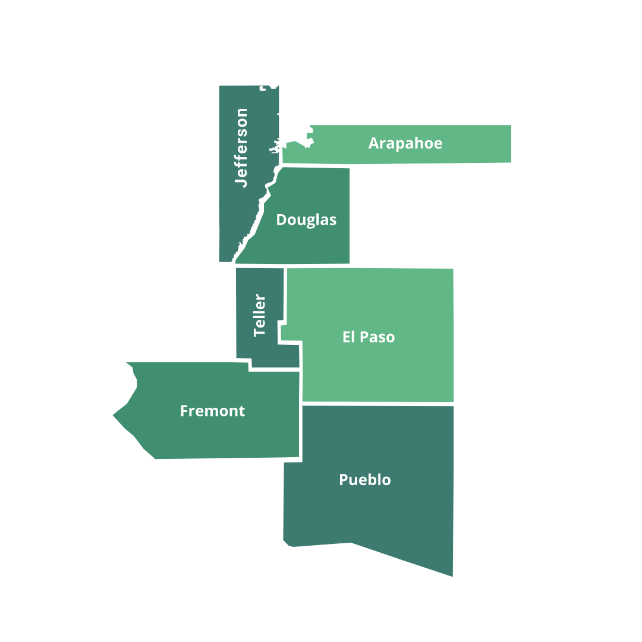
Right Law Group is built on a single advantage: our attorneys used to be the prosecutors filing and trying these cases. We know how the other side decides what to charge, when they overcharge a death as murder, and what makes a jury or a judge reconsider. We have offices in Colorado Springs, Castle Rock, Highlands Ranch, and Denver, and we serve clients across Arapahoe, Denver, Douglas, El Paso, Fremont, Jefferson, Pueblo, and Teller counties.
Contact Right Law Group today for a FREE Case Evaluation.
Homicide in Colorado simply means causing the death of another person. Whether that death is a crime, and which crime, depends almost entirely on your mental state at the time, what the law calls the mens rea. The same physical act, a death, can be charged as anything from a class 5 felony to a class 1 felony depending on whether the state can prove you acted with intent, with knowledge, recklessly, or with criminal negligence. Sorting out which mental state the evidence actually supports is the heart of every homicide defense.
Two facts do much of the work in any of these cases. The first is causation: the prosecution must prove that your conduct, and not some other event or pre-existing condition, caused the death. The second is the mental state, because that single element decides which statute applies and how many years are at stake. A criminal defense attorney who has prosecuted these cases knows that both elements rest on medical and forensic evidence that is rarely as airtight as it first appears.
It also matters what these charges are not. A death threat or a confrontation with a weapon where no one dies is menacing or assault, not homicide. A serious-injury crash with no death is vehicular assault, not vehicular homicide. Homicide requires a death, and the charge then turns on your culpability for it.
Colorado separates homicide into distinct offenses, each with its own statute and felony class. The class is what drives the sentence, and several of these carry sentencing rules far harsher than an ordinary felony of the same number.
First degree murder under C.R.S. section 18-3-102 is the most serious charge in Colorado law. It applies when a person, after deliberation and with intent, causes the death of another, and it also reaches certain other killings the statute defines, such as a death caused with extreme indifference to human life. It is a class 1 felony. Colorado abolished the death penalty for offenses charged on or after July 1, 2020, so the maximum punishment for first degree murder is life imprisonment without the possibility of parole, not execution. “Deliberation” is the element that separates this charge from second degree murder, and it is frequently the element most open to challenge.
Second degree murder under C.R.S. section 18-3-103 is knowingly causing the death of another person, without the deliberation that first degree requires. It is a class 2 felony and a per se crime of violence, which means the sentence is not the ordinary class 2 range but a mandatory range from the midpoint of the presumptive range up to twice the maximum, which works out to 16 to 48 years in the Department of Corrections followed by 5 years of mandatory parole. There is one reduction: if the killing was committed in a sudden heat of passion provoked by a serious and highly provoking act, second degree murder drops to a class 3 felony, with a 10 to 32 year range. Whether the death was “knowing” or instead reckless or accidental is often the line between this charge and a far less serious one.
Manslaughter under C.R.S. section 18-3-104 is recklessly causing the death of another person, or intentionally aiding another person to commit suicide. “Reckless” means you consciously disregarded a substantial and unjustifiable risk that death would result. It is a class 4 felony. Manslaughter is the charge that often results when an intentional or knowing killing cannot be proven but the conduct went beyond ordinary carelessness, and a heat-of-passion killing that does not qualify as murder can also land here. The difference between manslaughter and second degree murder is the difference between recklessness and knowledge, and it can mean decades of exposure.
Criminally negligent homicide under C.R.S. section 18-3-105 is causing a death through criminal negligence, meaning you failed to perceive a substantial and unjustifiable risk that a reasonable person would have perceived. It is a class 5 felony, the least serious homicide offense. This charge covers genuine accidents where the law concludes a reasonable person should have recognized the danger, such as a fatal firearm mishandling or a fatal lapse in supervision. Because it rests on what you should have perceived rather than what you intended, the defense often focuses on whether the risk was truly obvious and whether your conduct actually caused the death.
Vehicular homicide under C.R.S. section 18-3-106 covers a death caused by the operation of a motor vehicle. It splits in two. When the driver was under the influence of alcohol or drugs, it is a strict liability class 3 felony, which means the prosecution does not have to prove the driver was at fault for the crash, only that the driver was impaired and that the driving caused the death. When the death results instead from reckless driving, or from driving while ability impaired, it is a class 4 felony. The strict liability rule on the DUI version is what makes it one of the most dangerous charges a driver can face, and it is the reason an early, evidence-focused defense matters so much. The firm covers this charge in depth on its vehicular homicide page.
Homicide penalties split into the criminal sentence and the lasting collateral consequences. The criminal ranges below are the presumptive felony ranges for offenses committed on or after July 1, 2020, under C.R.S. section 18-1.3-401, as modified by the crime-of-violence rules in C.R.S. section 18-1.3-406 where they apply.
The criminal sentence is only part of the cost. A felony homicide conviction is a permanent record that strips the right to possess a firearm, ends eligibility for many jobs and professional licenses, and can affect immigration status and housing for the rest of a person’s life. A vehicular homicide conviction also brings a separate driver’s license revocation through the Colorado Division of Motor Vehicles, an administrative process that runs independently of the criminal case. Because the consequences reach so far beyond the sentence, the goal in many of these cases is to reduce the charge to one with a lighter class, or to defeat it outright on causation or mental state.
People use “murder,” “manslaughter,” and “homicide” interchangeably, but Colorado treats them as separate crimes separated by one thing: your mental state. Understanding which one actually fits the facts can change everything about the case.
Murder requires that you acted intentionally or knowingly. First degree murder adds deliberation; second degree murder is a knowing killing without it. Manslaughter drops to recklessness, a conscious disregard of a known risk. Criminally negligent homicide drops further still, to a failure to perceive a risk a reasonable person would have caught. The same death can be charged at any of these levels, and where it lands decides whether a person faces a class 5 felony or life imprisonment. This is why prosecutors so often file the most serious charge the facts could support and rely on the pressure of that exposure during plea negotiations.
That distinction is also where much of the defense work happens. Pushing a charge down from murder to manslaughter, or from manslaughter to criminally negligent homicide, is not a technicality; it is the difference between decades in prison and a chance at a far shorter sentence. A defense lawyer who has charged these cases knows exactly what evidence the state needs for each mental state and where that evidence tends to fall short.
Homicide cases are built on forensic and circumstantial evidence, because the central question, what you intended or perceived, lives in your head and cannot be proven directly. As former prosecutors, our attorneys know these cases are assembled from the autopsy, the toxicology, the scene reconstruction, witness statements, and whatever the accused said to police. Each of those is contestable.
Causation is the first pressure point. The prosecution must prove your conduct caused the death, and in many cases, a pre-existing medical condition, an intervening event, or another person’s actions complicate that chain. In a vehicular homicide case, the question of whether the impairment or the driving actually caused the fatal crash, rather than road conditions or another driver, is often the whole case.
Mental state is the second, and it is unique to homicide. Because the felony class turns on whether you acted with intent, knowledge, recklessness, or negligence, the defense attacks the inference the prosecution draws from the circumstances. A killing the state charges as knowing second degree murder may, on the evidence, be a reckless manslaughter or a genuine accident. We also examine the forensic work itself. Autopsy findings, toxicology results, blood draw procedures, and crash reconstruction all rest on protocols that can be challenged, and evidence gathered in violation of your rights can be suppressed. Self-defense, where Colorado law permits the use of force to protect yourself or others, is a complete defense to a homicide charge when it applies, and the burden is on the prosecution to disprove it once it is raised.
Every case is different, but the defenses that come up most often in Colorado homicide cases include:
Self-defense or defense of others. Colorado law allows a person to use physical force, including deadly force in limited circumstances, to defend against an imminent threat. When self-defense applies, it is a complete defense, and the prosecution must disprove it beyond a reasonable doubt.
Lack of the required mental state. Because each homicide offense requires a specific mental state, evidence that you acted with a lesser culpability, recklessly rather than knowingly, or negligently rather than recklessly, can move the charge to a far less serious offense or defeat it.
Causation. If your conduct did not actually cause the death, or an intervening cause did, the charge fails regardless of intent.
Accident. A truly accidental death, with no criminal negligence, is not a crime at all.
Constitutional challenges. Unlawful searches, improper interrogations, defective blood draws, and other rights violations can lead to suppression of the evidence the case depends on.
These are a few of the many homicide and violent crime cases our attorneys have resolved. Every case is different and past results do not guarantee a particular outcome, but they show the kind of work we do.
You can read more in our case studies and client reviews.
Our former-prosecutor bench has handled homicide and violent crime cases from both sides of the courtroom. Our attorneys move quickly to get ahead of the prosecution: we obtain and review the autopsy and toxicology reports, the scene and crash reconstruction, and every police report; we pin down the exact mental state the state must prove and attack the inference behind it; we identify causation problems and consult the forensic experts who can expose them; we file early motions where evidence was unlawfully obtained; and we open conversations with the district attorney about reducing the charge before the case builds momentum toward trial. No lawyer can promise a result, but early, informed defense work is what creates options in a case this serious.
If you or someone you love has been charged in a death in Colorado, the next decision matters more than almost any you will make. Do not discuss what happened with police or investigators, and talk to a criminal defense attorney before you say anything further. Right Law Group offers a free, confidential consultation, and we will review the state’s evidence with you and explain exactly where you stand. Call or text 719-822-6227.
The difference is your mental state. Murder requires that you killed intentionally or knowingly, while manslaughter requires only that you killed recklessly, by consciously disregarding a substantial risk of death.
That single distinction changes everything about the case. A knowing killing is second degree murder, a class 2 felony carrying 16 to 48 years as a crime of violence. The same death, if the state can prove only that you acted recklessly rather than knowingly, is manslaughter, a class 4 felony carrying 2 to 6 years. First degree murder adds a further element, deliberation, on top of intent. Prosecutors often charge the most serious level the facts could support and rely on that exposure during plea talks.
Because the mental state is so often disputed, moving a charge from murder to manslaughter is one of the central goals of a homicide defense, and it can mean the difference between decades in prison and a far shorter sentence.
Related: Second degree murder, Manslaughter
Second degree murder is a class 2 felony and a crime of violence, so it carries a mandatory range of 16 to 48 years in prison, followed by 5 years of mandatory parole.
Because second degree murder is a per se crime of violence, the sentence is not the ordinary class 2 presumptive range. The court must impose a term from the midpoint of the presumptive range up to twice the maximum, which produces the 16 to 48 year window. There is one reduction in the statute: a killing committed in a sudden heat of passion, provoked by a serious and highly provoking act, drops to a class 3 felony with a range of 10 to 32 years.
Whether the heat-of-passion reduction applies, and whether the killing was truly knowing rather than reckless, are the questions that decide the real exposure. Both are heavily fact-dependent.
Related: Second degree murder, Crime of violence sentencing
Criminally negligent homicide under C.R.S. section 18-3-105 is causing a death through criminal negligence, meaning you failed to perceive a substantial and unjustifiable risk that a reasonable person would have recognized. It is a class 5 felony.
This is the least serious homicide charge in Colorado, and it covers genuine accidents where the law nonetheless concludes a reasonable person should have seen the danger. Common examples include a fatal firearm mishandling, a fatal lapse in supervising someone, or a workplace accident. Unlike murder or manslaughter, it does not require that you intended harm or even consciously disregarded a risk; it asks only whether you should have perceived one. A class 5 felony carries a presumptive range of 1 to 3 years.
Because the charge rests on what a reasonable person would have perceived, the defense often focuses on whether the risk was actually obvious and whether the death was truly caused by your conduct rather than another factor.
Related: Criminally negligent homicide, Felony charges in Colorado
Vehicular homicide under C.R.S. section 18-3-106 is causing a death by the operation of a motor vehicle. It is a strict liability class 3 felony when the driver was under the influence, and a class 4 felony when the death results from reckless driving.
The strict liability rule on the DUI version is what makes it so serious. The prosecution does not have to prove the driver was at fault for the crash, only that the driver was driving under the influence and that the driving caused the death. The reckless version is a class 4 felony, carrying 2 to 6 years, while the DUI version as a class 3 felony carries 4 to 12 years. A vehicular homicide conviction also triggers a separate driver’s license revocation through the DMV.
Because fault is not an element of the DUI version, the defense turns on causation, the validity of the impairment evidence, and the blood draw procedures. The firm covers this charge in detail on its vehicular homicide page.
Related: Vehicular homicide, DUI defense in Colorado
The difference is whether the crash caused a death or only a serious injury. Vehicular homicide requires that a person died, while vehicular assault applies when a person suffered serious bodily injury but survived.
Both charges work the same way otherwise. Each has a DUI-based version and a reckless-driving version, and each treats the DUI version as the more serious offense. Vehicular homicide is a class 3 felony when DUI-based; vehicular assault is a class 4 felony when DUI-based. The line between them is simply the outcome of the crash, which means the same conduct can be charged either way depending on whether the victim lived.
If you are facing one of these charges, the medical evidence about the cause of death or injury, and the proof of impairment and causation, are the first things a defense lawyer examines.
Related: Vehicular homicide, Vehicular assault
Yes, and it is one of the most important things a defense can accomplish. Because each homicide offense is defined by a different mental state, showing that the evidence supports a lesser culpability can move a charge from murder to manslaughter, or from manslaughter to criminally negligent homicide.
The reduction is not a technicality; it is the difference between sentencing tiers that can span decades. A second degree murder charge carrying 16 to 48 years, reduced to manslaughter, drops to a 2 to 6 year range. Our attorneys have obtained reductions in serious violent cases, including Alexis Austin Litle’s reduction of an attempted murder charge to a lower felony with probation.
Whether a reduction is realistic depends on what the forensic and circumstantial evidence shows about your mental state and causation, which is exactly what an experienced defense lawyer evaluates first.
Related: Manslaughter, Case studies
Yes. Self-defense is a complete defense to a homicide charge in Colorado when it applies, and once it is raised, the prosecution must disprove it beyond a reasonable doubt.
Colorado law allows a person to use physical force, including deadly force in limited circumstances, to defend against what they reasonably believe is an imminent threat of death or serious bodily injury. When the facts support self-defense, a death that would otherwise be charged as murder or manslaughter is not a crime at all. The analysis is highly specific: the threat must have been imminent, the force must have been reasonable, and certain limits apply to who may claim it and when.
Because the prosecution carries the burden to disprove a valid self-defense claim, raising and developing that defense early, with the evidence to support it, is often the most important step in the case.
Related: Colorado self-defense laws, Criminal defense attorneys
The prosecution must prove two core things beyond a reasonable doubt: that your conduct caused the death, and that you acted with the specific mental state the charged offense requires.
Causation means the state has to connect your actions to the death, not merely show that a death occurred near you. The mental state element is what separates the offenses: intent and deliberation for first degree murder, knowledge for second degree murder, recklessness for manslaughter, and criminal negligence for criminally negligent homicide. Both elements rest on forensic evidence, the autopsy, toxicology, and scene reconstruction, and on the inferences the prosecution asks a jury to draw from circumstances.
Because both causation and mental state are open to challenge, the charge filed at arrest is often not the charge that holds up. A defense lawyer who attacks both early can change the trajectory of the case.
Related: Criminal defense attorneys, Colorado felony lawyer
Manslaughter is a class 4 felony in Colorado, carrying a presumptive sentence of 2 to 6 years in the Department of Corrections and a fine up to $500,000.
Manslaughter is recklessly causing a death, or intentionally aiding another person’s suicide. It sits between second degree murder, which requires a knowing killing, and criminally negligent homicide, which requires only a failure to perceive a risk. The 2 to 6 year range is dramatically lower than the 16 to 48 years a second degree murder conviction carries, which is why moving a charge from murder to manslaughter matters so much. A heat-of-passion killing that does not meet the murder definition can also be charged as manslaughter.
The actual sentence within and around that range depends on aggravating and mitigating factors, the strength of the causation and mental-state evidence, and the defense presented.
Related: Manslaughter, Felony charges in Colorado
The difference is deliberation. First degree murder requires that you killed intentionally and after deliberation, while second degree murder is a knowing killing without that deliberate, reflective decision.
Deliberation means the intent to kill was formed after at least some reflection, however brief, rather than in the immediate moment. First degree murder is a class 1 felony carrying life imprisonment without parole. Second degree murder is a class 2 felony and crime of violence carrying 16 to 48 years. So the presence or absence of deliberation is the line between a life sentence and a term of years, which makes it one of the most heavily contested elements in any murder case.
Because the consequences differ so sharply, contesting the deliberation element, and pressing for second degree rather than first, is often the central objective of the defense.
Related: First degree murder, Second degree murder
Yes, when it is based on driving under the influence. The DUI version of vehicular homicide under C.R.S. section 18-3-106 is a strict liability class 3 felony, meaning the prosecution does not have to prove the driver was at fault for the crash.
Strict liability is unusual and harsh. For the DUI-based charge, the state needs to prove only that the driver was under the influence and that the driving was the proximate cause of the death. The driver’s carelessness or fault for the crash itself is not an element. The reckless-driving version, by contrast, is a class 4 felony and does require proof of reckless conduct.
Because fault is not an element of the DUI version, the defense concentrates on causation, whether the impairment evidence and blood draw were valid, and whether the driving actually caused the death rather than another factor on the road.
Related: Vehicular homicide, DUI defense in Colorado
Yes. An accidental death can still be charged as criminally negligent homicide or, depending on the conduct, manslaughter, if the state believes you failed to perceive or consciously disregarded a substantial risk.
Colorado does not require intent to kill for every homicide charge. Criminally negligent homicide reaches deaths the law treats as the result of criminal carelessness, even where there was no desire to harm anyone. Manslaughter reaches deaths caused by recklessness. A truly accidental death with no criminal negligence at all is not a crime, but the line between an innocent accident and criminal negligence is exactly what these cases fight over.
Because the difference between a non-crime and a class 5 felony can be narrow, having a defense lawyer document why the risk was not obvious, and why your conduct was reasonable, is critical.
Related: Criminally negligent homicide, Manslaughter
Felony homicide charges are filed in district court in the county where the alleged offense occurred, with a preliminary hearing where the prosecution must show probable cause for the most serious charges.
For our clients, that usually means the El Paso County courts in the 4th Judicial District, the Douglas County courts in the 18th Judicial District, the Denver courts in the 2nd Judicial District, or the courts in Arapahoe, Fremont, Jefferson, Pueblo, or Teller counties, depending on where the death occurred. Each jurisdiction has its own prosecutors and its own tendencies in how violent crimes are charged and tried.
Knowing the local court and the prosecutors who staff it is part of why a Colorado defense lawyer with experience in your county matters in a case this serious.
Related: Colorado Springs criminal defense, Castle Rock criminal defense
Do not answer questions about what happened, and ask for a lawyer immediately. In a homicide investigation, statements about your state of mind or your actions are the most damaging evidence the prosecution can use to prove intent or recklessness.
People often try to explain themselves, believing it will clear things up, but in a homicide case those explanations are routinely turned into proof of the mental state the charge requires. You have the right to remain silent, and exercising it is not an admission of guilt; it is the protection the law gives you. Police are legally allowed to mislead you during questioning, which is one more reason not to speak without counsel.
The single most important step now is to stop discussing the case and get a defense lawyer involved before the prosecution locks in its theory of your mental state.
Related: Right to remain silent, Free consultation
Yes. Homicide charges can be dismissed when the prosecution cannot prove causation or the required mental state, when a complete defense like self-defense applies, or when key evidence is suppressed for a rights violation.
Dismissal is not common in cases this serious, but it happens, and so do reductions and acquittals. Our attorneys have resolved serious violent cases favorably, including Alexis Austin Litle’s deferred sentence and complete dismissal in an attempted homicide and vehicular assault case, and Gannon Becker’s reduction of an attempted homicide charge to a deferred sentence on a lesser felony. The path to a dismissal usually runs through the evidence: a causation gap, a defective blood draw, an unlawful search, or a self-defense claim the state cannot overcome.
Whether dismissal is realistic depends entirely on the facts and the evidence, which a defense lawyer assesses at the outset.
Related: Case studies, Client reviews
It varies widely. A homicide case can take a year or more to resolve, particularly when it proceeds toward trial, because of the complexity of the forensic evidence and the additional procedural stages a serious felony requires.
The timeline depends on the volume of forensic evidence, the court’s schedule, whether motions are filed, the need for expert analysis of the autopsy and toxicology, and whether the case is negotiated or tried. Felony homicide cases include stages, such as a preliminary hearing and extensive motions practice, that add time. Moving quickly on the defense does not necessarily shorten the case, but it shapes the options by getting ahead of the prosecution’s theory.
Your lawyer can give you a realistic timeline once the charge, the evidence, and the likely path of the case are clear.
Related: Colorado felony lawyer, Criminal defense attorneys
A former prosecutor knows how the state proves causation and mental state in a homicide case, because they used to build those cases. They understand how charging decisions are made, where prosecutors tend to overcharge a death as murder, and what evidence problems make a district attorney willing to reduce or dismiss.
At Right Law Group, our attorneys served as Colorado prosecutors before moving to the defense side. That experience shapes how we attack the mental-state inference, the causation chain, and the forensic evidence. Alexis Austin Litle has reduced an attempted murder charge to a lower felony with probation, and Gannon Becker has resolved an attempted homicide case with a deferred sentence, a few of the many results in our case studies.
No lawyer can guarantee an outcome, but insider knowledge of the prosecution’s playbook is a real advantage in a case where the mental state is everything. A free consultation is the place to start.
Related: About Right Law Group, Case studies
Your first appearance is an advisement, where the court tells you the charges and your rights and addresses bond. In a homicide case, bond is often high or, for the most serious charges, may be denied, and you are not required to enter a plea or explain your side at this stage.
At the advisement the judge addresses custody and any conditions of release. Felony homicide cases then move through district court, typically with a preliminary hearing where the prosecution must show probable cause for the charge before the case proceeds. You should not discuss the facts of the case in open court, because anything you volunteer can be used later.
Having a lawyer at or before the first appearance is critical for bond arguments and to keep you from saying something that harms the case. This is the moment to get counsel involved, before the prosecution commits to its theory.
Related: Colorado felony lawyer, Right to remain silent
Homicide charges frequently appear alongside related violent or weapons offenses, such as assault, menacing, or weapons charges, depending on how the death occurred.
When a weapon was involved, prosecutors often add a weapons count, and a crime-of-violence designation under C.R.S. section 18-1.3-406 can attach to the charge, triggering mandatory sentencing. In a vehicular homicide case, a DUI charge and a vehicular assault count for other injured people often accompany it. Stacking these charges raises the overall exposure and the pressure to plead.
A defense lawyer looks at the whole set of charges together, because resolving the homicide count often depends on what happens with the charges attached to it.
Related: Menacing, Weapons charges
Second degree murder is a per se crime of violence, which means the crime-of-violence sentencing applies automatically rather than requiring a separate finding about a weapon or injury.
Under C.R.S. section 18-1.3-406, most violent felonies require the prosecution to allege and prove that a deadly weapon was used or serious bodily injury caused before mandatory sentencing applies. Certain offenses, including second degree murder, are treated as crimes of violence per se by statute, so the mandatory range of the midpoint of the presumptive range up to twice the maximum applies without that extra finding. For a class 2 felony, that produces the 16 to 48 year range.
Because the crime-of-violence designation removes the option of a lighter sentence, understanding when it does and does not apply to your charge is an early priority for the defense.
Related: Crime of violence sentencing, Second degree murder
The difference is whether you were aware of the risk. Manslaughter requires recklessness, a conscious disregard of a known risk of death, while criminally negligent homicide requires only that you failed to perceive a risk a reasonable person would have caught.
That awareness line separates a class 4 felony from a class 5 felony. With manslaughter, the state must prove you actually knew of the risk and chose to disregard it. With criminally negligent homicide, the state need only prove the risk was obvious enough that a reasonable person would have recognized it, even if you did not. Manslaughter carries 2 to 6 years; criminally negligent homicide carries 1 to 3 years.
Because the dividing line is what you actually perceived, the defense often develops evidence that you were unaware of the risk, which can move a manslaughter charge down to negligent homicide or defeat it entirely.
Related: Manslaughter, Criminally negligent homicide
It depends on causation. Colorado requires the prosecution to prove your conduct was the proximate cause of the death, so a death you did not actually cause, or one caused by an intervening event, may not support a homicide charge against you.
Causation is a real and frequently contested element. If a pre-existing medical condition, a separate accident, or another person’s actions were the actual cause of death, the chain the prosecution needs may break. This comes up often in vehicular homicide cases, where the question of whether the defendant’s driving or some other factor caused the fatal crash can decide the case.
Because the state must prove causation beyond a reasonable doubt, attacking the causal chain with medical and forensic evidence is one of the most powerful tools a defense lawyer has in a homicide case.
Related: Vehicular homicide, Criminal defense attorneys
Homicide is the broad category, and murder is one type within it. Homicide means causing the death of another person; murder is a homicide committed intentionally, knowingly, or with deliberation, while other homicides like manslaughter and criminally negligent homicide require lesser mental states.
People often use the words as synonyms, but in Colorado law they are not the same. All murders are homicides, but not all homicides are murders. A death caused recklessly is manslaughter; a death caused by criminal negligence is criminally negligent homicide; a death caused by an impaired or reckless driver is vehicular homicide. Only intentional or knowing killings are murder. The category a charge falls into decides the felony class and the sentence.
Because so much turns on the distinction, the first question in any case is which homicide offense the evidence actually supports, not the label investigators used at the scene.
Related: First degree murder, Second degree murder
Yes. A felony homicide conviction is a permanent record that strips your right to possess a firearm, ends eligibility for many jobs and professional licenses, and can affect housing, immigration status, and more for the rest of your life.
The collateral consequences of a felony conviction reach far beyond the prison sentence. A convicted felon cannot lawfully possess a firearm under both state and federal law. Many professional licenses are unavailable to people with felony homicide records, and the conviction shows up on every background check a landlord or employer runs. A vehicular homicide conviction adds a separate driver’s license revocation.
Because the consequences are this severe and this lasting, the goal in many cases is to avoid the felony conviction entirely, whether through dismissal, acquittal, or a reduction to a charge with a different class.
Related: Felony charges in Colorado, Weapons charges
No. Colorado abolished the death penalty for offenses charged on or after July 1, 2020. The maximum punishment for first degree murder, a class 1 felony, is now life imprisonment without the possibility of parole.
Before the repeal, a first degree murder conviction could carry a death sentence. That is no longer an option for current cases in Colorado. A class 1 felony conviction means life in prison with no parole eligibility, the most severe sentence available under current Colorado law. No other homicide offense, including second degree murder, carries a life sentence; second degree murder is a class 2 felony at 16 to 48 years.
Because life without parole is the only sentence for first degree murder, the defense focuses on the deliberation element and on whether the charge should instead be a lesser homicide offense.