





Facing disorderly conduct charges in Colorado?
At Right Law Group, our experienced disorderly conduct defense lawyers are ready to help you. We will explain your rights clearly and build a strong defense to protect your future. Contact us today for a free consultation to discuss your case.
Legally reviewed by Alexis Austin Litle, Founder of Right Law Group. A former Deputy District Attorney in the 10th Judicial District, she served as Chief of its Domestic Violence Unit and served as a Homicide Unit prosecutor before founding the firm in 2018.
Disorderly conduct in Colorado, C.R.S. section 18-9-106, covers fighting, unreasonable noise, offensive public displays, displaying a weapon to alarm someone, and firing a gun in public. Most forms are a petty offense; displaying a weapon to cause alarm is a class 2 misdemeanor; discharging a firearm is a class 1 misdemeanor. A former prosecutor first attacks intent and the public-place element.
In Colorado, the specific subsection of the disorderly conduct statute you are charged under decides whether you face a petty offense or a misdemeanor that can mean jail. The fear is that a momentary lapse now follows you. Disorderly conduct is not one crime with one penalty; it is a single statute that covers very different conduct, and the version you are charged with decides whether you face a petty offense ticket or a class 1 misdemeanor with up to 364 days in jail.
This page explains how Colorado defines each form of disorderly conduct, the exact classification and penalty for each, how it differs from related charges like disturbing the peace, menacing, and harassment, how prosecutors in El Paso, Douglas, and Denver counties build these cases, and where a criminal defense lawyer looks first to take them apart.
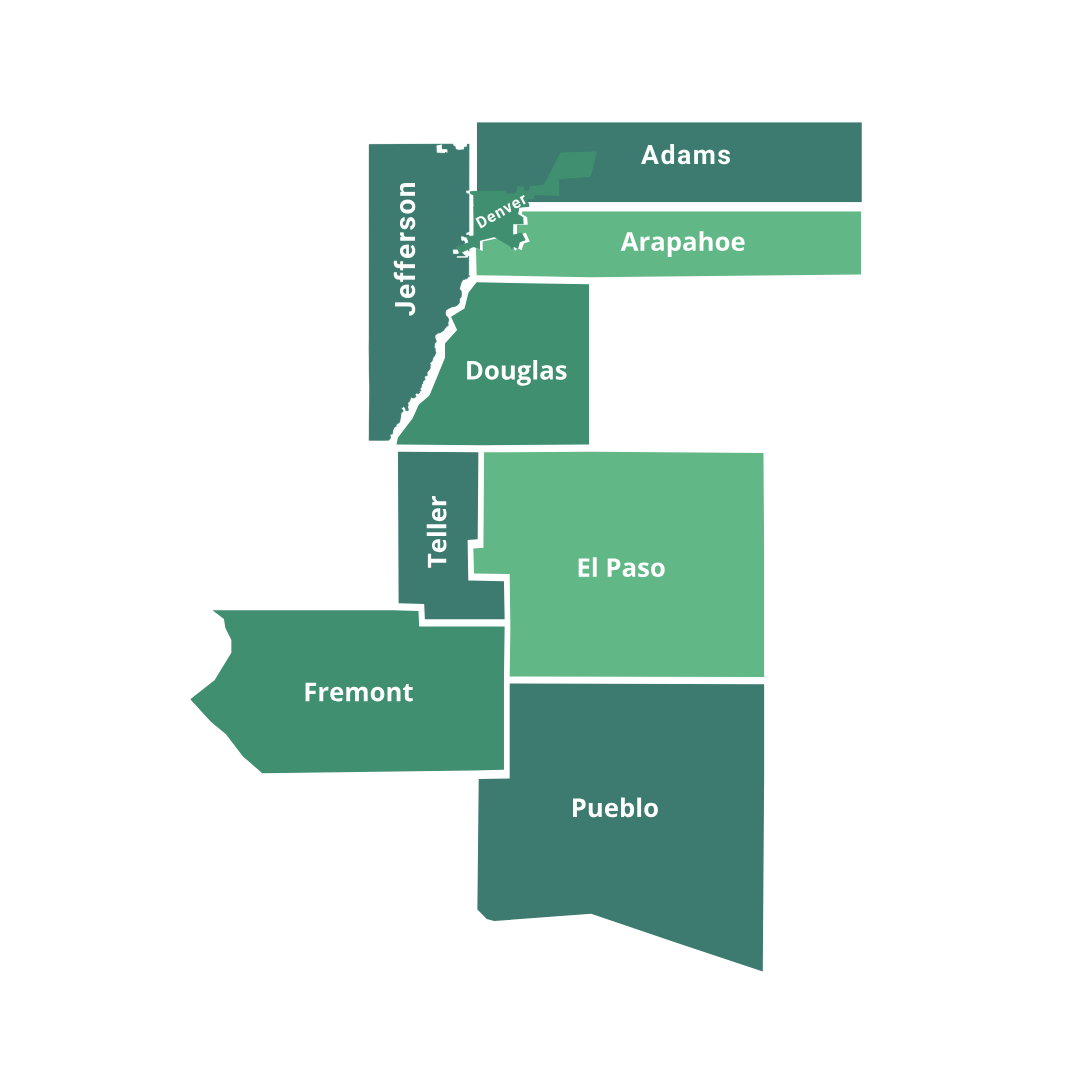
Right Law Group is built on a simple advantage: our attorneys used to be the prosecutors filing and trying these cases. We know how the other side decides what to charge, when a petty offense gets overcharged as a misdemeanor, and what makes a district attorney reconsider. We have offices in Colorado Springs, Castle Rock, Highlands Ranch, and Denver, and we serve clients across Arapahoe, Denver, Douglas, El Paso, Fremont, Jefferson, Pueblo, and Teller counties.
Disorderly conduct under C.R.S. section 18-9-106 is a public-order offense. A person commits it by intentionally, knowingly, or recklessly engaging in one of several specific behaviors in or near a public place. The statute does not punish being annoying in private; nearly every form requires a public place or a setting where the conduct disturbs others who have a right to be there.
The key point most people miss is that the statute lists separate types of conduct, each with its own classification. What you are accused of doing controls how serious the charge is. The current forms of disorderly conduct are a coarse and offensive public utterance or gesture that tends to incite an immediate breach of the peace, making unreasonable noise in public or near a residence you have no right to occupy, fighting another person in public, displaying a firearm or simulated firearm in a manner calculated to alarm someone, and discharging a firearm in a public place. An older subsection that once criminalized other speech was repealed in 2000, so a charge written under that long-gone provision is defective on its face.
Because the conduct elements are written narrowly, the words “in a public place,” “unreasonable,” “calculated to alarm,” and “tends to incite an immediate breach of the peace” do most of the work in these cases. Each is a place a defense can push.
Colorado groups the conduct into three penalty tiers. Knowing which tier your charge sits in is the first thing to confirm, because the difference between a petty offense and a class 1 misdemeanor is the difference between a fine and the risk of nearly a year in jail.
Making a coarse and obviously offensive utterance, gesture, or display in a public place that tends to incite an immediate breach of the peace is a petty offense. This is the speech-based form, and it is intentionally narrow. The First Amendment protects most offensive speech, so the prosecution has to show the words or gesture were the kind that tend to provoke an immediate violent response, not merely that someone was offended. This version becomes a class 2 misdemeanor only when it is committed with intent to disrupt or interfere with a funeral, or to cause severe emotional distress to people attending one.
Making unreasonable noise in a public place, or near a private residence that you have no right to occupy, is a petty offense. “Unreasonable” is judged by the circumstances, which is why context, time of day, and whether anyone had a lawful right to make the noise all matter. Like the offensive-utterance form, the noise version rises to a class 2 misdemeanor when it is aimed at disrupting a funeral.
Fighting with another person in a public place is a petty offense, with the narrow exception of a sanctioned amateur or professional athletic contest. This form grows out of bar fights and street altercations. Because it requires a public place and an actual fight, a defense often turns on whether the conduct was a mutual fight, lawful self-defense, or an assault the prosecution undercharged or overcharged.
Displaying a real or simulated firearm, or any article used or fashioned to look like a deadly weapon, in a manner calculated to alarm and that does alarm another person, is a class 2 misdemeanor. This is the most serious of the non-firearm-discharge forms, and it borders directly on menacing. The line between the two matters: where the conduct places a person in fear of imminent serious bodily injury, prosecutors often charge the more serious menacing offense instead. A defense lawyer looks hard at whether the display was “calculated to alarm” or was something else, such as lawful carry or a misread gesture.
Discharging a firearm in a public place, by someone who is not a peace officer acting in the line of duty, is a class 1 misdemeanor, the most serious form of disorderly conduct. The statute carves out lawful target practice, hunting, and blank cartridges fired at a veteran’s funeral. This form overlaps with the separate felony of reckless endangerment or reckless discharge, so part of the defense is keeping a single shot from being charged as something far more serious.
Penalties split into the criminal sentence and the long-term collateral consequences. The criminal ranges below come from C.R.S. section 18-1.3-501 for misdemeanors and C.R.S. section 18-1.3-503 for petty offenses, as they apply on or after the March 1, 2022 sentencing changes.
Do not treat a petty offense as nothing. Even the lowest tier is a criminal charge that creates a record, and the firearm and weapon forms carry real jail exposure. The collateral consequences often outlast the sentence. A conviction shows up on background checks run by employers and landlords. Any conviction touching a firearm, including the weapon-display and discharge forms, can complicate your right to possess firearms and can matter for professional and security-clearance purposes. Certain jobs, licenses, and immigration situations treat even a minor public-order conviction as a problem, which is why avoiding the conviction itself is often the real goal rather than only reducing the sentence.
People use “disturbing the peace” and “disorderly conduct” interchangeably, and search for both, but in Colorado the formal charge is disorderly conduct under C.R.S. section 18-9-106. “Disturbing the peace” is the everyday name for the noise and fighting forms of that statute, and some municipalities also have their own local disturbing-the-peace ordinances. The conduct is the same family of public-order offenses; the charge filed depends on whether you are cited under the state statute or a city code.
The charge can shift up or down depending on the facts, which is why the distinctions matter. Menacing under C.R.S. section 18-3-206 is knowingly placing another person in fear of imminent serious bodily injury, and it is a class 1 misdemeanor that becomes a class 5 felony when a deadly weapon is involved. A weapon shown during an argument can be charged as disorderly conduct (weapon display) or as the more serious offense of menacing, so how you frame that single fact changes everything. Third degree assault under C.R.S. section 18-3-204 is knowingly or recklessly causing bodily injury, and a public fight that caused an injury can be charged as assault rather than disorderly conduct. Harassment under C.R.S. section 18-9-111 covers conduct directed at a specific person, such as repeated contact or insults, rather than a public disturbance. Where weapons or threats are involved, the firm also handles related weapons charges. Sorting out which charge fits the facts is often where a case is won.
Disorderly conduct cases are built fast and on thin evidence. They usually start with a 911 noise complaint, an officer responding to a fight, or a report that someone flashed a gun. As former prosecutors, our attorneys know these cases are charged on the scene from an officer’s quick read of a chaotic situation, and that quick read is exactly what a defense tests.
The “public place” element is the first pressure point. Several forms of the statute require that the conduct happened in a public place, or near a residence you had no right to occupy. Conduct inside your own home, on private property where you had a right to be, or in a setting that does not meet the statutory definition of public can defeat the charge or force a reduction.
The intent and “calculated to alarm” elements are the second. The weapon-display form requires that the display was calculated to alarm and that it actually alarmed someone. A person lawfully carrying a firearm, adjusting a holster, or making an ambiguous gesture has a real argument that the conduct was not calculated to alarm anyone. For the speech form, the prosecution must show the words tended to incite an immediate breach of the peace, a high bar the First Amendment sets, not merely that the words were rude.
The third issue is witness reliability. These cases often come down to competing accounts of a loud, fast-moving incident, sometimes among people who had been drinking. We examine the 911 audio, body-camera footage, and the timeline, and we assess whether statements were taken in violation of your rights so the evidence can be suppressed. Alexis Austin Litle, for example, secured a complete dismissal of felony menacing and attempted assault charges arising from a road-rage confrontation, the kind of heated public dispute that often produces a disorderly conduct or weapon charge.
Every case is different, but the defenses that come up most often in Colorado disorderly conduct cases include:
Not a public place. Where a form of the charge requires a public place and the conduct happened on private property you had a right to occupy, the charge can fail.
Protected speech. The offensive-utterance form cannot reach speech the First Amendment protects; the words must tend to incite an immediate breach of the peace, not simply offend.
Self-defense. A public fight that was actually self-defense or defense of another is not criminal disorderly conduct.
Not calculated to alarm. For the weapon-display form, lawful carry, an innocent gesture, or conduct that was not meant to and did not alarm anyone undercuts the charge.
No unreasonable noise. “Unreasonable” depends on context, and noise that was lawful, brief, or made where you had a right to be may not meet the standard.
Constitutional challenges. Unlawful stops, improper searches, and statements taken in violation of your rights can lead to suppression of the evidence the case depends on.
These are a few of the many public-order, weapons, and confrontation cases our attorneys have resolved. Every case is different and past results do not guarantee a particular outcome, but they show the kind of work we do.
You can read more in our case studies and client reviews.
Our former-prosecutor bench has handled public-order and weapons cases from both sides of the courtroom. Our attorneys move quickly to get ahead of the prosecution: we obtain and review the 911 audio, body-camera footage, and police reports, pin down exactly which form of the statute is charged and whether it fits the facts, test the public-place and intent elements, file early motions where evidence was unlawfully obtained, and open conversations with the district attorney about reducing a misdemeanor to a petty offense or dismissing a charge that should never have been filed. No lawyer can guarantee a result, but early, informed defense work is what creates options.
If you or someone you love has been charged with disorderly conduct in Colorado, the next decision matters. Talk to a criminal defense attorney before you speak with police or prosecutors again. Right Law Group offers a free, confidential consultation, and we will review the state’s evidence with you and explain exactly where you stand. Call or text 719-822-6227.
It depends on the conduct. Under C.R.S. section 18-9-106, fighting in public, unreasonable noise, and offensive public utterances are petty offenses, while displaying a weapon to alarm someone is a class 2 misdemeanor and discharging a firearm in public is a class 1 misdemeanor.
Disorderly conduct is a single statute that covers very different behavior, and the classification tracks the conduct rather than the charge name. The three petty-offense forms carry up to 10 days in jail and a $300 fine. The weapon-display form carries up to 120 days and $750. The firearm-discharge form, the most serious, carries up to 364 days and a $1,000 fine. The speech and noise forms can rise to a class 2 misdemeanor when aimed at disrupting a funeral.
Because the tier controls your exposure, the first thing to confirm with a criminal defense lawyer is exactly which form you are charged under.
Related: Misdemeanor charges in Colorado, Menacing
They describe the same family of conduct. In Colorado, the formal charge is disorderly conduct under C.R.S. section 18-9-106; “disturbing the peace” is the everyday name people use for the noise and fighting forms of that statute.
There is no separate state crime literally titled “disturbing the peace.” When people search that phrase, they are usually describing a loud party, a public argument, or a fight that drew police, all of which Colorado prosecutes under the disorderly conduct statute or under a local municipal ordinance. Some cities have their own disturbing-the-peace or noise ordinances that carry municipal penalties separate from the state charge, which is why where you were cited matters.
If you were ticketed for “disturbing the peace,” confirm whether it was filed as a state disorderly conduct charge or a city ordinance, because the penalties and the defenses differ.
Related: Disorderly conduct defense, Criminal defense attorneys
It depends on the form. The petty-offense forms carry up to 10 days in county jail, the class 2 misdemeanor weapon-display form carries up to 120 days, and the class 1 misdemeanor firearm-discharge form carries up to 364 days.
These are statutory maximums under C.R.S. section 18-1.3-501 for misdemeanors and C.R.S. section 18-1.3-503 for petty offenses, not the likely outcome for most first-time cases. A first offense, especially a petty offense, often resolves without significant jail through a fine, probation, or a deferred judgment. Firearm and weapon charges carry the most real jail risk because of the danger the law attaches to them.
A defense lawyer who presents strong mitigation early can often steer a first offense away from incarceration. The maximum is the ceiling, not the prediction.
Related: Criminal defense attorneys, Free consultation
No. Disorderly conduct under C.R.S. section 18-9-106 is never a felony. Its most serious form, discharging a firearm in a public place, is a class 1 misdemeanor.
What does happen is that conduct charged as disorderly conduct can sometimes be charged instead as a felony offense when the facts support it. A firearm fired in a way that endangered others can become felony reckless endangerment or reckless discharge, and a weapon shown in a threatening way can become felony menacing. The charge label depends on how the prosecutor reads the conduct.
If you are facing a felony charge alongside or instead of disorderly conduct, the stakes change substantially, which makes early defense work important.
Related: Menacing, Weapons charges
For a first-time petty-offense disorderly conduct charge, the exposure is up to 10 days in jail and a $300 fine, and many first offenses resolve with no jail at all. Misdemeanor charges carry more, but a first offense still often resolves favorably.
First-time public-order cases are often good candidates for a deferred judgment, a diversion agreement, or a reduction, especially when the conduct was a one-time lapse and the evidence is weak. A deferred judgment can let you avoid a conviction entirely if you complete the conditions, which protects your record. The exact options depend on the form charged and the county.
Because a first offense is where the most outcomes are still on the table, getting counsel involved early gives you the best chance at a result that keeps your record clean.
Related: Criminal defense attorneys, Case studies
Yes. Even a petty-offense disorderly conduct conviction is a criminal record that can appear on background checks run by employers and landlords. The weapon and firearm forms can also affect firearm rights and certain licenses.
People assume a low-level public-order charge is harmless, but any criminal conviction can matter to an employer screening applicants, a landlord reviewing a rental application, or a licensing board. Convictions touching firearms, including the weapon-display and discharge forms, can complicate your right to possess a firearm and can matter for security clearances and certain professions. The reputational effect can outlast the small fine.
Because the collateral effects can be worse than the sentence, many cases aim to avoid conviction through dismissal, reduction, or deferred judgment.
Related: Criminal defense attorneys, Free consultation
A public place is a location open to or used by the public, such as a street, bar, park, or parking lot. Several forms of disorderly conduct require that the conduct occurred in a public place, which makes that element a frequent defense.
The requirement matters because conduct on private property where you had a right to be often does not meet the statute. A loud argument inside your own home, for example, generally is not disorderly conduct, though the noise form can reach noise made near a residence you have no right to occupy. Whether a particular location counts as public is a factual question the defense can contest.
If the alleged conduct happened somewhere that does not meet the public-place definition, that alone can defeat or reduce the charge, which is one of the first facts we check.
Related: Disorderly conduct defense, Criminal defense attorneys
Yes. Fighting with another person in a public place is one of the listed forms of disorderly conduct under C.R.S. section 18-9-106, and it is a petty offense, with a narrow exception for sanctioned athletic contests.
The fighting form is common after bar altercations and street confrontations. Because it requires an actual fight in a public place, the defense often turns on whether the conduct was mutual combat, lawful self-defense, or something the prosecution should have charged as third degree assault instead. If someone was injured, prosecutors may charge assault rather than disorderly conduct, which raises the stakes.
If your charge grew out of a public fight, the first step is determining whether self-defense applies and whether the right charge was filed.
Related: Third degree assault, Assault defense
Disorderly conduct’s weapon-display form is showing a weapon in a manner calculated to alarm, a class 2 misdemeanor, while menacing under C.R.S. section 18-3-206 is knowingly placing another person in fear of imminent serious bodily injury, which is a class 1 misdemeanor and a class 5 felony with a weapon.
The two charges sit right next to each other, and the same incident, showing a firearm during an argument, can be charged either way depending on how the prosecutor reads the threat. Menacing is the more serious charge because it requires putting someone in fear of imminent serious bodily injury, and a deadly weapon turns it into a felony. Prosecutors sometimes overcharge a weapon display as menacing when the facts fit only the lesser disorderly conduct form.
Because the line between the two carries a large difference in exposure, contesting how the conduct is characterized is often central to the defense.
Related: Menacing, Weapons charges
Yes. Displaying a real or simulated firearm, or an article fashioned to look like one, in a manner calculated to alarm and that does alarm another person, is the class 2 misdemeanor form of disorderly conduct under C.R.S. section 18-9-106.
This form requires more than the gun being visible. The display must be calculated to alarm, and it must actually alarm someone. Lawful open or concealed carry, adjusting a holster, or an ambiguous movement is not automatically a crime. Where the display was meant to threaten, prosecutors often charge the more serious menacing offense or related weapons charges instead.
Because the “calculated to alarm” element is contestable, a defense lawyer looks closely at what you actually did and whether it meets the statute.
Related: Menacing, Weapons charges
Often yes. Discharging a firearm in a public place, outside lawful target practice, hunting, or blank cartridges at a veteran’s funeral, is the class 1 misdemeanor form of disorderly conduct under C.R.S. section 18-9-106, the most serious form of the offense.
Firing a gun, even into the air to celebrate or scare someone off, can be charged this way, and it carries up to 364 days in jail and a $1,000 fine. The same shot can also be charged as a more serious felony, such as reckless endangerment or reckless discharge, if it endangered other people. Zoe Levesque resolved a felony reckless discharge case through diversion, keeping a firearm charge from becoming a conviction.
If a single shot has produced a firearm charge, keeping it from being charged as a felony is often the central goal of the defense.
Related: Weapons charges, Case studies
Sometimes, but the First Amendment limits it. The offensive-utterance form of disorderly conduct requires a coarse and obviously offensive utterance in a public place that tends to incite an immediate breach of the peace, not merely speech an officer found rude or insulting.
Courts protect a great deal of offensive and even profane speech directed at police, so an officer’s annoyance is not enough. The prosecution has to show the words were the kind that tend to provoke an immediate violent reaction, a narrow category. Charges based only on someone being loud or critical toward police are frequently vulnerable.
If your charge rests on what you said rather than what you did, the protected-speech defense is often a strong one, and it is worth raising early with a defense lawyer.
Related: Criminal defense attorneys, Disorderly conduct defense
Yes, and it is a common outcome. Because disorderly conduct charges turn on contestable elements like “public place,” “unreasonable,” and “calculated to alarm,” and because many are filed quickly at chaotic scenes, dismissals and reductions are realistic.
A misdemeanor form can often be reduced to a petty offense, and a petty offense can sometimes be resolved through a deferred judgment or diversion that avoids a conviction. Where the evidence is weak, the public-place element is missing, or the speech was protected, dismissal is possible. Our attorneys have obtained dismissals in related public-order and weapons cases, including a complete dismissal of menacing and attempted assault charges.
Whether a reduction or dismissal is realistic depends on the specific evidence, which is what a defense lawyer evaluates first.
Related: Case studies, Criminal defense attorneys
A deferred judgment is an agreement where you plead guilty, but the court holds the conviction in abeyance while you complete conditions, and if you finish them, the case is dismissed, and no conviction enters. It is a frequent goal in disorderly conduct cases.
For a low-level public-order charge, a deferred judgment can mean a clean record at the end if you complete probation-style conditions, such as a fine, classes, or staying out of trouble for a set period. It is especially useful for a first offense, because it lets you avoid the collateral consequences that follow even a petty-offense conviction. Eligibility depends on the charge and the prosecutor’s agreement.
Because a deferred judgment can keep a conviction off your record entirely, it is one of the first resolutions a defense lawyer explores in these cases.
Related: Criminal defense attorneys, Free consultation
Yes. Disorderly conduct is one of the most discretionary charges in Colorado, because officers responding to a loud, fast-moving scene decide on the spot whether conduct crossed the line into a crime. That discretion cuts both ways.
Because the statute uses judgment-laden terms like “unreasonable” and “calculated to alarm,” two officers can read the same incident differently, and a charge can reflect an officer’s snap assessment rather than a clear violation. That same flexibility is why these cases are often reducible or dismissible: the defense can show the conduct did not meet the statutory standard the officer assumed it did.
If your charge came out of an officer’s on-scene judgment call, testing whether the facts actually meet the statute is a core part of the defense.
Related: Disorderly conduct defense, Criminal defense attorneys
Yes. Making unreasonable noise in a public place, or near a private residence you have no right to occupy, is the noise form of disorderly conduct, a petty offense. Many of these charges start as 911 noise complaints.
“Unreasonable” is judged by the circumstances, so the time of day, the volume, the setting, and whether you had a lawful right to make the noise all matter. A loud party at your own home is often handled first as a municipal noise-ordinance matter rather than a state criminal charge, though repeated or extreme conduct can escalate. Context determines whether the noise was actually “unreasonable” under the statute.
If a noise complaint turned into a criminal charge, the reasonableness of the noise and where it occurred are the elements a defense lawyer examines first.
Related: Disorderly conduct defense, Criminal defense attorneys
It depends on the county and whether you were cited under state law or a municipal ordinance. State disorderly conduct charges are generally handled in county court in the county where the alleged conduct occurred; municipal charges go to that city’s municipal court.
For our clients, that usually means the El Paso County courts in the 4th Judicial District, the Douglas County courts in the 18th Judicial District, the Denver courts in the 2nd Judicial District, or a municipal court such as Colorado Springs or Denver municipal court for a city ordinance. Each jurisdiction has its own prosecutors and its own tendencies in how public-order cases are charged and resolved.
Knowing the local court and the prosecutors who staff it is part of why a Colorado defense lawyer with experience in your county matters.
Related: Colorado Springs criminal defense, Castle Rock criminal defense
Don’t explain your side to the police; ask for a lawyer. In disorderly conduct cases, statements about why you were yelling, fighting, or showing a weapon are among the most damaging evidence the prosecution uses.
People often try to justify their conduct on the spot, believing it will clear things up, but in a public-order case, those explanations can easily be turned into proof of intent or of the very conduct the statute targets. Politely declining to answer questions and asking for an attorney is not an admission of guilt; it is the protection the law gives you. If you have already spoken to police, a defense lawyer can still help.
The most important step now is to stop discussing the incident and get counsel involved before the prosecution locks in its theory.
Related: Criminal defense attorneys, Free consultation
Often, yes, if the case ends without a conviction or after a waiting period for certain convictions. A dismissal, an acquittal, or a completed deferred judgment generally allows the record to be sealed.
Sealing keeps the case off most background checks, which protects housing and employment. Because disorderly conduct convictions, even petty offenses, can show up on those checks, ending the case without a conviction and then sealing it is a meaningful goal. Eligibility and timing depend on the disposition and the specific charge.
The cleanest path to sealing is to avoid a conviction in the first place, which is why the disposition you negotiate now shapes what you can seal later. A defense lawyer can map that out as part of the overall strategy.
Related: Criminal defense attorneys, Client reviews
It can carry a domestic violence enhancer. If the disorderly conduct was committed against an intimate partner, prosecutors can attach the domestic violence designation under C.R.S. section 18-6-800.3, which changes how the case is handled.
A domestic violence designation is not a separate charge; it is a sentence enhancer attached to an underlying offense, including a public-order one, when the alleged victim is a current or former intimate partner. It triggers a mandatory protection order and a firearm surrender requirement, and the prosecutor can pursue the case even if the alleged victim does not want to. That makes an otherwise minor disorderly conduct charge significantly more serious.
If a domestic violence label is attached to your disorderly conduct case, the protection order and firearm consequences make early legal advice especially important.
Related: Domestic violence, Protection order violations
It is worth talking to one. Even a petty-offense disorderly conduct charge creates a criminal record, and a lawyer can often get it reduced, dismissed, or resolved through a deferred judgment that keeps your record clean.
People assume a petty offense is too minor to fight, but the conviction can still show up on background checks and, for the weapon and firearm forms, affect firearm rights. A defense lawyer can evaluate whether the public-place, intent, or speech elements actually hold up, and can negotiate a resolution that avoids a conviction. The cost of a conviction often outweighs the cost of contesting it.
A free consultation is a low-risk way to learn whether your charge is reducible or dismissible before you decide.
Related: Free consultation, Criminal defense attorneys
It is an enhanced version. The offensive-utterance and unreasonable-noise forms of disorderly conduct, normally petty offenses, become a class 2 misdemeanor under C.R.S. section 18-9-106 when committed with intent to disrupt a funeral or to cause severe emotional distress to people attending one.
The Colorado legislature singled out funeral disruption for harsher treatment, so conduct that would otherwise be a minor petty offense becomes a class 2 misdemeanor carrying up to 120 days in jail when it targets a funeral. The key element is the intent to disrupt the service or distress the attendees, which the prosecution has to prove.
If your charge involves a funeral-disruption enhancement, the intent element is the place a defense focuses, because without it the charge drops back to a petty offense.
Related: Disorderly conduct defense, Criminal defense attorneys
A former prosecutor knows how the other side decides to charge a public-order case, because they used to make those calls. They understand where officers and prosecutors overread a chaotic scene, and what evidence problems make a district attorney willing to reduce or dismiss.
At Right Law Group, our attorneys served as Colorado prosecutors before moving to the defense side. That experience shapes how we attack the public-place element, the intent and “calculated to alarm” standards, and the reliability of fast-moving witness accounts. Alexis Austin Litle has secured a complete dismissal of menacing and attempted assault charges, and Zoe Levesque has resolved a felony reckless discharge case through diversion, a few of the many results in our case studies.
No lawyer can guarantee an outcome, but insider knowledge of how these cases are charged is a real advantage. A free consultation is the place to start.
Related: About Right Law Group, Case studies
It helps. Disorderly conduct cases are resolved in the county or municipal court where they are filed, before local prosecutors and judges, so a lawyer who regularly works in that courthouse understands how these cases tend to go there.
We defend public-order and related cases in Colorado Springs and El Paso County, Castle Rock and Douglas County, Denver, Highlands Ranch, and the surrounding counties. Local familiarity with the prosecutor’s office and the municipal courts that handle these charges informs how we approach negotiation and motions.
A free consultation is a good place to learn how your specific county and court are likely to handle the charge.
Related: Colorado Springs criminal defense, Denver criminal defense
Yes. A single incident often produces several charges, because disorderly conduct frequently appears alongside the more serious offense the conduct could fit. A fight can bring assault, a weapon display can bring menacing, and a firearm can bring separate weapons charges.
Prosecutors commonly stack charges from one event to gain bargaining power, then offer to drop some in exchange for a plea. A bar altercation might produce disorderly conduct, assault, and a separate harassment count. A gun shown during a dispute might produce both the disorderly conduct weapon-display form and felony menacing. Resolving the most serious charge usually drives what happens to the disorderly conduct count.
A defense lawyer looks at the whole set of charges together, because the disorderly conduct count rarely resolves in isolation.
Frequently Asked Questions
Yes, police have significant discretion since what constitutes a “breach of the peace” is not concretely defined. Officers can make judgment calls based on the situation.
Yes, paying a fine still creates a damaging criminal record if not expunged. This record can hurt future employment, education, housing, and other prospects.
Community service, treatment programs, and other useful public work may substitute fines/jail if you have a clean record and negotiate properly.